The ideas here run from a light scorch on pallet edges to fractal burning, which involves high voltage and is not an afternoon project.
What decides your pick is the tool you already own: a propane torch covers the bench, the bed frame and shou sugi ban on softwoods like cedar, a wood burning tool covers fine plaque work, and fractal burning needs gear most home shops lack.
Whichever you choose, the order stays the same: burn first, brush off the soot, then stain.
1. Burnt Wood Finish
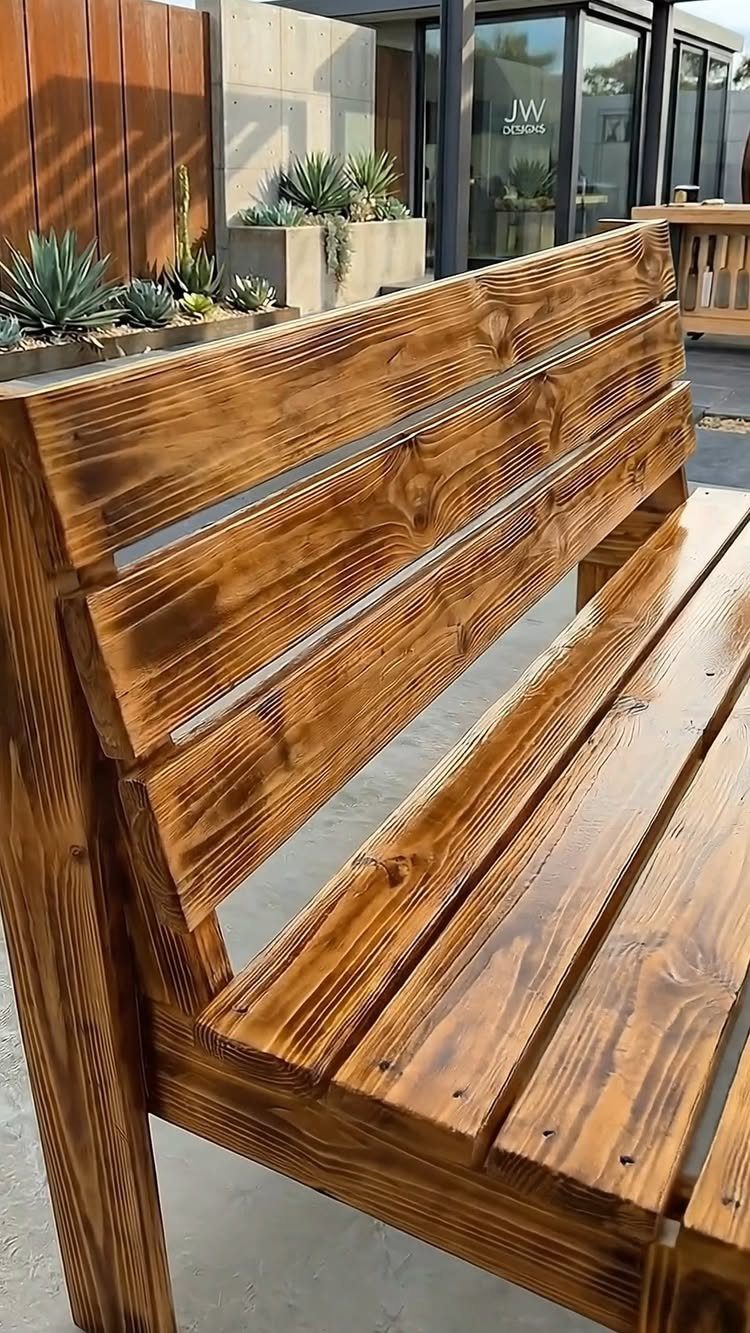
A burnt finish does 2 jobs at once: the charred surface looks deep and weathered, and a coat of stain on top turns the grain into something close to glossy brown. That is what I like most about this bench.
Burn first, then stain.
Scorching opens up the grain contrast, and the stain settles into the dark ridges. Brush off loose soot before staining so it doesn’t smear.
Test on a scrap board before you commit to the real piece.
2. Wood Burning for Detailing
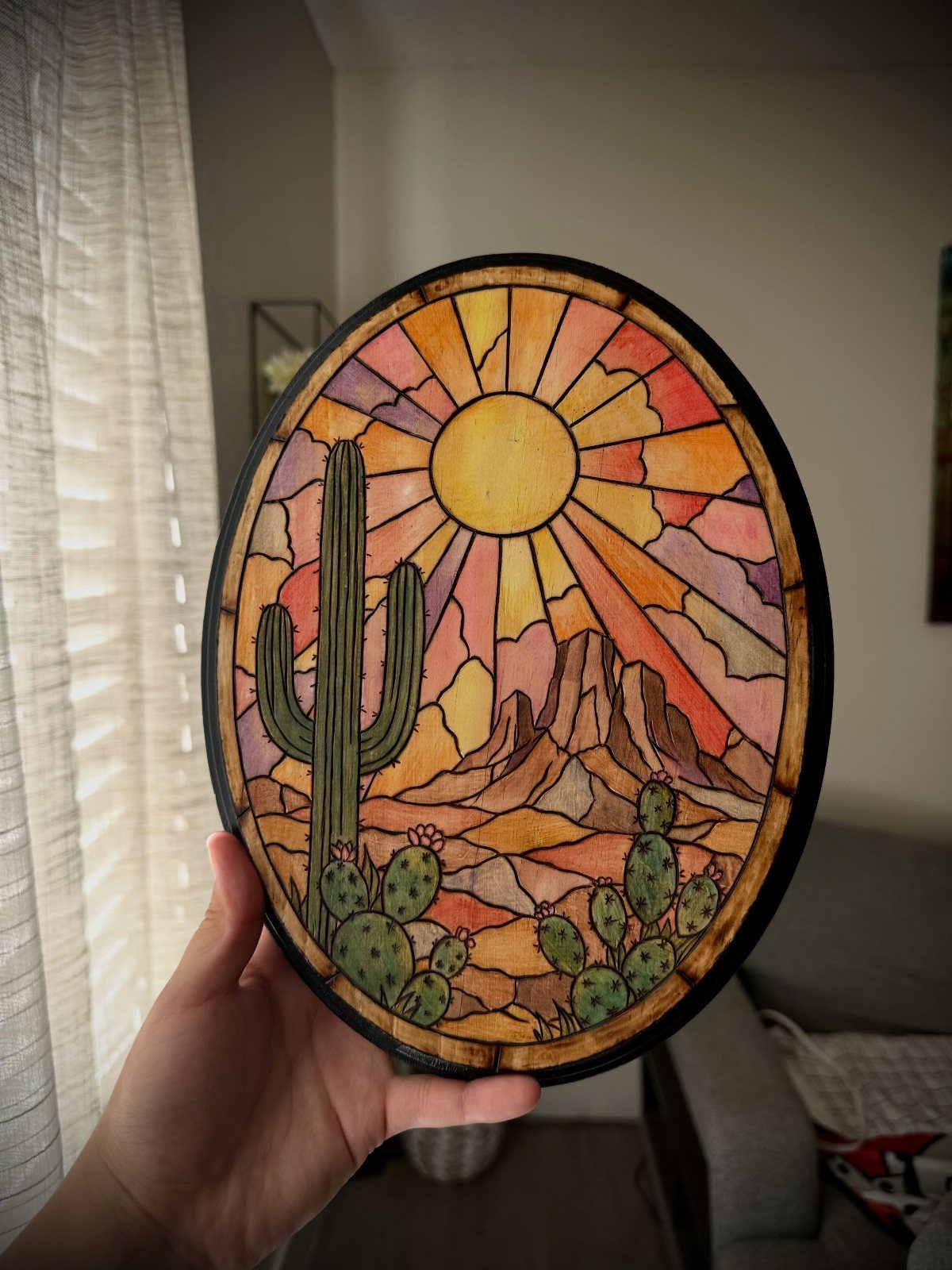
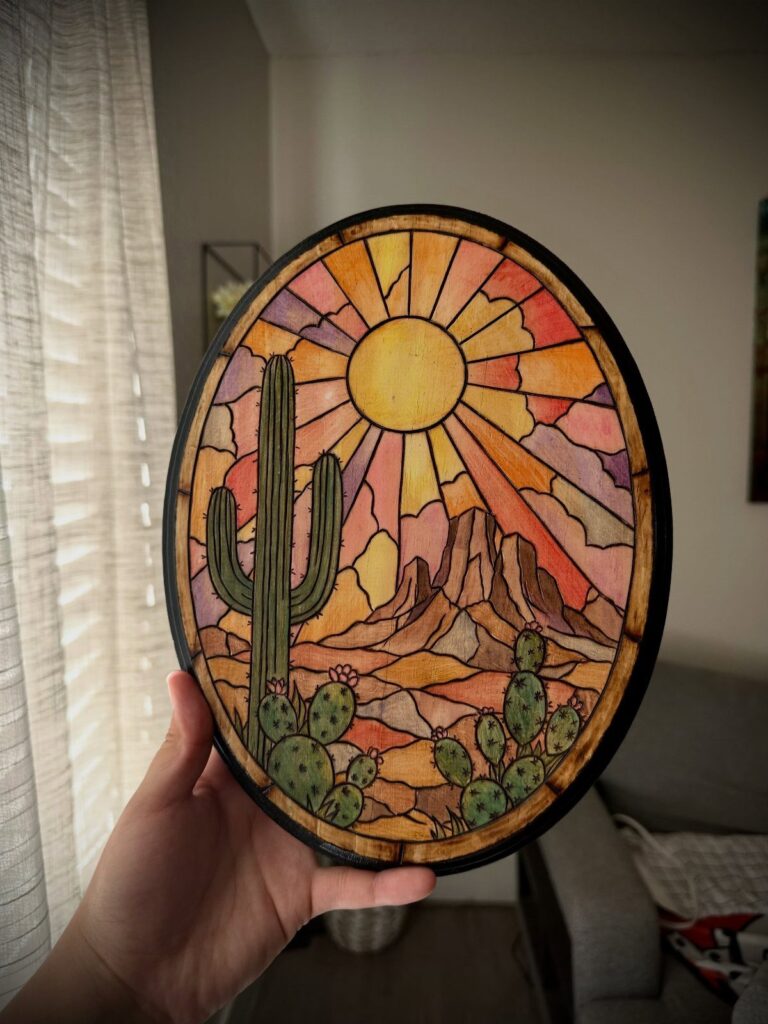
Color is what makes a wood-burned plaque pop. Burn the outlines first with a wood burning tool, then fill the shapes with stain so the dark lines stay crisp.
I would sketch in pencil before touching the tool, because burned lines can’t be erased.
Light, tight-grained wood takes fine detail best. Practice your line weight on a scrap first.
3. Charred and Stained Outdoor Bench
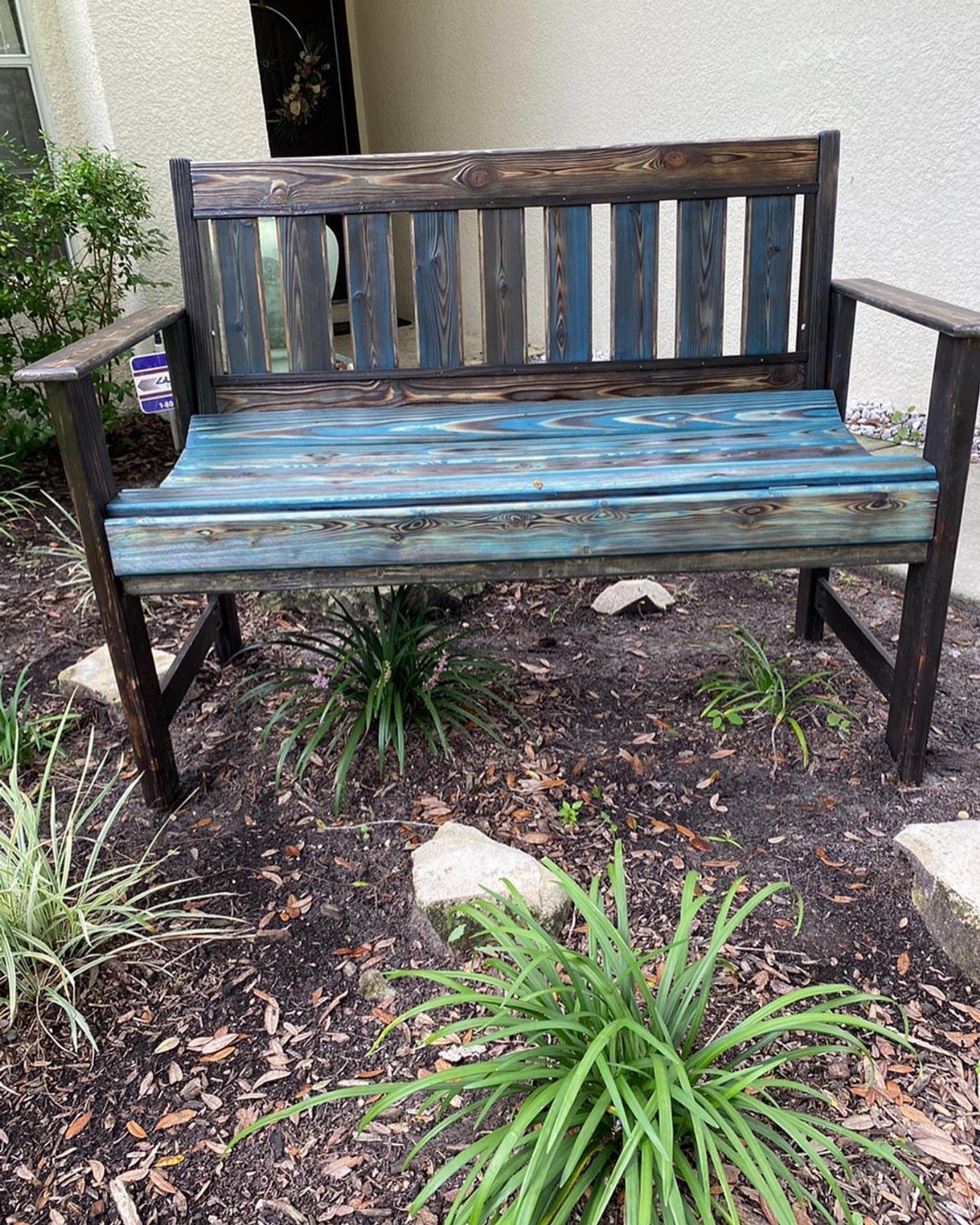
Blue and brown stain on the slats, with charred edges between them, gives a garden bench a patchwork look that holds up against green plants and mulch. Alternating the 2 colors slat by slat keeps it orderly.
Char the edges with a torch before staining, wipe off the loose ash, and then brush on each color. Blue tends to look flat on its own, and the burned grain gives it depth.
Use an outdoor-rated finish on top, since a bench lives in the weather.
4. Burned Pallet Bed Frame
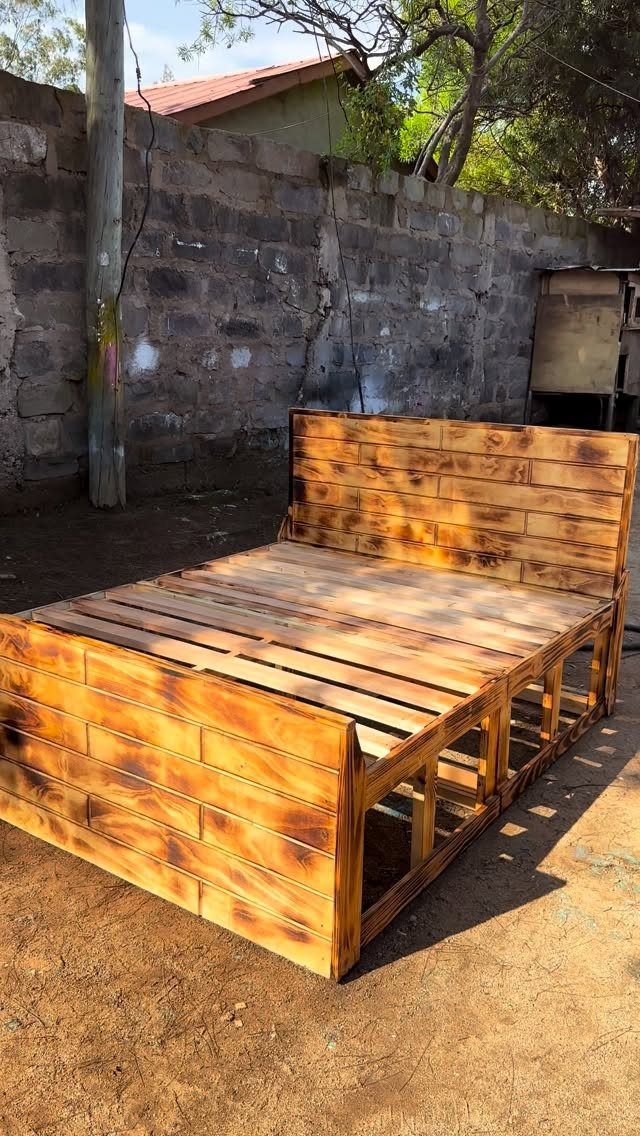
Pallet boards make a platform bed with a headboard cheap to build, and a torch-burned edge plus golden-brown stain hides the rough, mismatched look of reclaimed wood.
Sand the boards first so nobody gets splinters in bed.
Then scorch the edges lightly, brush off the soot, and stain. I prefer golden brown over something darker, because it keeps the charring visible.
Finish with a clear coat so the char doesn’t rub off on sheets.
5. Fractal Burned Wood with Stain
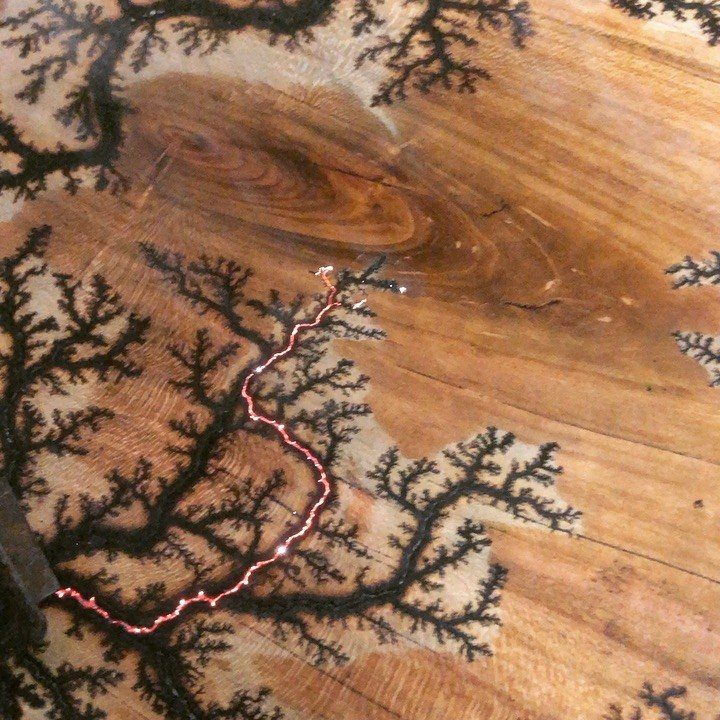
Fractal burning leaves branching black patterns that look like lightning frozen in the grain.
This is the riskiest idea on the list. It involves high voltage and real fire hazard, so I would treat it as an advanced project, not an afternoon one, and work outdoors with the proper protective gear.
Stain afterward, once the surface is cool and brushed clean, to add color around the dark branches.
Safety Concerns with Burning Wood
Stained or finished wood is a different fuel from bare lumber, because the stain and any sealer can release toxins as they burn. Burn only small amounts at a time, and work outdoors or anywhere with strong airflow.
Never burn stained scraps in a wood stove or fireplace. Bag them and dispose of them with your regular trash instead.
Wear a respirator rated for fumes, not a paper dust mask. Keep a bucket of water or a fire extinguisher within reach, and step away from the smoke instead of waiting for it to clear on its own.
Techniques for Shou Sugi Ban
Shou sugi ban comes from Japan, where charring the surface of a board with flame has long been used to protect it.
The name translates to "burnt cedar board," and the traditional steps are simple: scorch the surface, let it cool, brush out the soft char, wipe off the dust, and add a natural oil if you want one.
A propane torch gives you the most control. Keep the flame moving so the char stays even, and stop when the surface turns black and cracks into a scaly pattern.
Softwoods are the right choice. Cedar is the traditional pick, and other softwoods work too.
Let the board cool completely, then brush it.
A wire brush softens the char and decides how the finish looks: brush lightly for a deeper black, or harder to pull out silver streaks and show more grain. Wipe off the dust before you do anything else.
A coat of natural oil is optional. It is worth adding if you want a richer tone.
Though examples of shou sugi ban were seen as early as 700 A.D., the technique generally dates back to 18th-century Japan, where it was primarily applied to wooden boards used in exterior siding to weatherproof them and thereby prolong their life.
— Bob Vila
Environmental Impact of Burning
Burning wood releases pollutants into the air, and smoke from treated or stained pieces is worse than smoke from bare wood. Keep any burning small, and do it away from open windows, neighbors and dry brush.
Some people argue that burning scrap is better than sending it to a landfill. That may hold for clean, untreated offcuts, but I would not stretch it to wood carrying stain, paint or sealer.
For those pieces, the better route is often to reuse them as test boards, kindling-free craft stock, or small projects. Check local rules before any open burning, since many areas restrict it.
Frequently Asked Questions
Is it okay to burn wood that has been stained?
A little stained scrap in an outdoor fire pit is tolerable, but keep it out of a wood stove or fireplace, where fumes and residue build up indoors.
Finishes can give off toxic fumes as they burn, so any small burn belongs outside or in a space with strong airflow.
Stained offcuts go in a bag and into the regular trash, and open burning of any kind calls for a check of local rules first.
Do you stain wood before or after you burn it?
Burn first, then stain.
Burn first: the scorched grain gives the stain more contrast to work with, and color pools in the dark ridges. Wipe or brush the loose soot off before staining, or the pigment will drag it around and smear the lines.
Can you get burn stains out of wood?
Burned lines can’t be erased, so plan on prevention rather than removal. Deliberate char can be softened by brushing, though: a wire brush pulls out silver streaks and shows more grain.