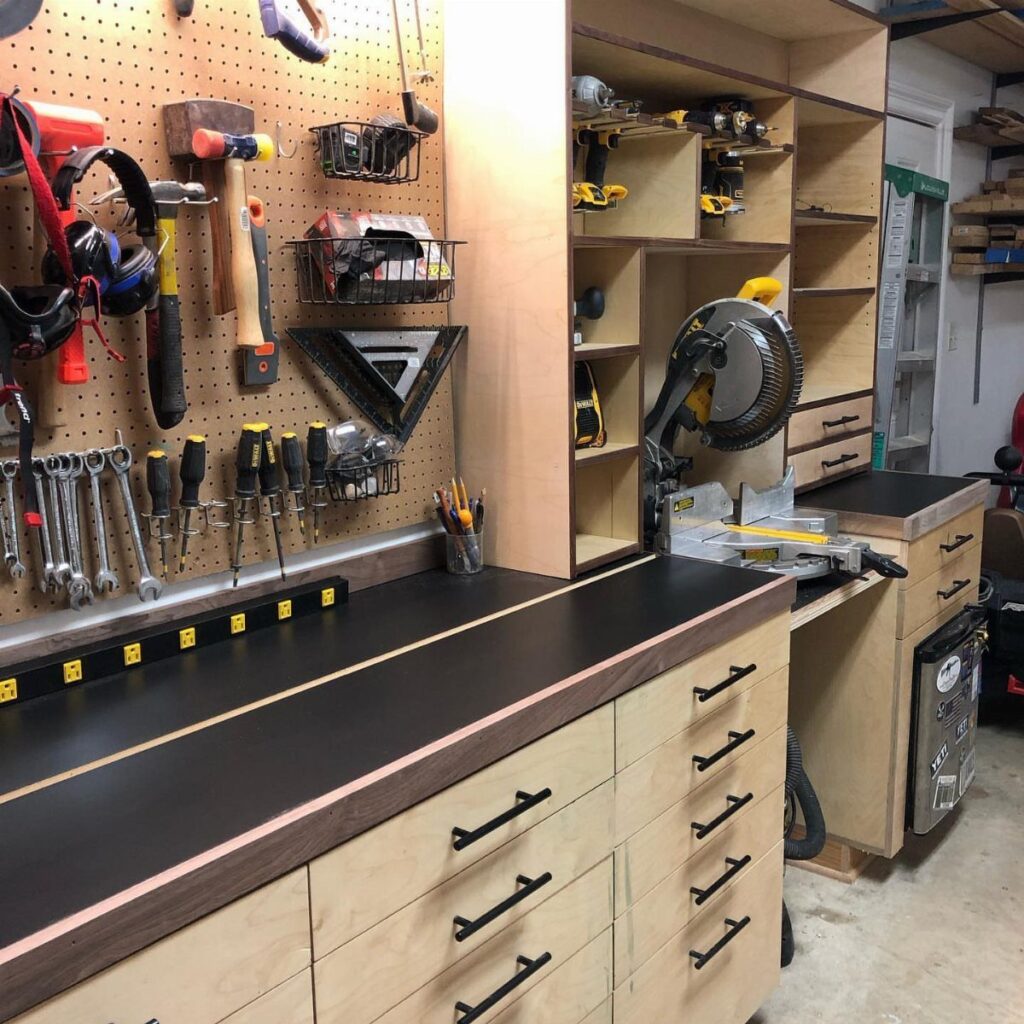
Floor space decides which of these miter saw storage ideas fits your shop: a narrow rolling shelf that slides past the car sits at the cheap, quick end, while the integrated dual-saw station, which carries two saws on one frame, takes well over an afternoon.
A garage with room for only one station points to the cabinet, stand or recessed bench, and a garage that can’t spare two stations points to the integrated dual-saw station.
Before you cut anything, measure your saw’s table height, because a plywood build that comes out an inch off is an expensive one to redo.
1. Storage Cabinet
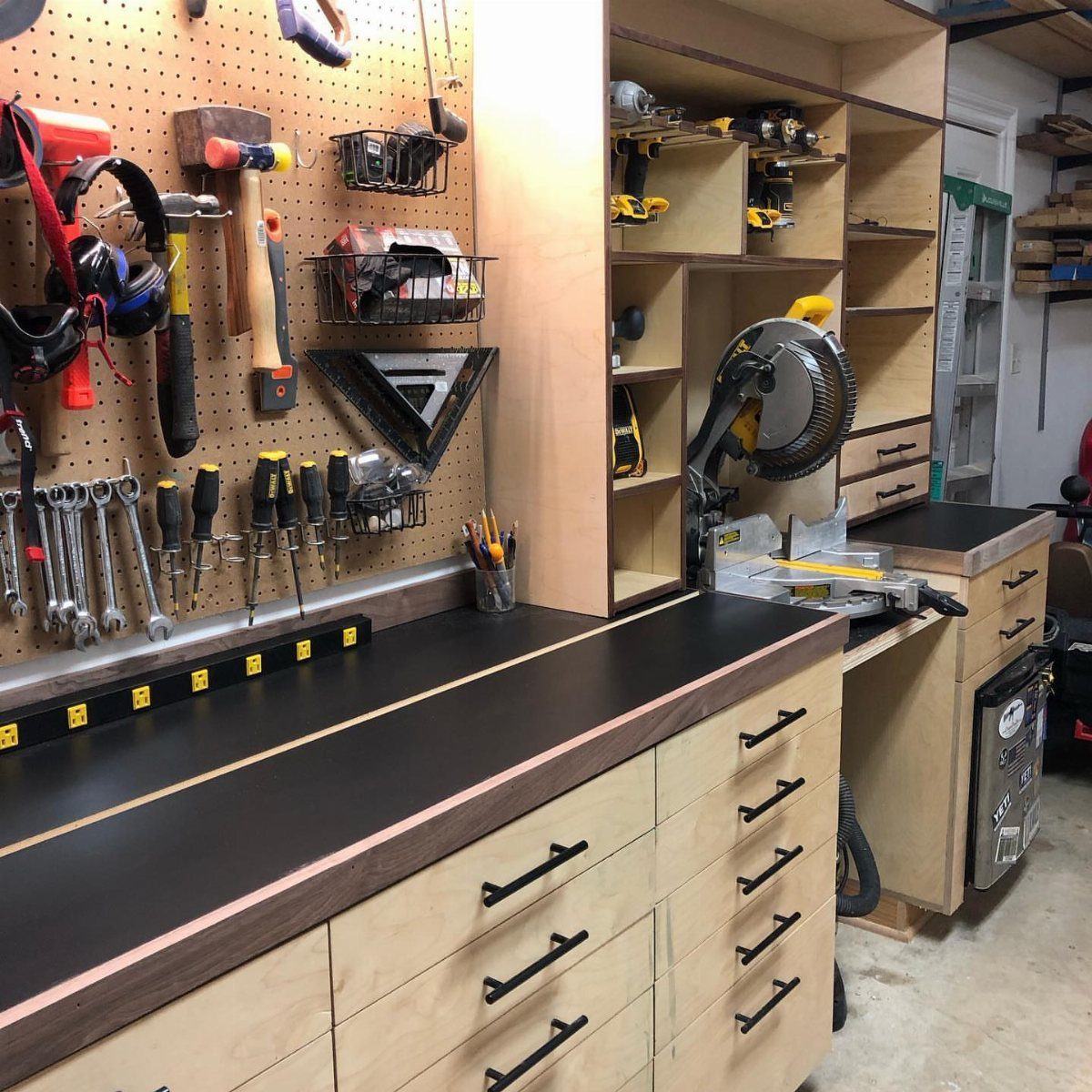
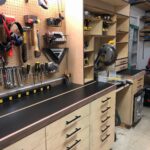
A cabinet with drawers below and a countertop on top gives the saw a home that closes up. Tools and blades tuck away, and the top doubles as a work surface in a small shop.
Build the drawers to match what you own: shallow ones for blades and pencils, a deeper one for clamps. A dark laminate or painted top wipes clean easily after sawdust-heavy cuts.
Cost depends on how many drawers you build, since slides and hardware add up fast.
2. Rolling Shelf
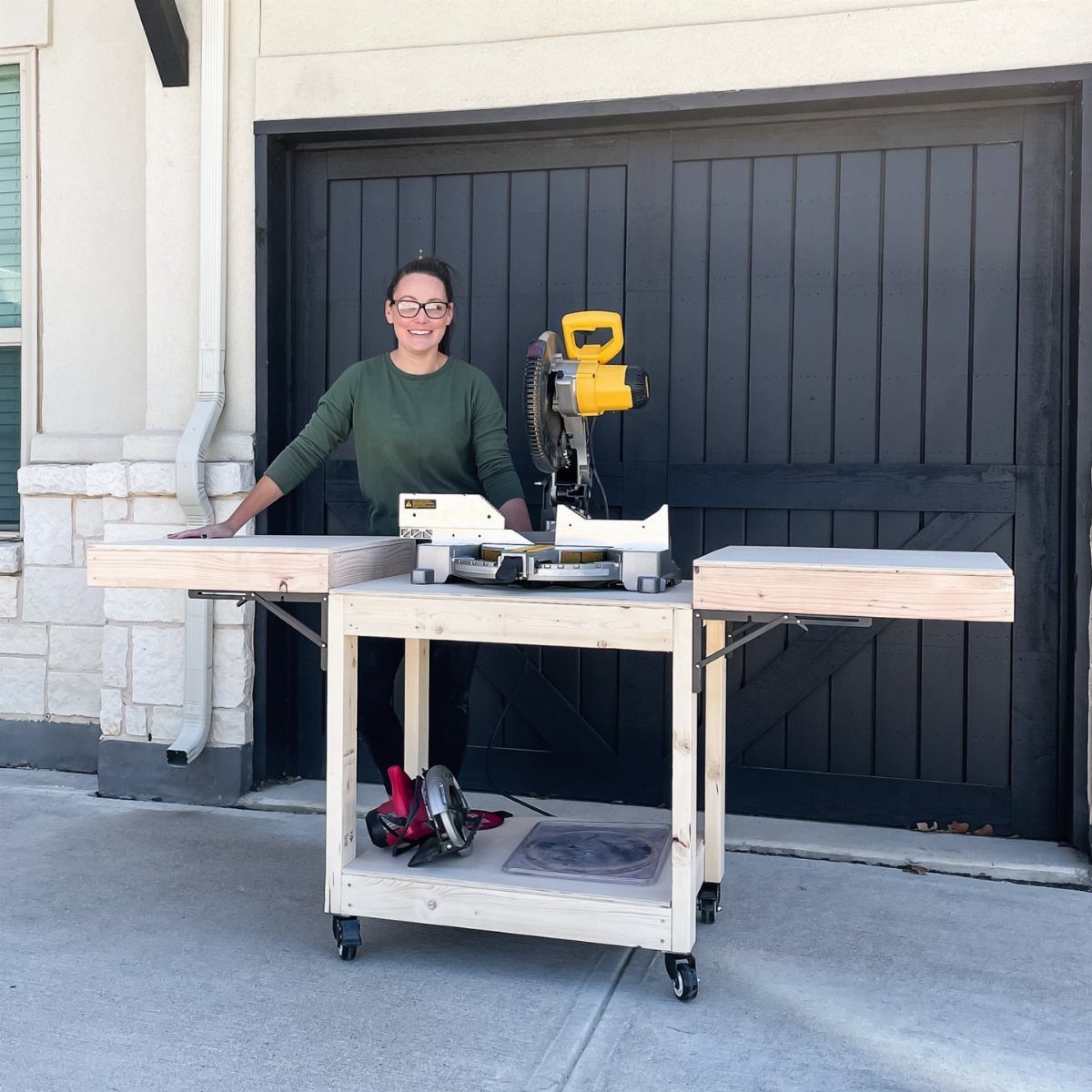
Wheels are what a small garage needs most.
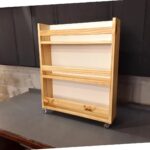
A compact rolling shelf holds the miter saw up top and keeps a lower shelf free for blades, a drill, or offcuts, then pushes out onto the driveway when you need room for long boards.
Keep the footprint narrow so it slides past the car. Locking casters are my pick, because a saw that creeps mid-cut is a problem.
This is also one of the cheapest builds on the list.
3. Miter Saw Stand
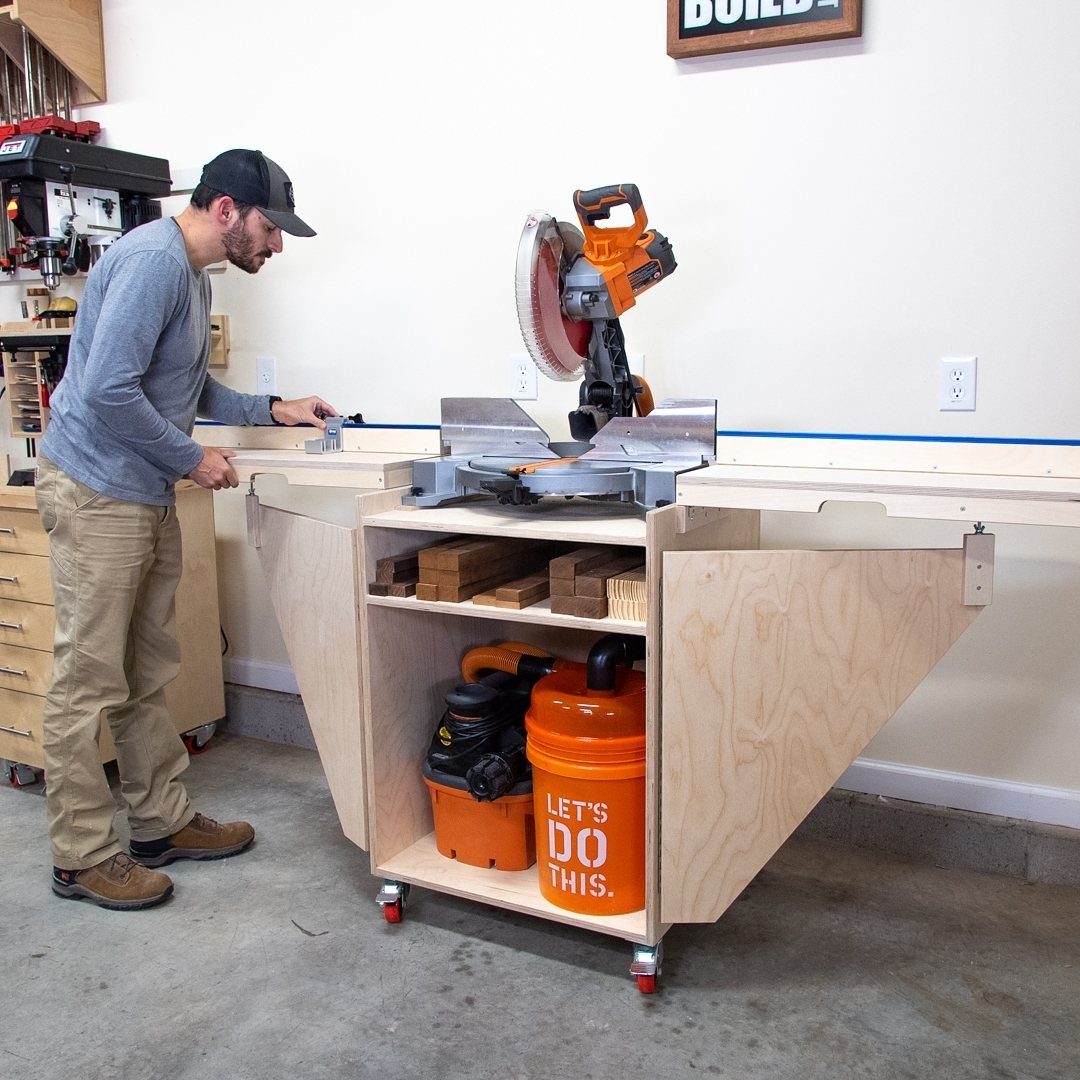
Plywood is plenty for a dedicated stand, and it keeps the saw at a working height with shelves below for the gear you reach for most. Because the saw lives in one spot, setup time drops to nearly nothing.
Put the heaviest items on the bottom shelf so the stand stays stable when you push it around. Casters make it easy to roll out of the way.
Plan on an afternoon of cutting and screwing, plus a bit more for finishing.
4. Recessed Miter Saw Workbench
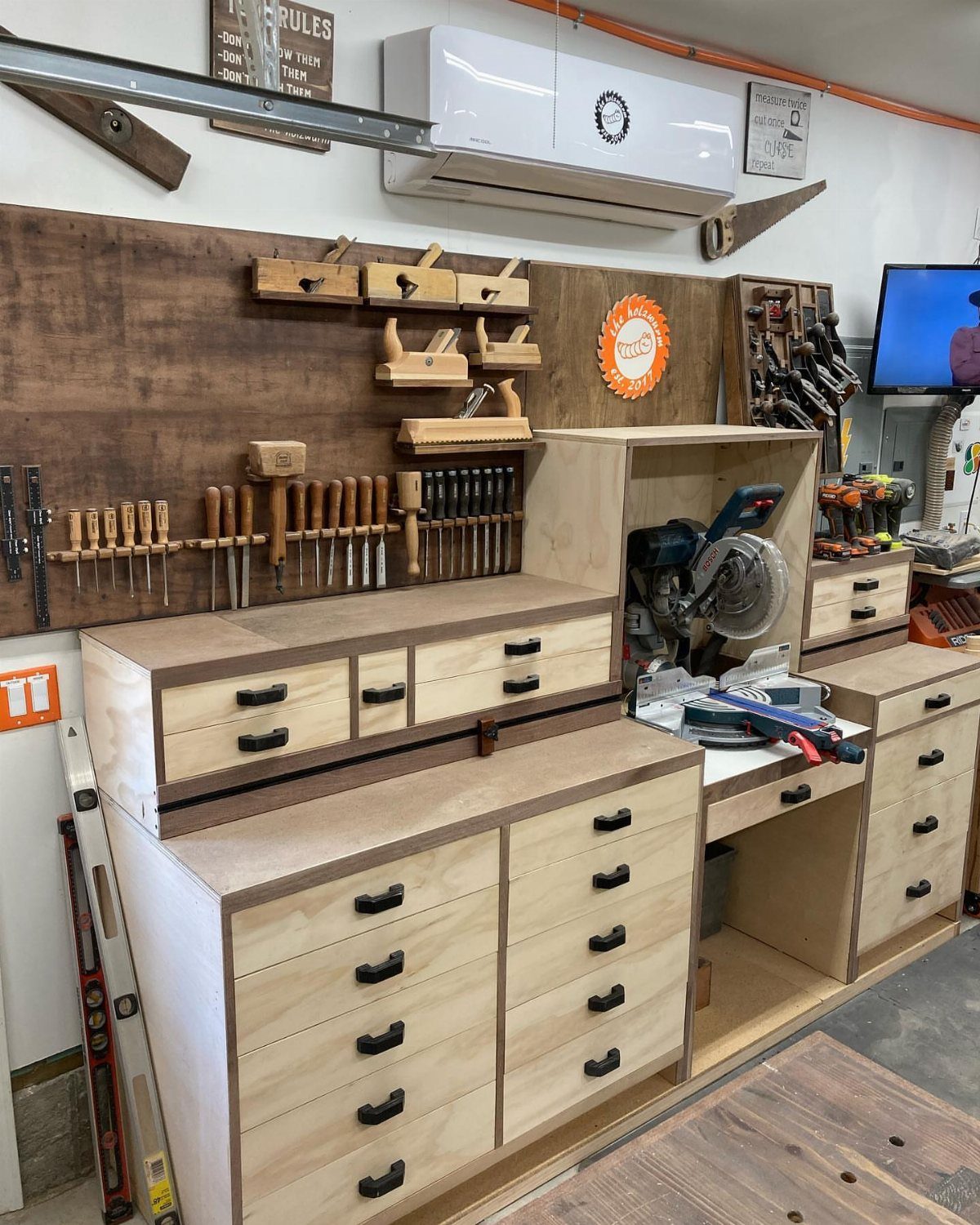
Sinking the saw flush into a cutout in the benchtop means the table of the saw lines up with the surrounding surface. Long boards then rest level on both sides, with no shimming or outboard supports.
Measure the saw’s base and table height before cutting the opening, and leave room around it so you can still adjust and remove it. Drawers along the bench hold small tools within reach.
This takes more planning than a stand, so I’d sketch it first.
5. Workbench with Extended Wings
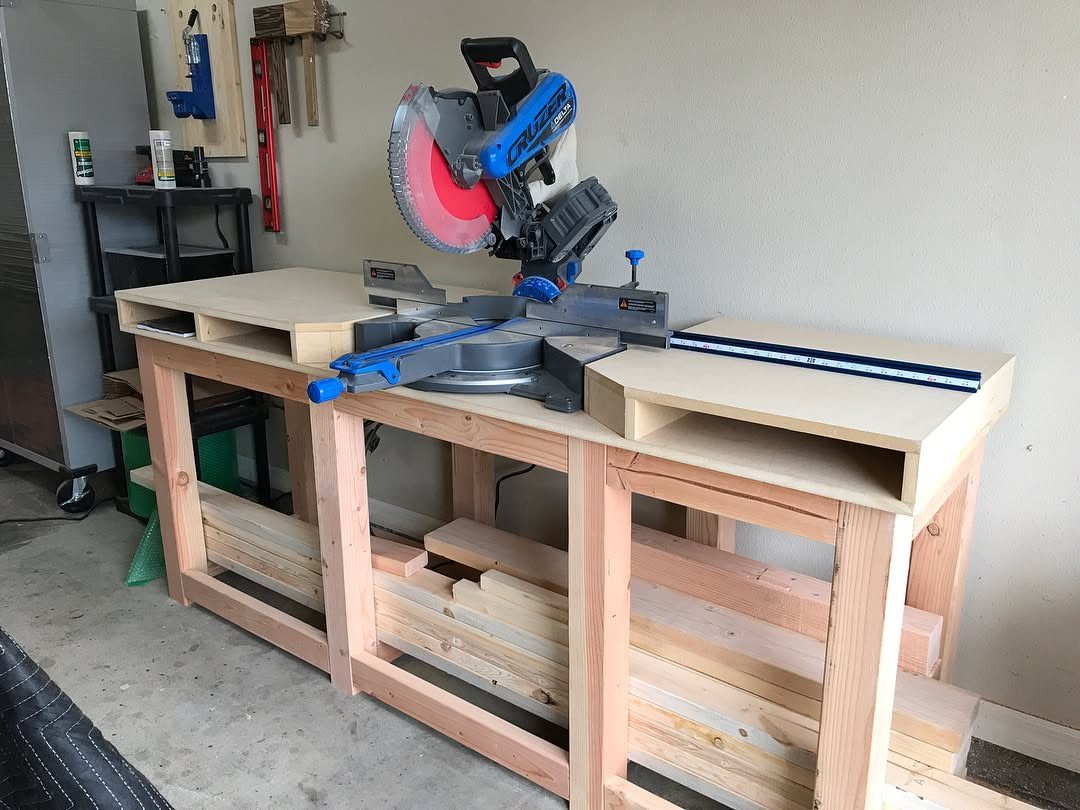
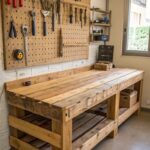
Wings on either side of the saw turn a short bench into a support for long stock. Open shelving below holds lumber right where you cut it, so boards go from rack to blade in a few steps.
Build the wings level with the saw’s table, and check them with a straightedge before you fasten anything down. Open shelves are cheaper and faster than drawers, but they collect dust.
For anyone who cuts a lot of long boards, I think this layout wins.
6. Integrated Dual-Saw Station
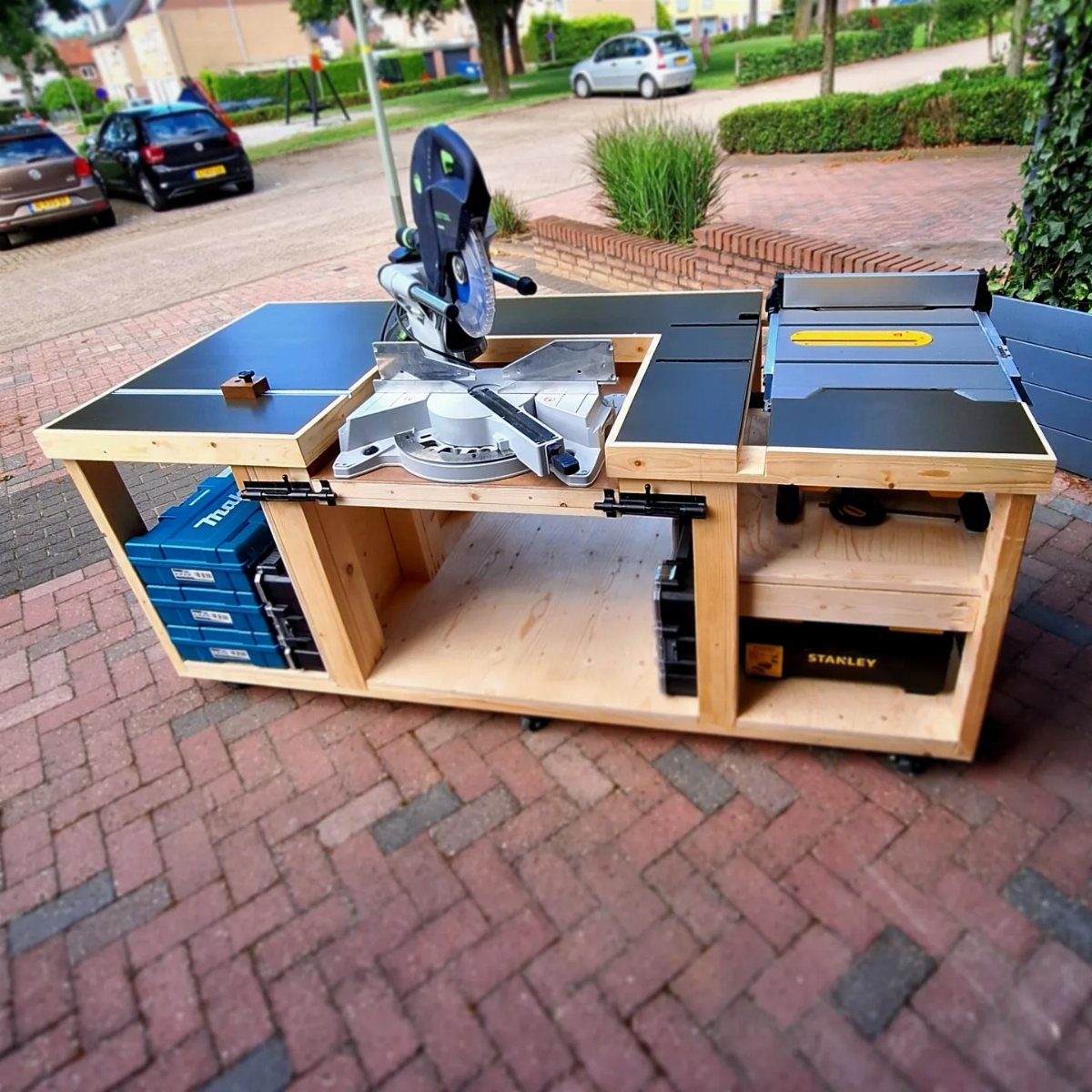
Two saws on one mobile bench saves the floor space a second stand would eat. The miter saw and table saw share a frame, with shelves underneath for toolboxes and accessories.
The build is bigger than the others here, so expect more than an afternoon, and heavy lumber and 2 saws mean strong casters matter. Wheels let you roll it out to a driveway for big cuts and back in afterward.
Pick this one if your garage can’t spare room for two separate stations.
Storage Accessibility
Access decides whether a saw gets used. If pulling it out takes more than a minute or two, small cuts start happening with a hand saw, or they get skipped.
Before you commit to any storage plan, picture the full routine: grabbing the saw, setting it up, making a cut, putting it away.
Anything that makes you move other tools or lift the saw over clutter is a problem to fix on paper, not in the shop.
Keep the area around the saw clear too. A tidy shop makes the saw easier to reach, so sweep up and put tools back where they belong.
Protecting the Miter Saw
A cover is cheap protection. Sawdust and damp air both wear on a miter saw, and a cover keeps them off the motor, the fence and the sliding rails.
Drape it over the saw every time you finish, even if you plan to cut again tomorrow. The habit matters more than the type of cover, so use whatever you will actually put on.
If the saw shares a surface with another tool, such as a table saw top, expect to move it each time you switch. That shuffle is the real cost of sharing space, so weigh it before choosing that spot.
Measurement Importance
Measure the saw itself before you cut a single board for storage. A small error in one dimension can waste hours of work, and plywood is not cheap to redo.
Measure the table height of the saw, then add the thickness of the plywood if the saw will sit on top of it. Mark those numbers directly on the cabinet side rather than trusting memory.
Set each shelf support back 3/4 inch from the front edge of the cabinet, so the face frame or doors still close over it.
A bead of wood glue plus brad nails or screws will lock it in place, and I like using both so nothing shifts while the glue cures.
A saw hung on the wall needs studs behind it, since a 40-pound miter saw can pull drywall anchors right out; find the studs first and screw into them.
Miter saws are fairly light, but a falling one is still dangerous, so be careful.
Frequently Asked Questions
How to maintain a miter saw?
A simple cover over the saw after each session keeps dust and humid air off the motor and rails, and I’d use it even when the next cut is only a day away.
Sweeping up and putting tools back in their places also keeps the saw easy to reach.
How to store a miter saw in the garage?
Pick the setup that fits your space and how often you cut. A rolling shelf with locking casters works well in a tight garage, since it slides past the car and rolls out onto the driveway for long boards.
If you cut a lot, a stand or bench with shelves below keeps the saw ready to use. Whichever you choose, cover the saw when you finish.
Do I need a stand for my miter saw?
No, a stand is not required. Where a stand earns its place is height: the saw sits at a comfortable working level, and the shelves underneath hold the tools you grab most.
How deep does a miter saw station need to be?
Measure your own saw to find out, because no single depth fits every model. In a tight garage, a slim footprint is what keeps the station from crowding the car.