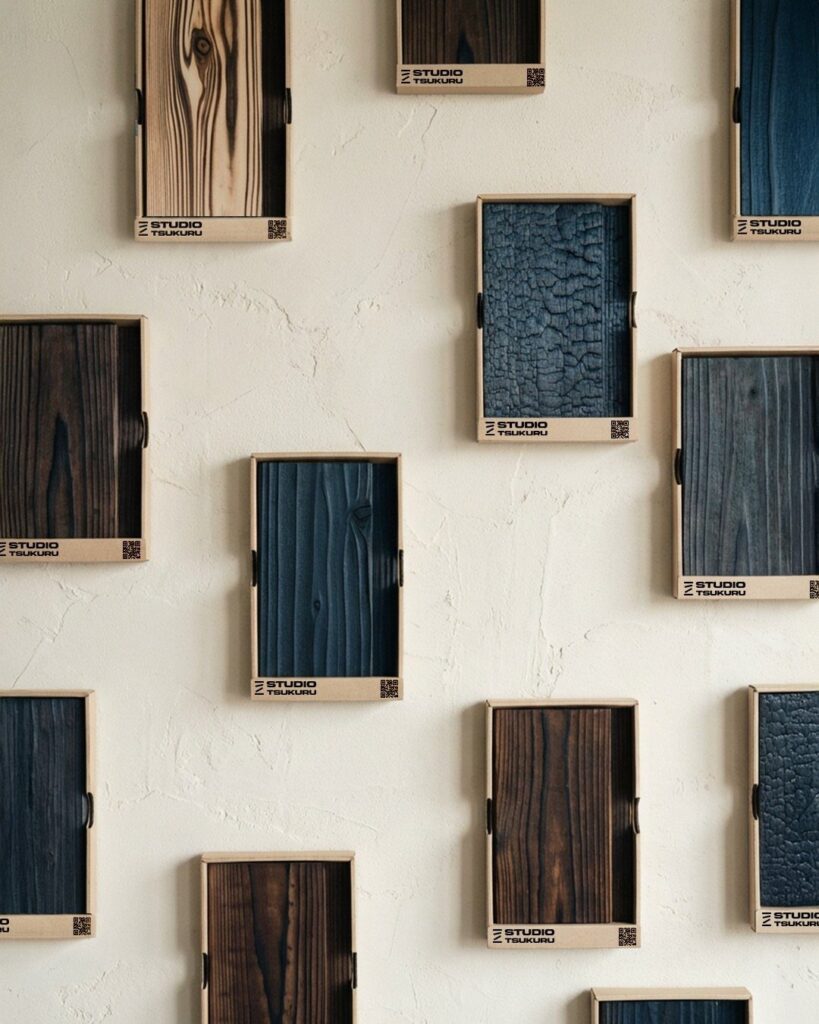
Every color here sits on the same black char, so the real choice is how much of that burn shows: golden-brown or muted blue-grey lets the dark grain read through, while deep blue, teal and the rainbow gradient push the color forward.
If this is your first charred piece, stay near the quiet end, because strong reds and blended bands show every uneven wipe.
Whatever you pick, stain a scrap of the same species first, since the burnt grain decides how much color it holds.
1. Shou Sugi Ban Color Collection
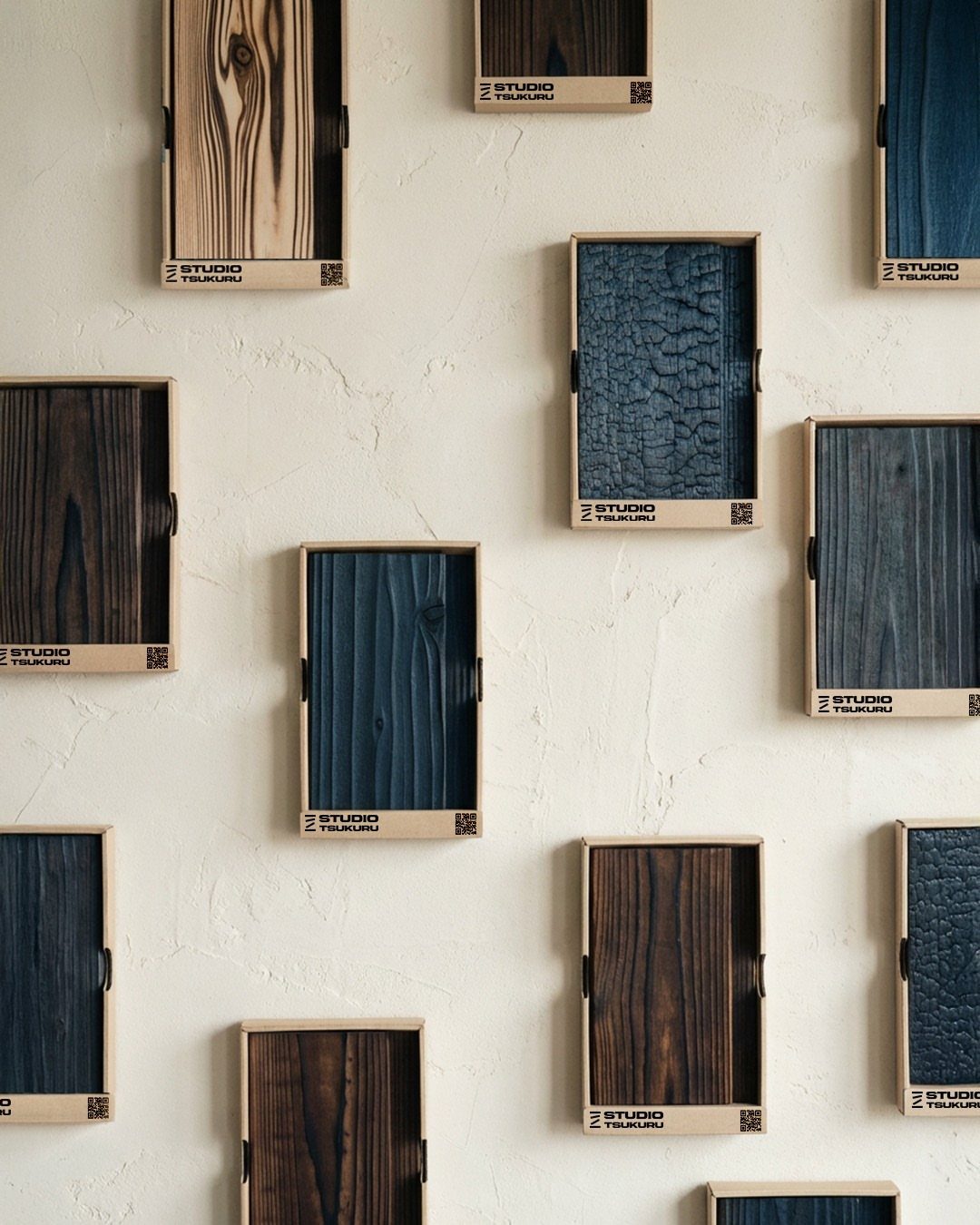
A sample board is the cheapest way to pick a color before you commit to a full project. Each charred piece here shows a different dark tone and surface texture, and that spread is what you want to compare.
Make your own set on scrap from the same species you plan to use. Burn them, stain each one differently, and hang them where the finished piece will live, since light changes how dark tones read.
2. Golden-Brown Stained Tabletop
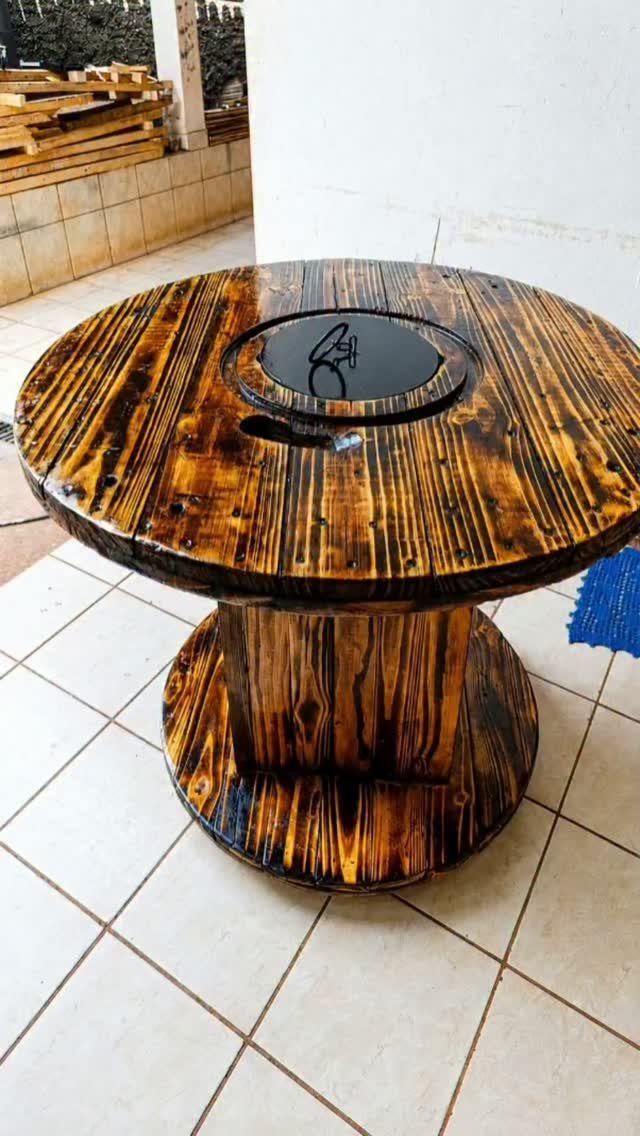
Black char with a golden-brown stain gives a tabletop warmth that plain charcoal can’t. On a round cable spool table, the stain settles into the grain and leaves the burnt ridges dark, so the rings stand out.
For an afternoon project, this is the one I’d pick.
The color is forgiving and sits well on a patio. Stain a test section near the edge first, because the brown deepens as the coats build.
3. Teal and Turquoise Charred Grain
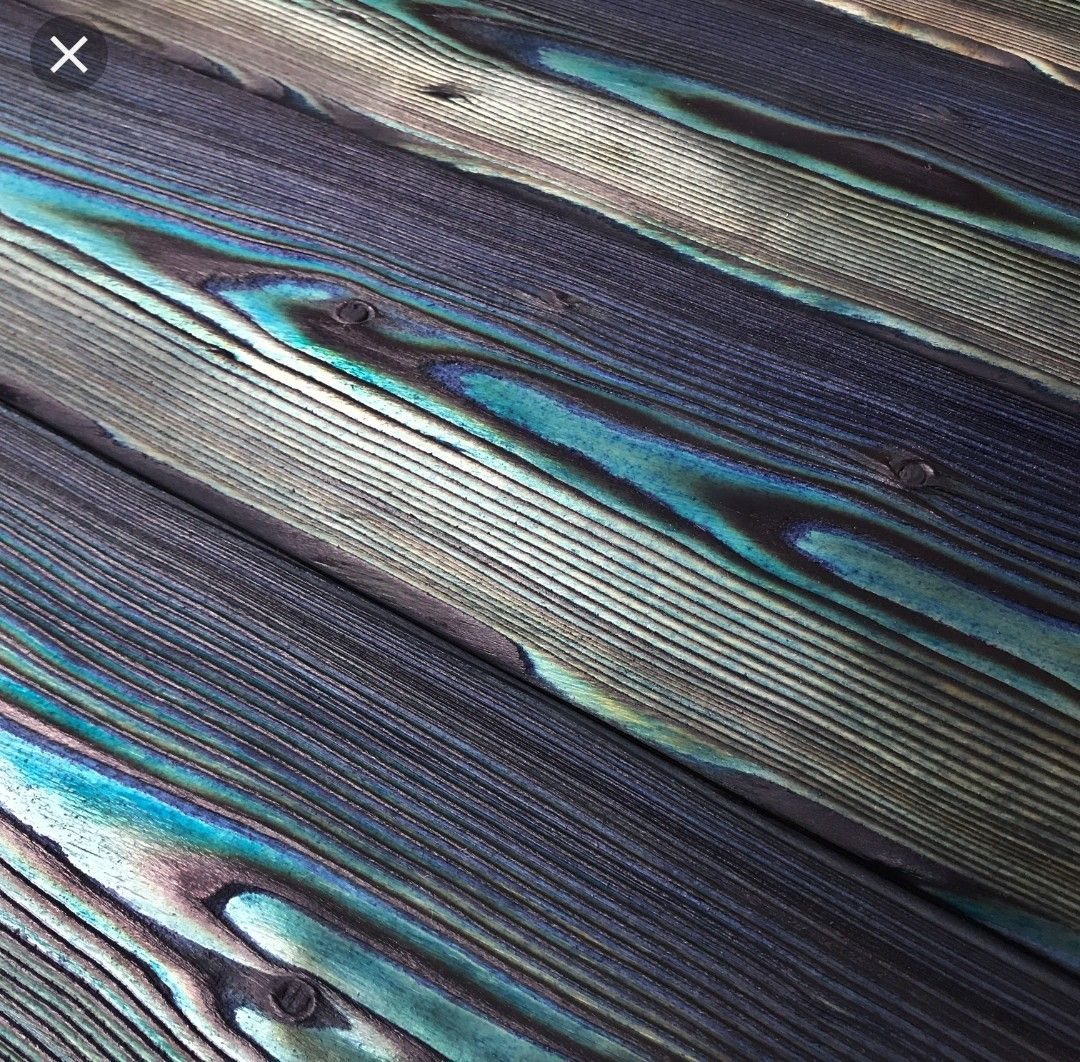
Teal and turquoise are the colors to try if you want char to look like something other than a campfire. Deeply burnt planks hold the stain in the grain, so the blue-green glows against the black.
Wipe the loose soot off before staining, or the color turns muddy.
Keep the first coat thin. You can always add a second pass, but you can’t lift a heavy one.
4. Vibrant Pinkish-Red Charred Wood
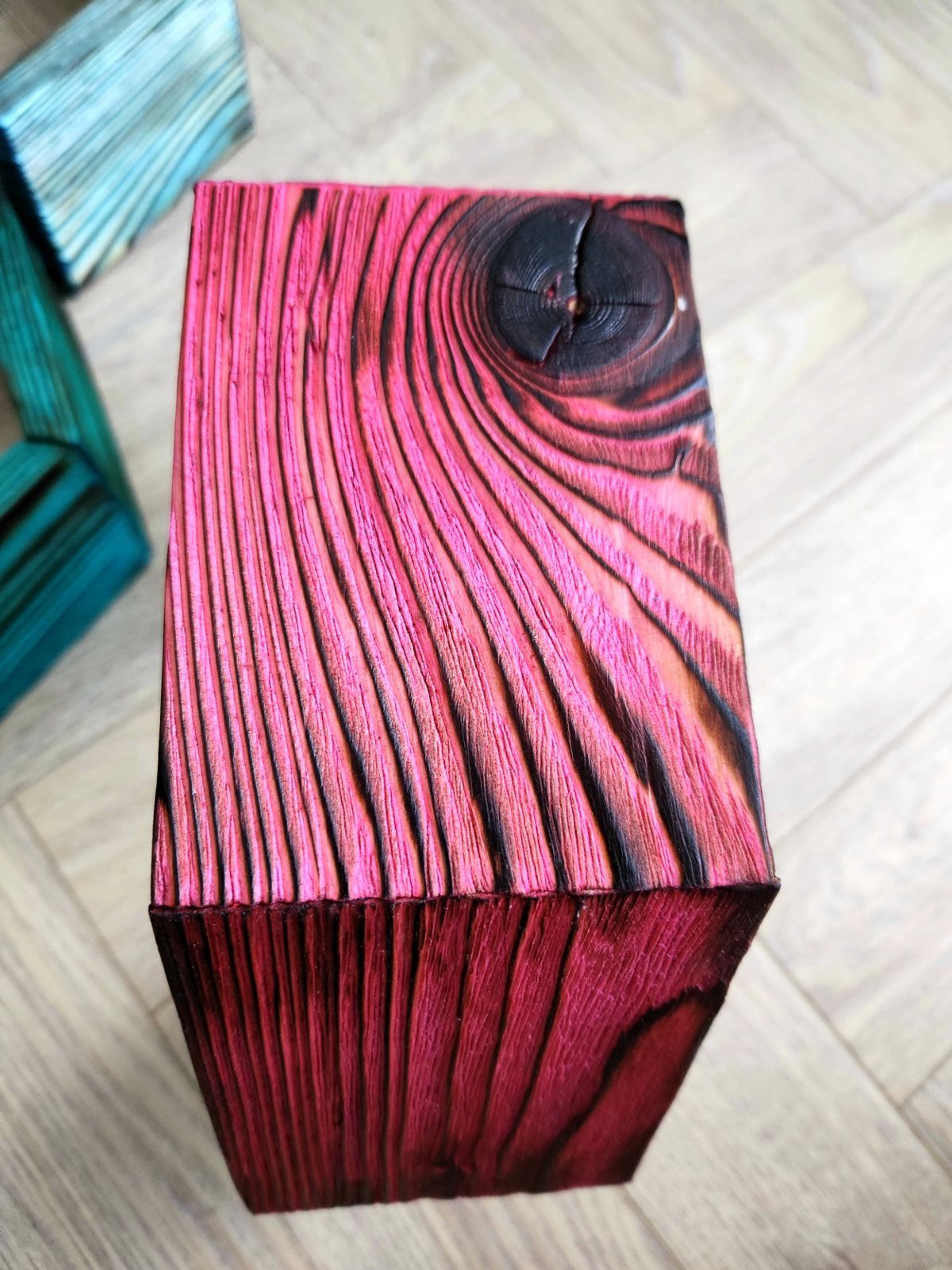
Pink and red on black char is bolder than most people expect, and I like it for that.
The stain catches the raised grain while the burnt grooves stay deep black, so the pattern reads clearly even on a small block.
Start with a small piece like this one. Strong reds show every uneven wipe, so work in the direction of the grain and keep a clean rag ready.
5. Rainbow Gradient Charred Plank
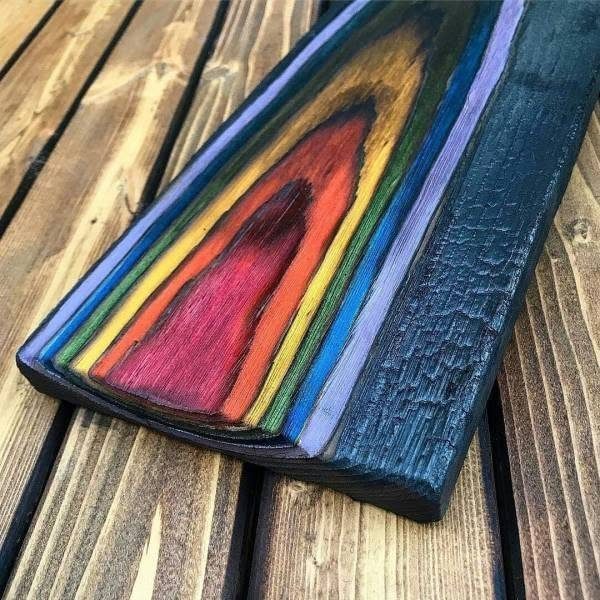
A rainbow gradient takes patience, because the colors must blend where they meet. Red, orange, yellow, green, blue and purple each get their own band on the charred plank, then you feather the edges while they’re still wet.
Work from light to dark if you can.
Yellow turns muddy next to purple, so keep a band of green or orange between warm and cool shades. Practice on scrap before you touch the good board.
6. Iridescent Teal and Purple Grain
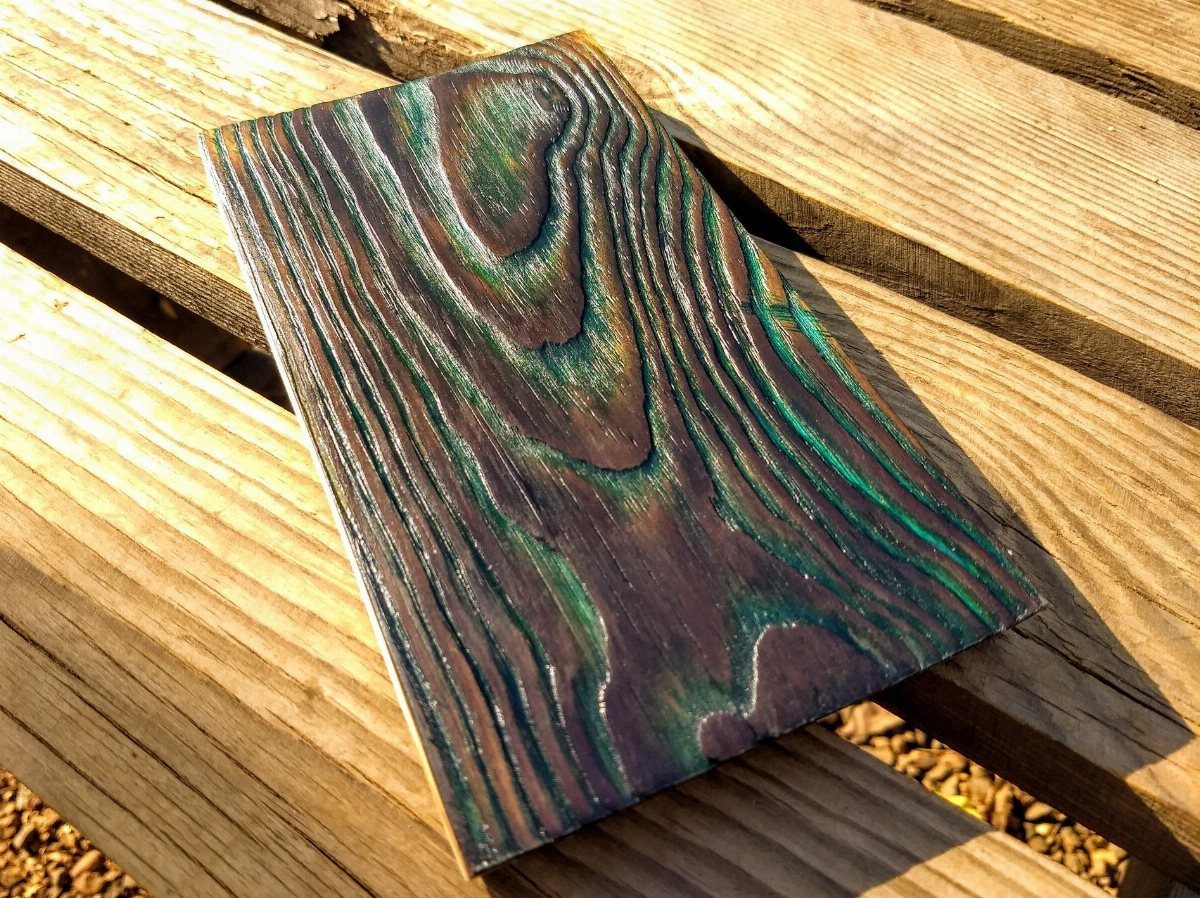
Teal shifting into purple across the grain gives char a shimmer that changes as you move around the piece.
Iridescent teal and purple is the most unusual finish for charred wood, and it suits a plank you’ll display rather than use hard.
Apply the 2 colors in overlapping passes so they merge in the middle. Do a test piece first; the shimmer depends on how much stain the burnt grain holds.
7. Deep Blue Charred Timber
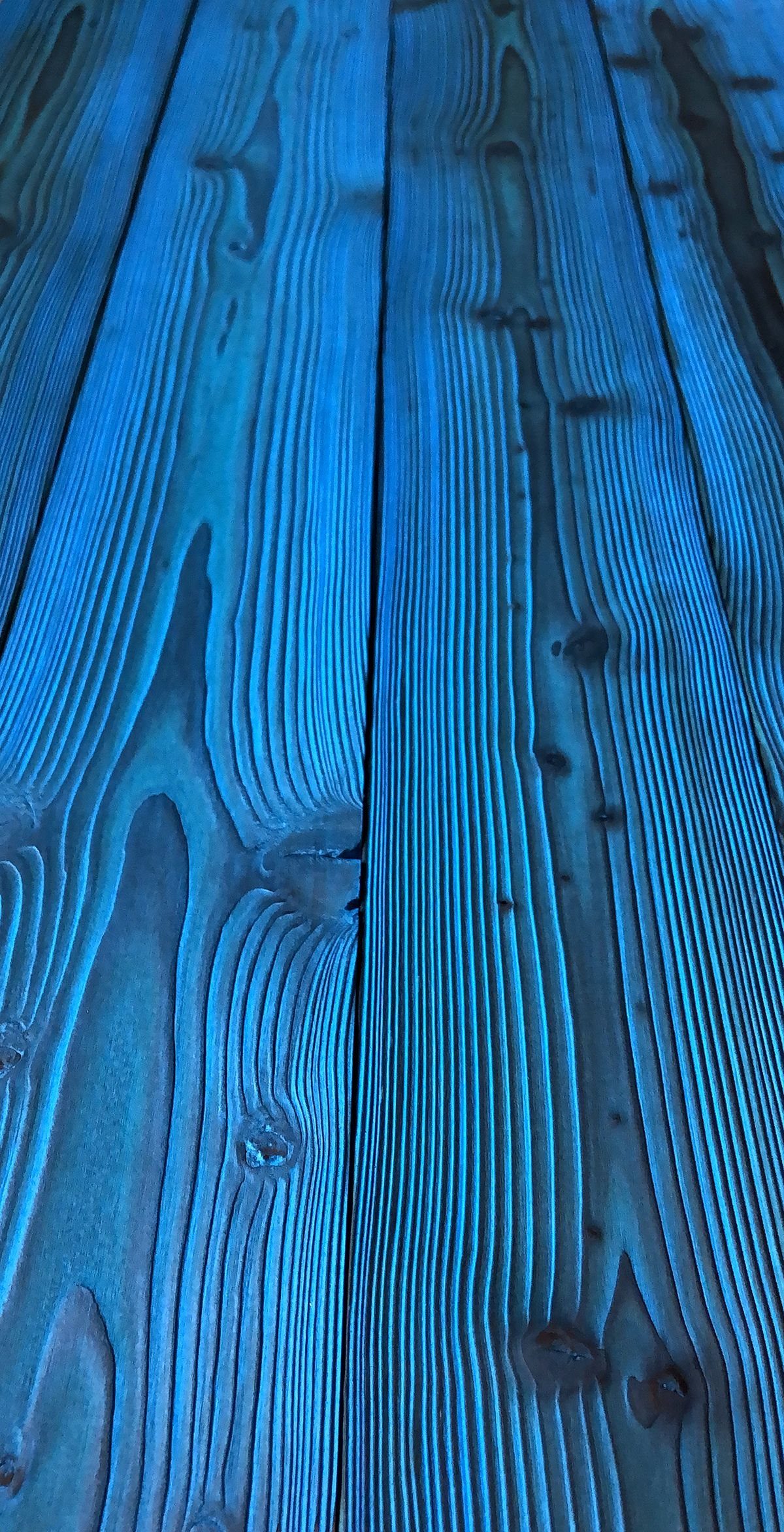
Deep blue over heavy char is the darkest color you can get with shou sugi ban, and the stain reads almost like ink where the burn is thickest.
The linear grain stays visible because the blue settles into the texture instead of covering it.
Brush off loose soot first, then wipe the stain on thin and follow the grain.
Dark blue hides a second coat better than lighter shades, so build depth slowly and stop when it looks right. Test on a scrap plank.
8. Muted Blue-Grey Burnt Planks
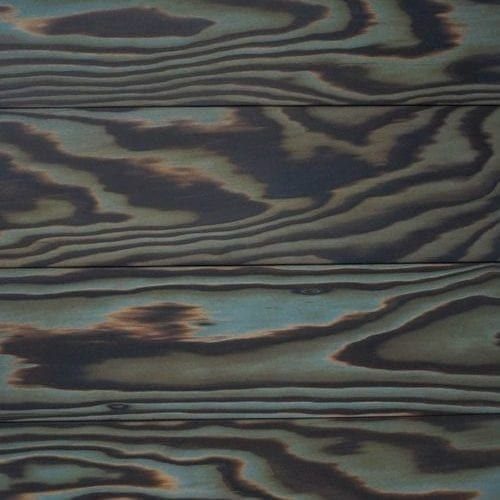
A muted blue-grey wash is the quiet pick here, and for a first charred project it’s the one I’d steer you toward.
The stain sits on the surface and lets the dark grain show through, so the planks look weathered rather than painted.
Wipe on a light coat and let it dry before judging the shade, since stain looks different wet.
If it’s too pale, add another pass. Lay the planks horizontally and the grain lines run long and calm, which suits a muted blue-grey finish well.
Frequently Asked Questions
Can burnt wood be stained?
Yes, charred wood takes stain well, and it comes in colors from golden brown to teal, red, and deep blue.
Because the stain sinks into the open grain and slides off the glossy char, the raised ridges stay near black and the pattern reads even stronger.
A quick pass with a stiff brush to clear loose soot keeps the color clean, since leftover ash mixes into wet stain and dulls it.
Do you have to seal wood after Shou Sugi Ban?
Sealing is recommended, since it makes the color look richer and protects the wood.
It matters most on a piece that will sit outdoors, like a patio tabletop. Let the stain dry fully before you judge the shade or seal it.