Floor space decides which of these woodworking shop projects you build first: a napkin holder or salt cellar fits on a bench corner and runs on offcuts, while a miter saw station, a kitchen island or a slat wall needs a wall, a driveway or a whole shop corner to stand in.
The range runs from scrap-wood jewelry boxes to a tool "book" with plywood pages on 3" door hinges. Pick the biggest build your room can hold, then fill the gaps with small ones.
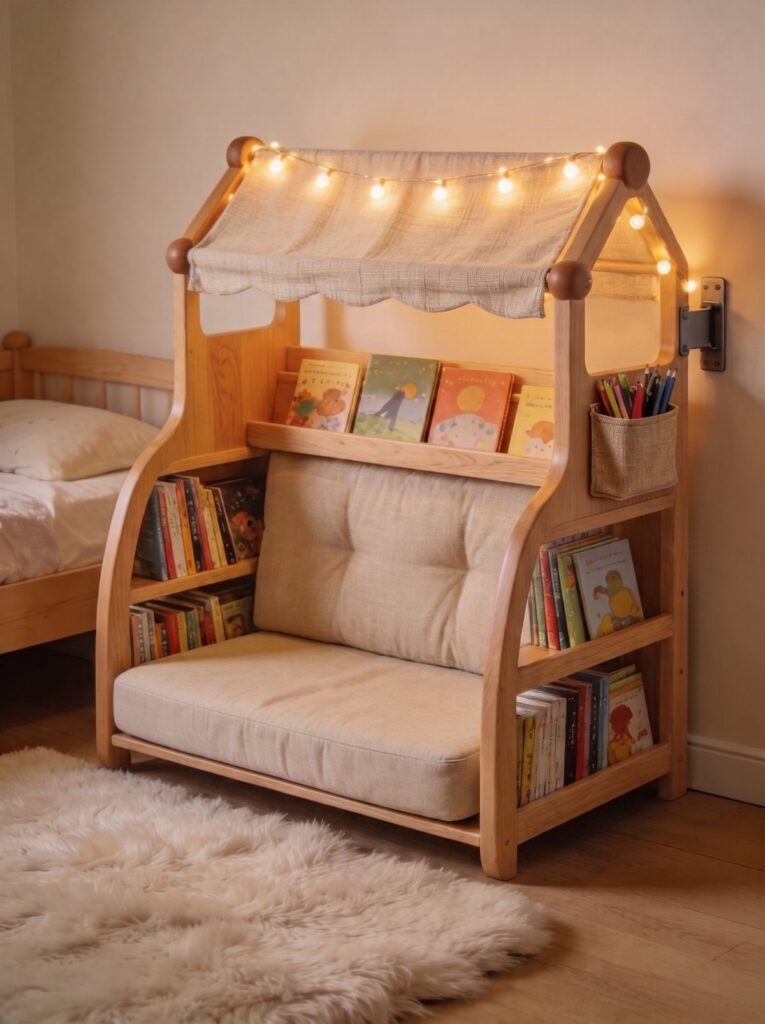
1. Kid’s Bookshelf
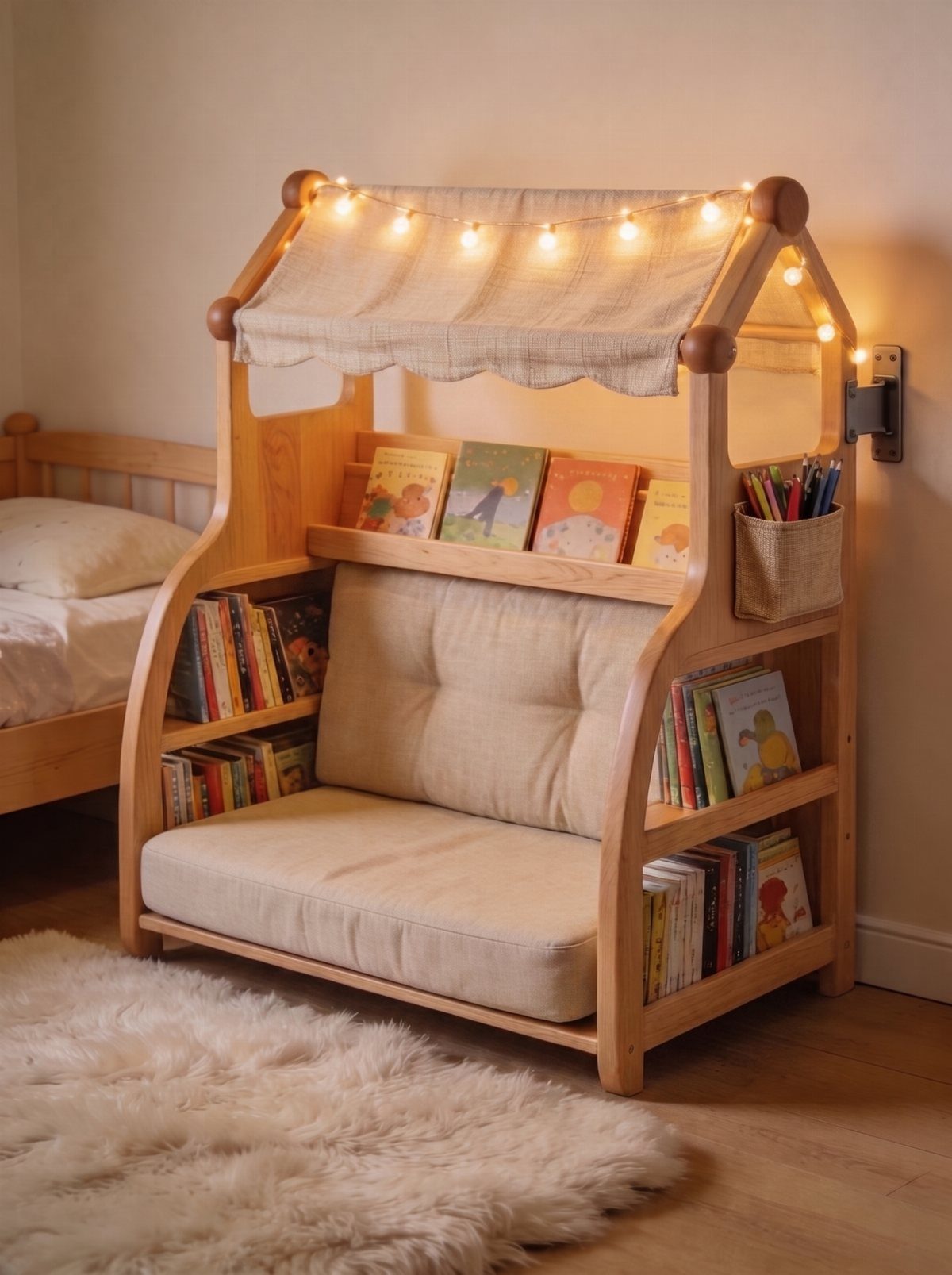
A child’s bookshelf works best when the books sit at kid height and the shelf doubles as a place to settle in.
Keep the shelves low so a small reader can pull a book without help.
2. Small Project Plans
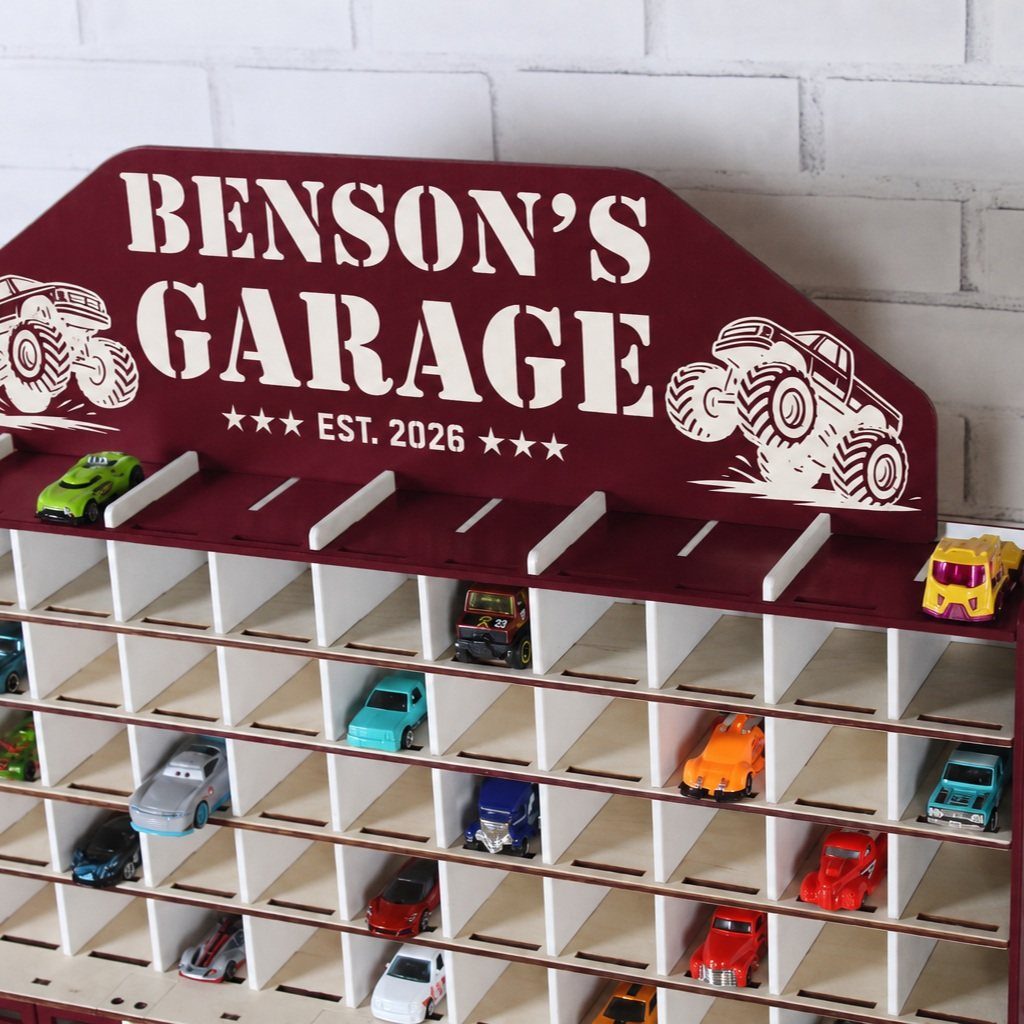
Small shops reward small builds, and a toy car display rack is a good example: a narrow shelf, a printed sign across the top, and room for a handful of cars.
It takes little lumber, so scraps from bigger projects can cover it.
Personalizing the top with a name and year, as this maroon sign does, turns a basic shelf into a gift. I’d pick projects like this when floor space is tight and you want a finish in one afternoon.
3. Floating Shelves
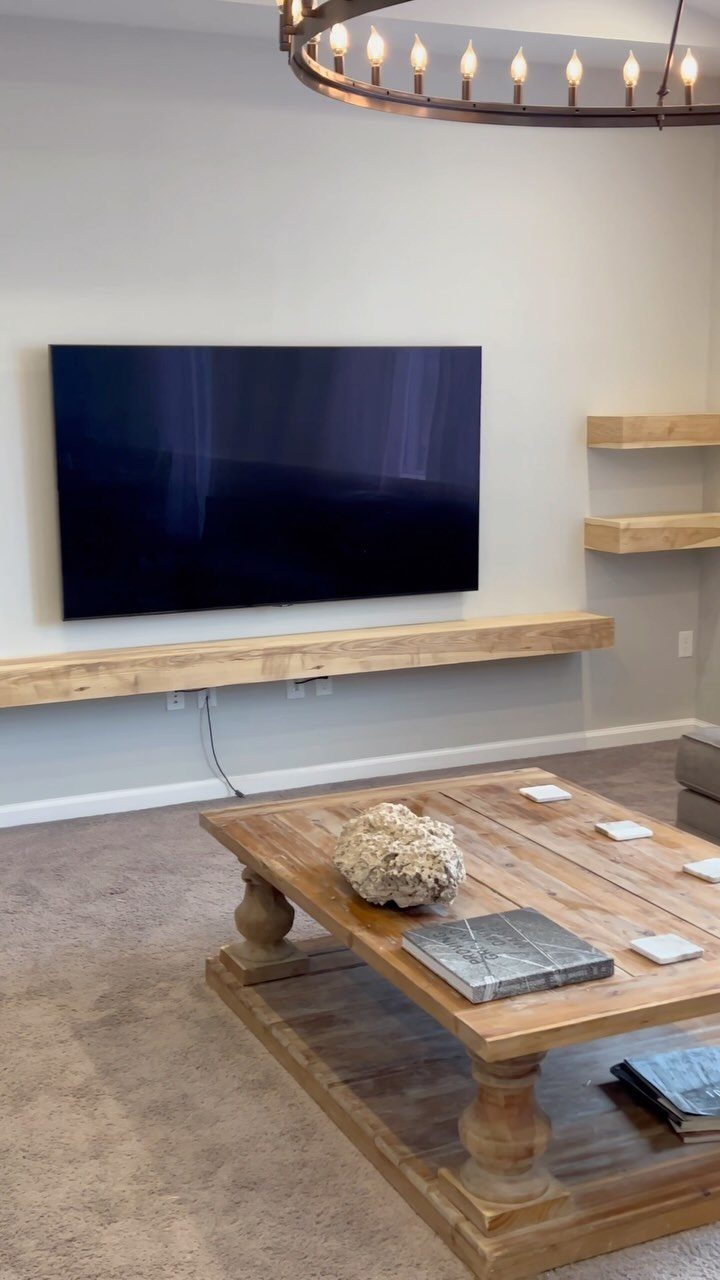
Floating shelves earn their place under a wall-mounted TV, where one long shelf can hold media gear while shorter ones sit off to the side.
Mixing a long shelf with 2 smaller ones keeps the wall from looking like a single flat slab.
Hidden brackets decide how the shelf gets built, so settle the hardware first, ahead of any saw work. Match the wood tone to the coffee table below for a room that feels tied together.
4. Kitchen Island
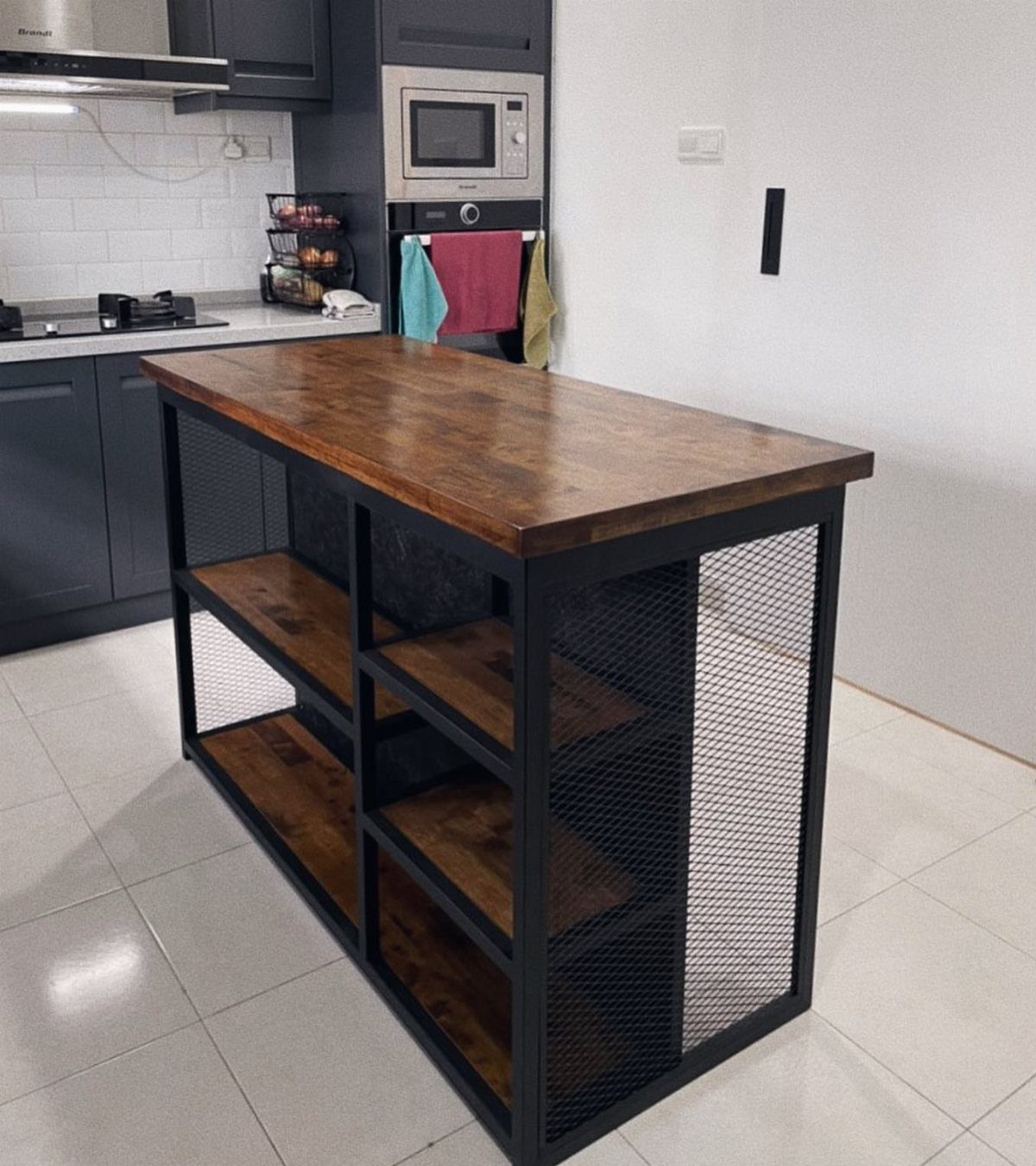
Open shelving under a wood top gives a kitchen island a lighter look than a box of cabinet doors.
A black metal frame with mesh sides keeps pots and baskets visible and within reach, and the open sides also let air move around produce.
A wood top against grey cabinets adds warmth without much effort. Build the top from boards you can handle alone, and let the frame carry the storage.
5. Simple Router Table
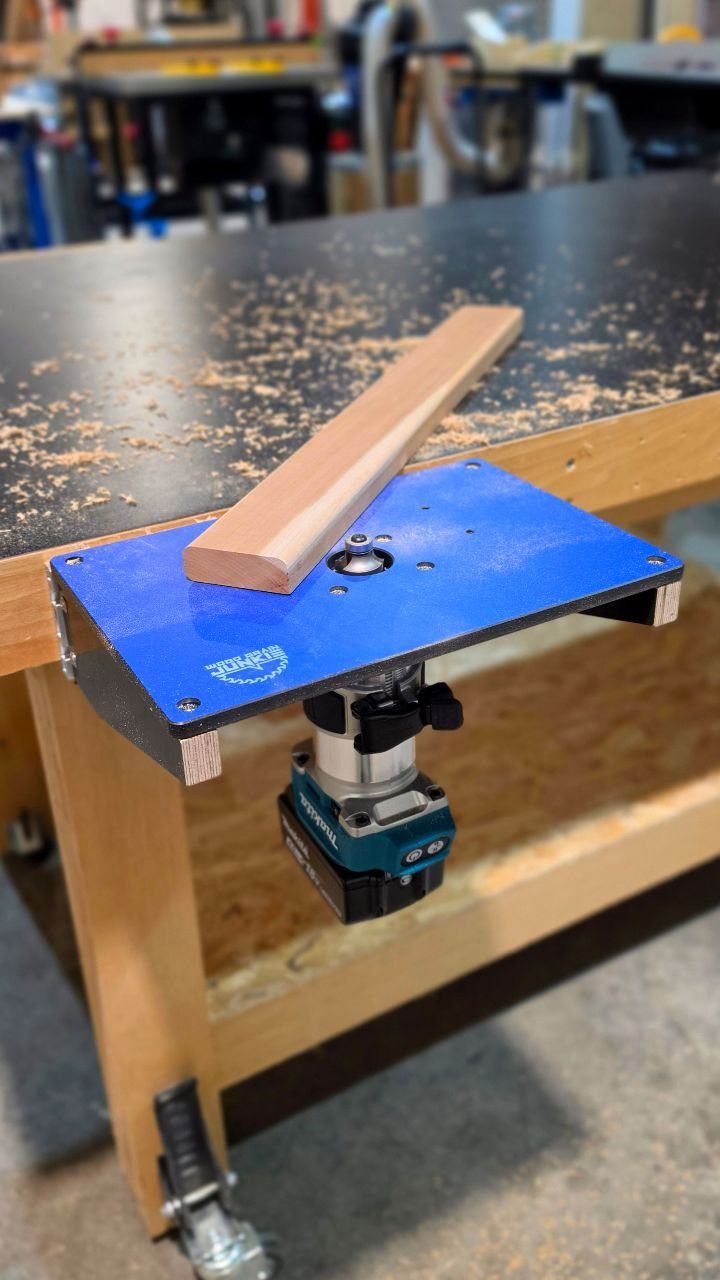
Mounting a router upside down under a flat plate gives you a router table for the price of a plate and a bench.
The blue top here sits on a workbench, so the table needs no floor space and can be clamped down only when you need it.
For a first build, I’d keep it simple. Hold the workpiece flat against the plate as you feed it past the bit.
6. Miter Saw Station
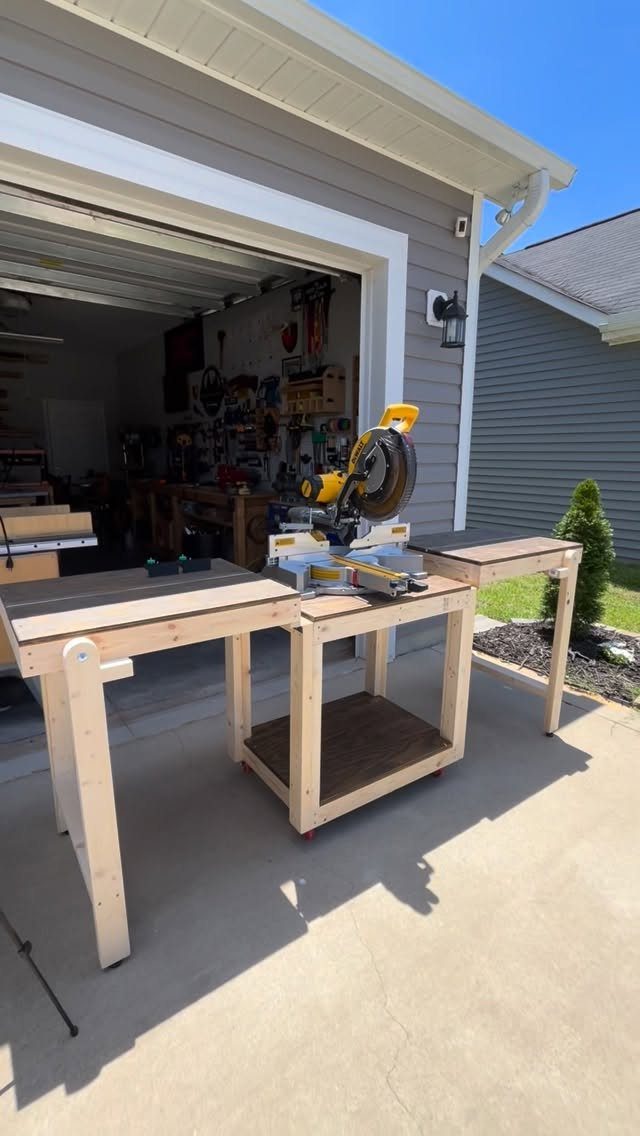
Wings on both sides of a miter saw hold long boards level, and shelves underneath turn dead space into storage. This station is built for a yellow saw, with room on each side for stock.
Build the saw’s base to suit your saw before anything else. A station on a driveway or in front of a garage door also means rolling it out for dusty cuts, so casters are worth planning in.
7. Shop Organization
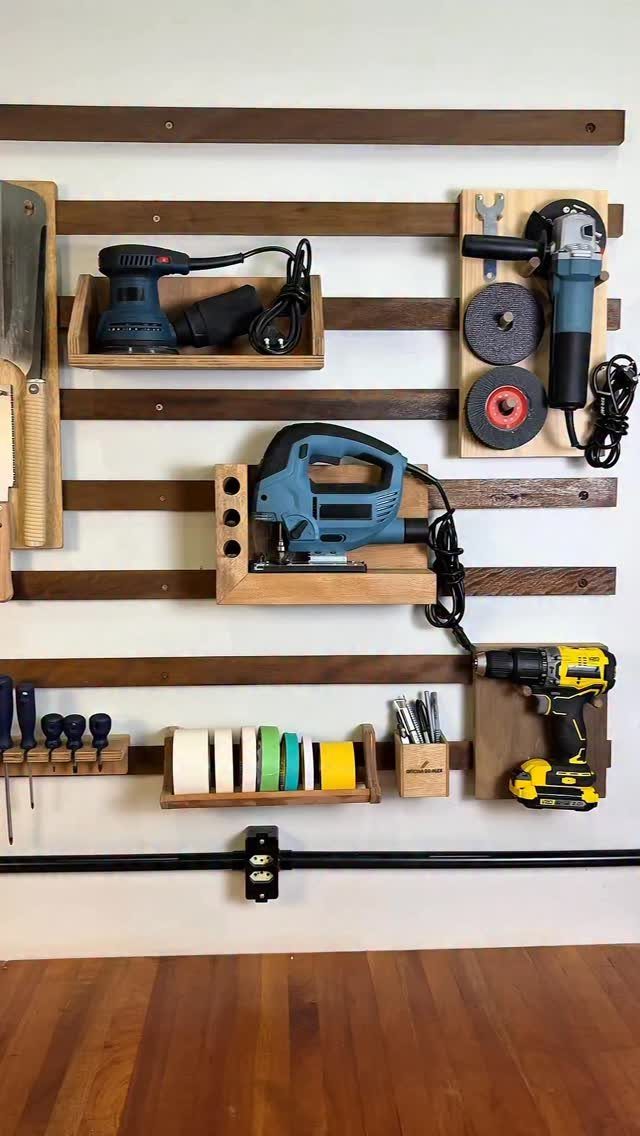
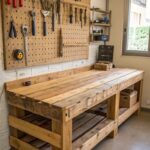
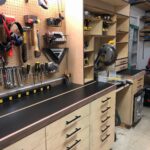
A slat wall lets every tool hang where you can see it, which beats digging through drawers when floor space is tight.
Slat walls hold a mix of power tools, hand tools and sharpening stones, as long as each holder is cut to fit the tool it carries.
Cut each holder to fit the tool it carries, and put the tools you grab most at arm height. Build a few holders first and move them around before committing to a layout.
8. Reclaimed Industrial Side Table
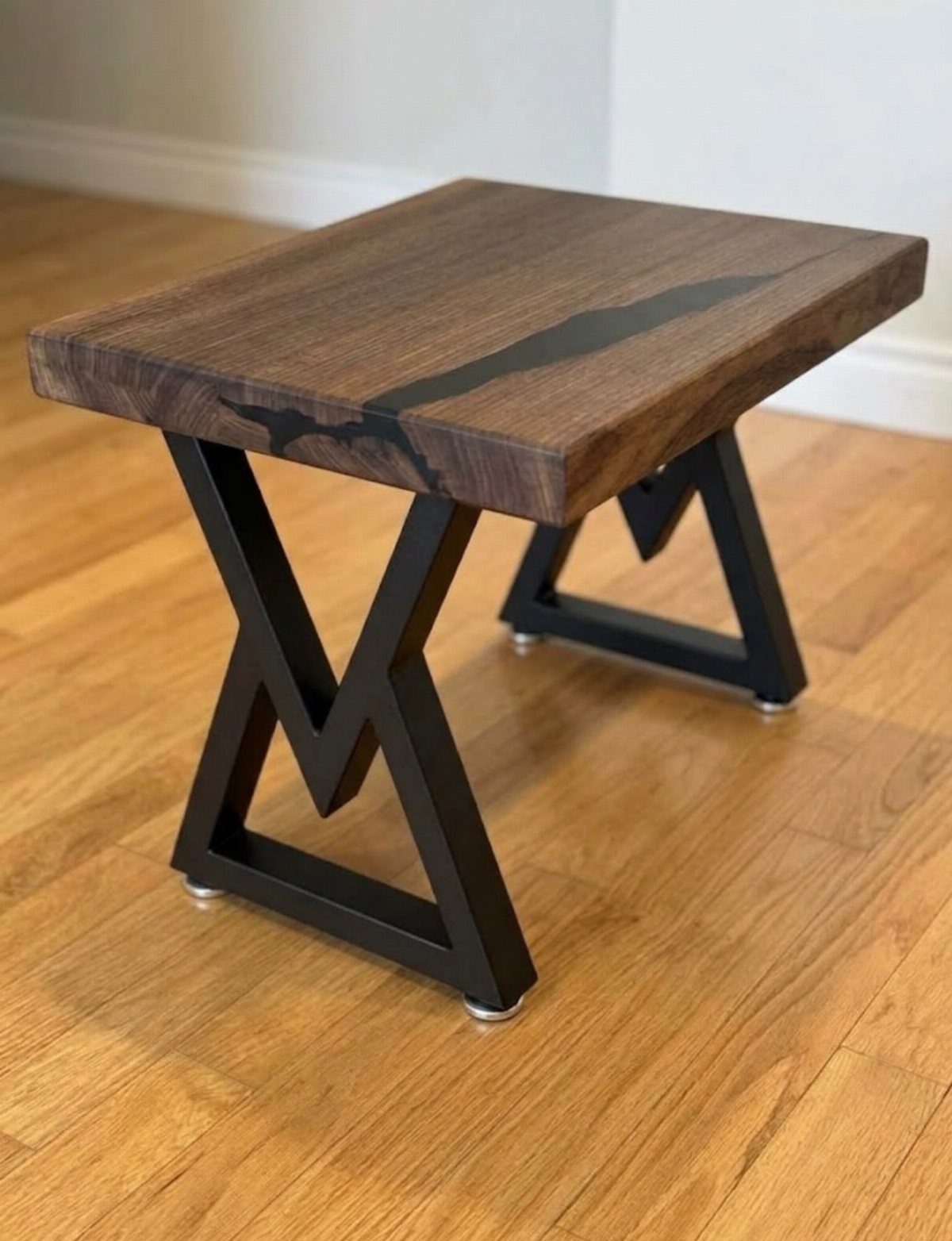
Black metal X-shaped legs under a thick, dark wood top give a side table an industrial look, and a resin river down the middle makes it the piece people notice.
Reclaimed wood suits the look because rough, uneven character reads as intentional here.
A table this small can be built from one good slab, so a single afternoon of shaping and finishing is realistic. Pour the resin with care, since it is the step that is hardest to undo.
9. Writing Desk
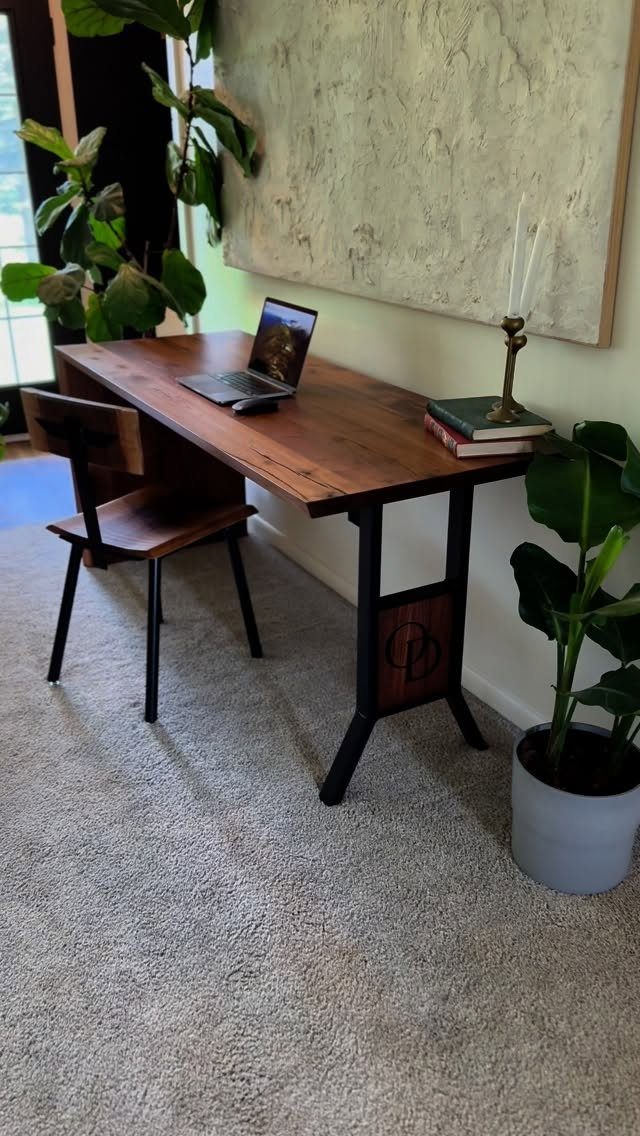
A small writing desk with clean lines asks for very little: a top, a set of metal legs, and a chair in matching wood. The slim shape fits a corner beside a plant and a laptop without crowding the room.
I’d keep the top plain and let the dark wood grain do the work. Metal legs save you from cutting joinery, which makes this a good build for an afternoon and a modest budget.
10. DIY Raised Garden Bed
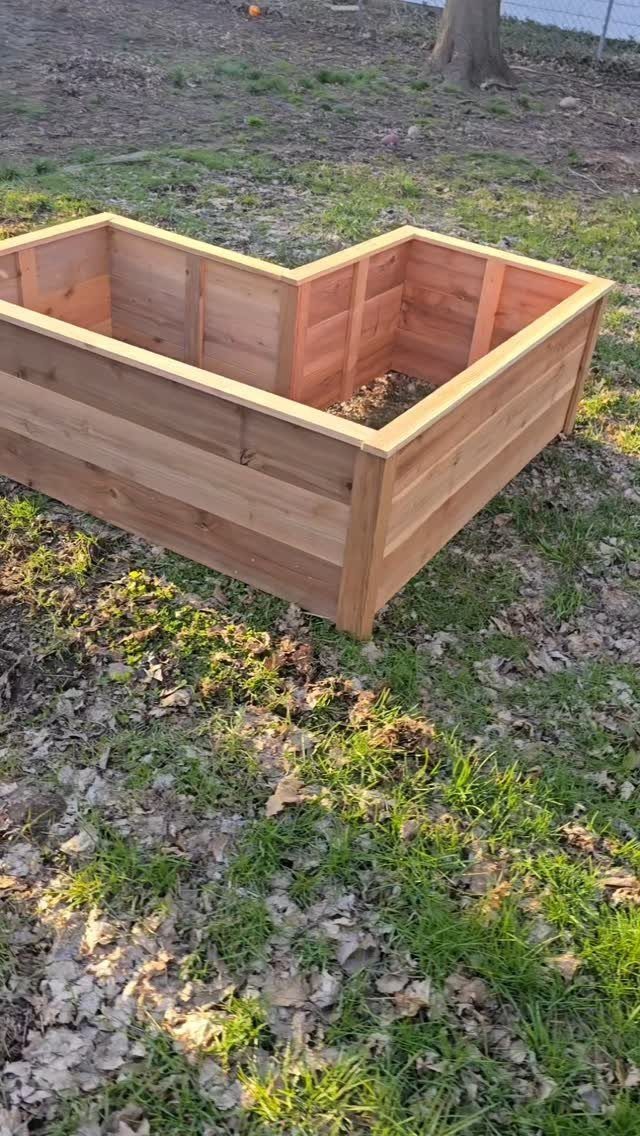
Raised beds are about the easiest outdoor build there is: boards, screws and a flat spot on the lawn.
This L-shaped version with a central divider gives you separate planting sections, so one half can hold a different crop than the other.
Cut the boards to length, join the corners, and add the divider last so you can check the fit. Set the frame on the grass before filling it with soil.
11. Napkin Holder
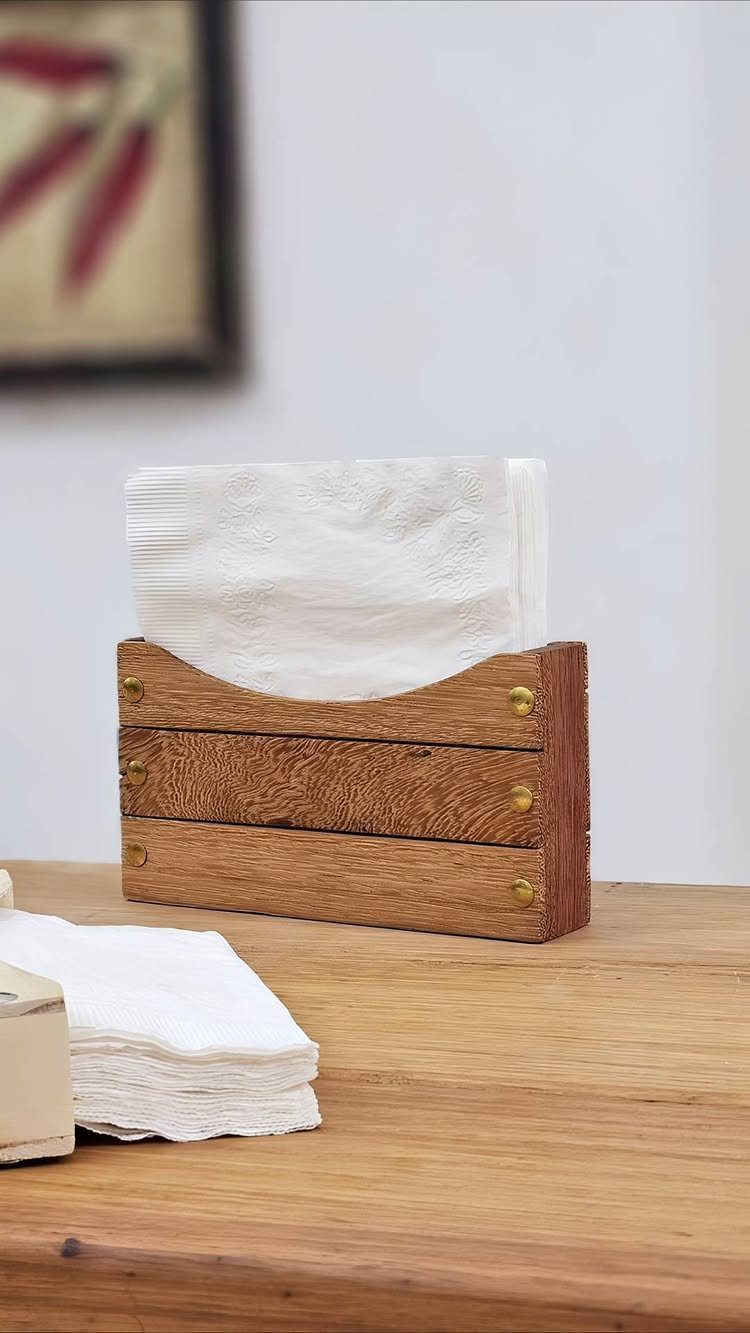
Napkins stay upright and tidy in a wooden holder, and a few gold fasteners add a small bit of shine against the wood. It is a small build, so offcuts from a larger project can cover the whole thing.
Measure your napkins first, then size the opening to match.
Fold one, hold it against the wood, and mark from that. Sand the edges smooth, since hands will brush them at every meal.
12. Salt Cellar
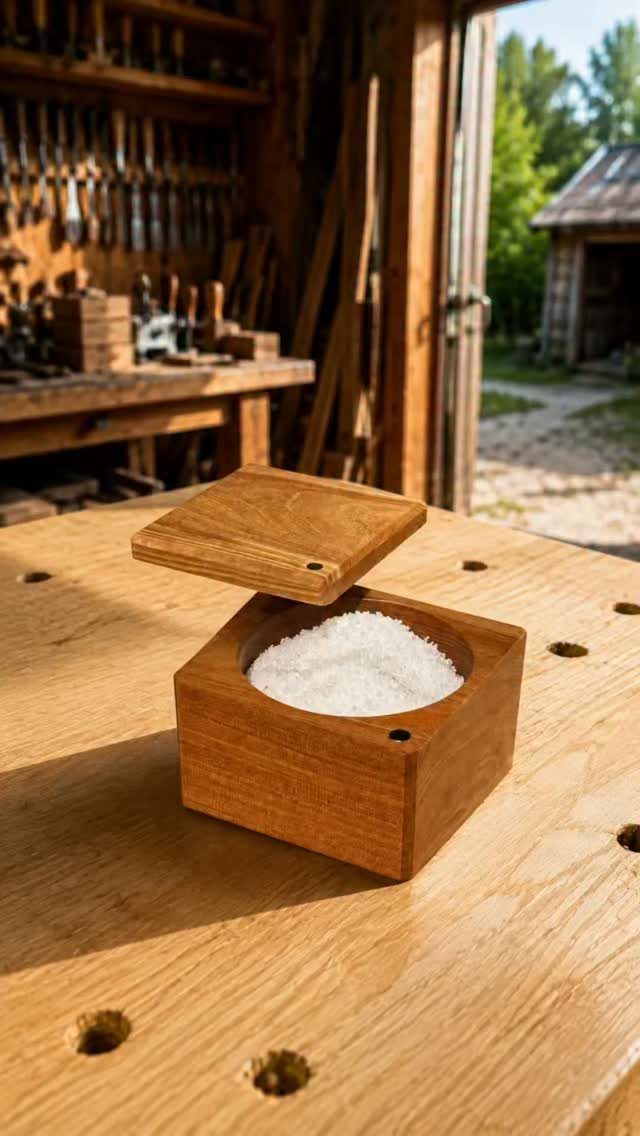
A salt cellar is a small, square box with a lid, sized to sit by the stove and be reached with a pinch. Its size makes it a fine place to use a good scrap you were saving.
I’d make the lid fit loosely enough to lift with one finger. Because it holds food, choose a finish labeled food safe, and let it cure fully before filling it.
13. Scrapwood Jewelry Boxes
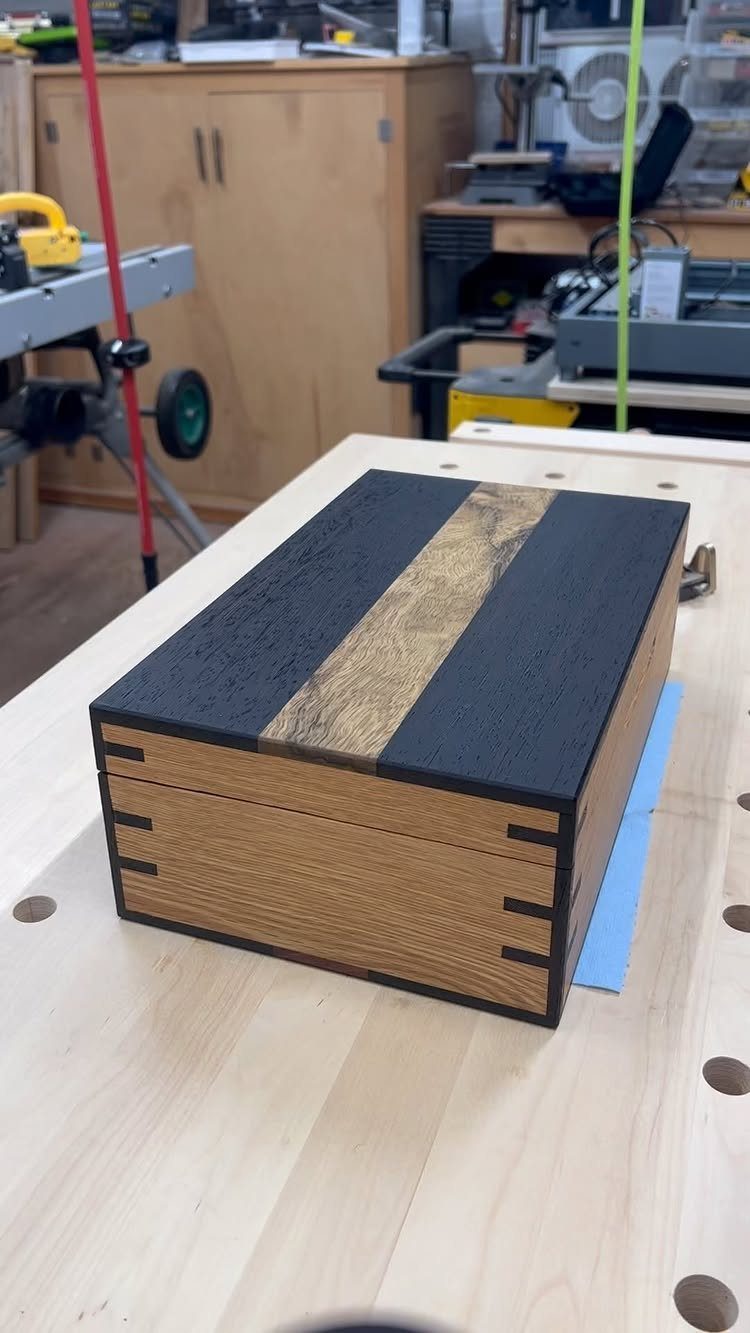
Striped boxes like this one, with a dark lid over light sides, are a good use for offcuts too nice to toss. Small pieces are all a jewelry box needs, so the lumber costs next to nothing.
Pair a dark wood with a pale one so the contrast does the decorating.
I’d glue up the stripes first, then cut the box parts from that panel so the pattern runs cleanly around the sides. Sand the lid last; it’s the part everyone touches first.
14. Pizza Peel
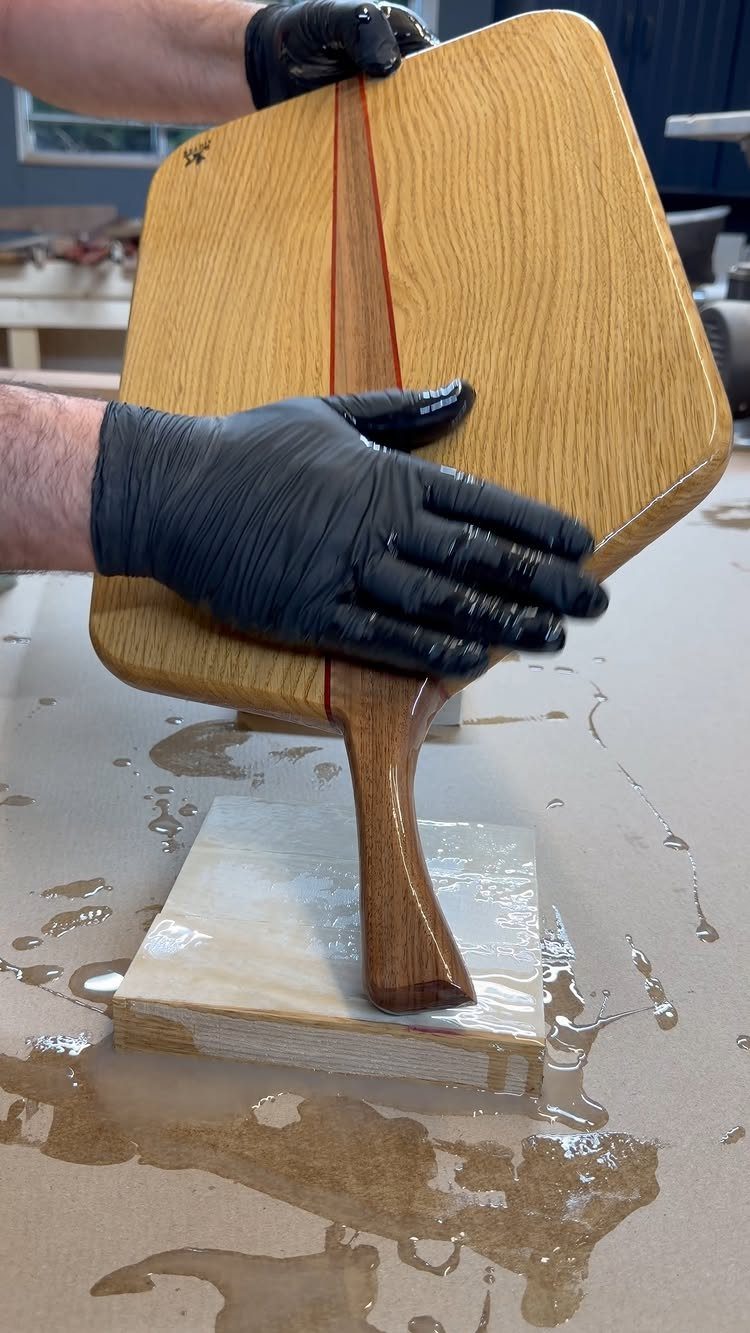
Sliding a pizza from a counter to a hot oven takes a flat, thin paddle, and a wooden peel is the simple tool for it.
Wear gloves while sanding and shaping the long handle and wide blade, since both give splinters plenty of edge to work with.
Taper the blade edge toward the front so it slips under a pizza without pushing it. A colored stripe, red for example, is cheap decoration and makes the peel easy to spot on a crowded hook.
Because it touches food, finish it with something labeled food safe.
Shop Organization Tips
Vertical space is the cheapest square footage in any shop, so start by clearing the walls before buying another cart or cabinet.
For hanging storage, I’d pick French cleats over pegboard or fixed hooks every time. Each cabinet or rack carries its own cleat, so you can lift it off and rehang it somewhere else when your tool collection grows.
That flexibility matters more than it sounds, because a layout that works with 10 tools rarely works with 30.
A tool "book" is a clever way to pack in storage: plywood "pages" cut from 1/2" or 3/4" stock, spaced about 4" apart on horizontal 2x4s and swung open on 3" door hinges.
It packs a lot of tools into a small wall footprint.
Beginner Woodworking Tools
A miter saw and a drill cover most of what a first project asks for: square crosscuts and clean holes with screws driven straight.
Add basic hand tools, such as a tape measure, a square, a hammer and clamps, and you can start building.
A random orbital sander should come soon after. Anyone who has sanded a whole project by hand knows how much time it saves, and it leaves a more even surface for finishing.
Once you own one, a simple rack to sort sandpaper discs by grit keeps the sanding station tidy. This one goes together quickly, which makes it a friendly first build for someone just starting out.
Free plans with step-by-step instructions and diagrams are easy to find online, and a quick read of them first saves a lot of recutting. A solid plan prevents more mistakes than any single tool.
Gift Ideas from Wood Projects
A handmade wooden gift carries your time and skill, and that is why people keep it on a shelf instead of in a drawer.
Cutting boards are the classic handmade gift, and any skill level can make a good one.
Other good options include a ring box, a custom sign and a wireless speaker kit. Free plans exist for each of these, so you can follow a tested layout instead of guessing at dimensions.
Pick the project by the recipient, not by what looks impressive. A simple piece sized and finished with care beats a complicated one that never gets done.
Frequently Asked Questions
What woodworking projects are selling right now?
Furniture and home decor pieces are the popular sellers. Small items like cutting boards, custom signs, ring boxes and simple shelves fit that group and are friendly builds for a first-time maker.
Many of these builds have free plans online, complete with diagrams and cut lists, which means I’d rather start from a layout someone has already tested than work out dimensions on my own.
What does every woodworking shop need?
Every shop needs a few essential tools and an organized workspace. Next on my list is a random orbital sander; it cuts hours from hand sanding and leaves a flat, even surface that takes finish well.