A painted dresser can be a hardware swap or a full afternoon of hand-painting a floral mural, and the fact that sorts the ideas is whether you want to paint a design yourself or only borrow one with a stencil or decoupage.
Pulls, stencils and tape-off borders need a steady hand and little else, while decoupage lets a printed storybook scene stand in for the brushwork.
1. Dresser with New Hardware
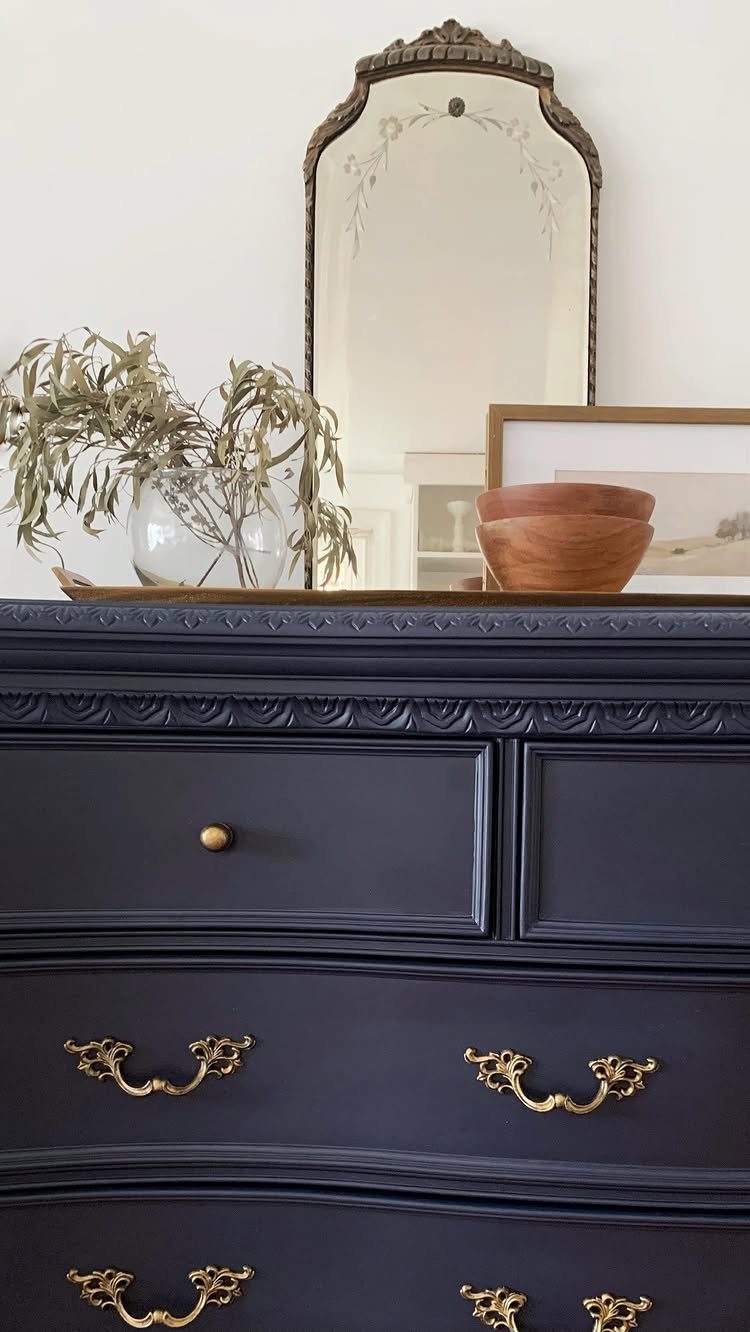
Swapping the pulls is the cheapest change you can make to a painted dresser, and a deep navy shows why. Ornate gold handles stand out against a dark finish, so the hardware does the decorating while the paint stays simple.
Match the new pulls to the old screw holes to skip drilling.
If the spacing differs, fill the old holes with wood filler, sand them flush, and paint before drilling new ones. I would pick a warm gold over a bright brass for this look.
2. Decoupage Painted Dresser
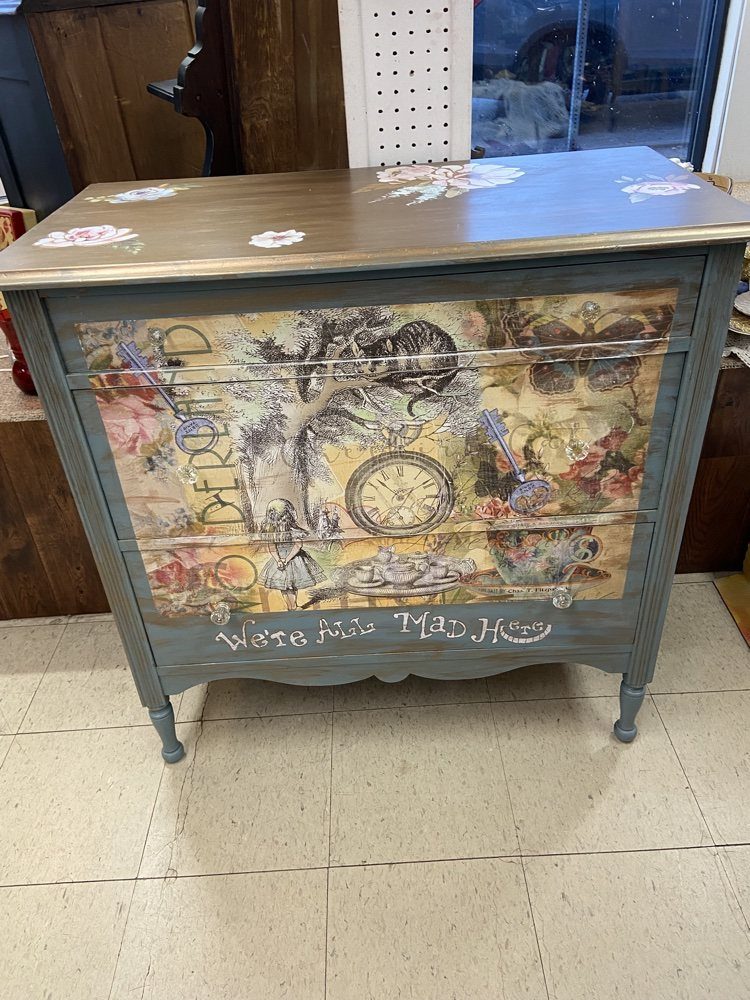
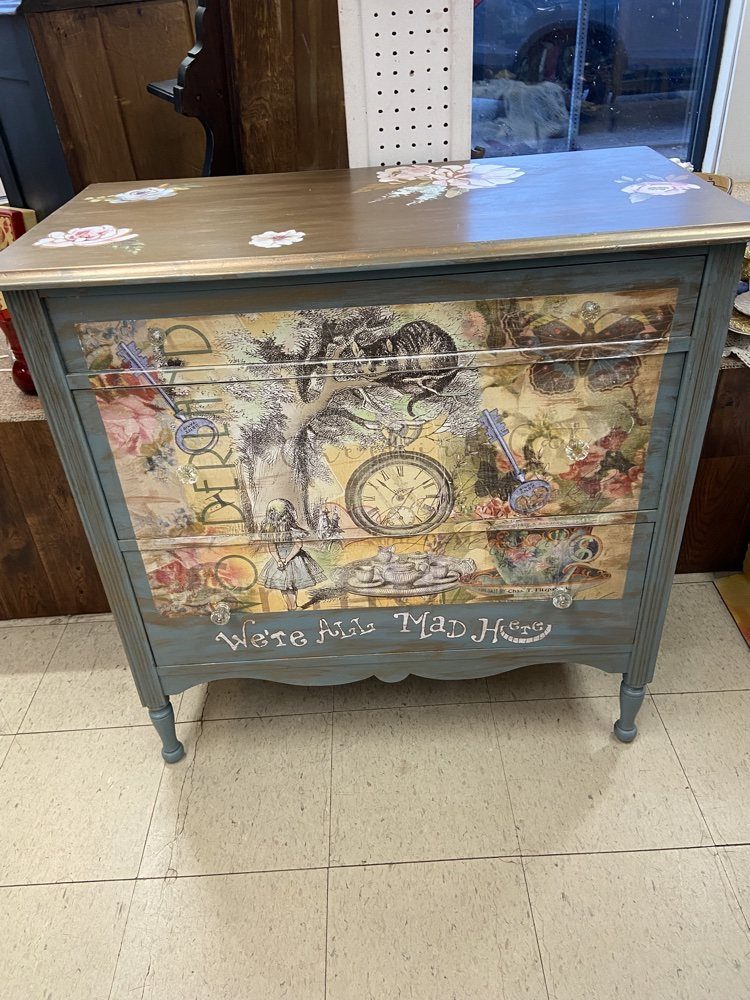
Decoupage lets you put a full illustration on a drawer front without painting a single brushstroke of it. Paint the dresser first, then glue a printed image on top and seal it under several coats of decoupage medium.
A large scene across the drawers, like this storybook one, needs the image cut or printed in sections that line up across the gaps.
Cut along the drawer edges so the drawers still open cleanly. Smooth out air bubbles with a soft brush as you go, working from the center outward.
A short painted phrase along the bottom ties the image to the dresser.
3. Stenciled Painted Dresser
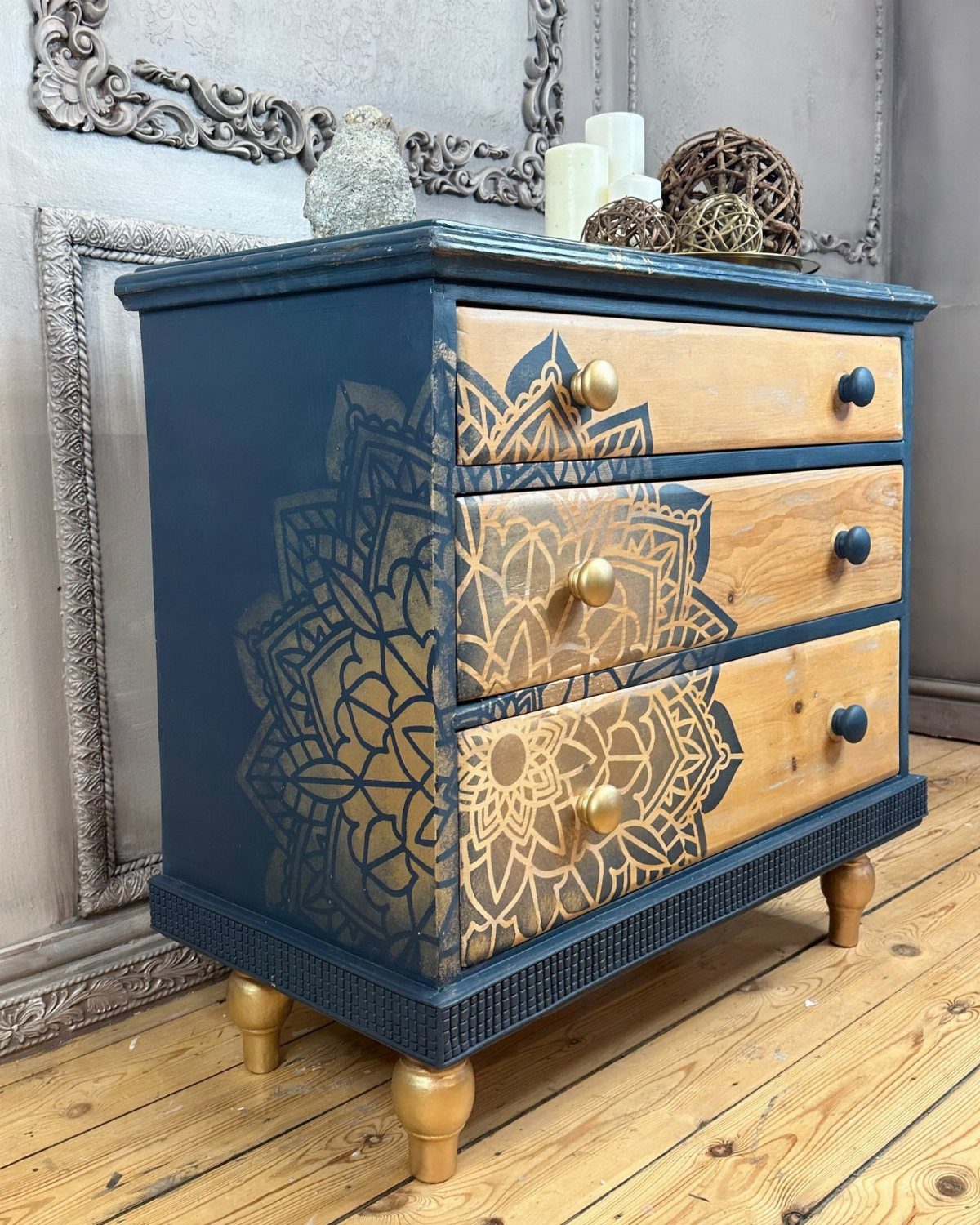
Stenciling a gold mandala onto bare wood drawers gives a plain dresser a custom look for the price of a stencil and a small pot of paint.
Tape the stencil down firmly and load the brush lightly.
Dab it off on a paper towel before touching the wood, because too much paint is what causes bleed under the edges. Gold knobs repeat the pattern’s color, which I like.
4. Ombre Painted Dresser Drawers
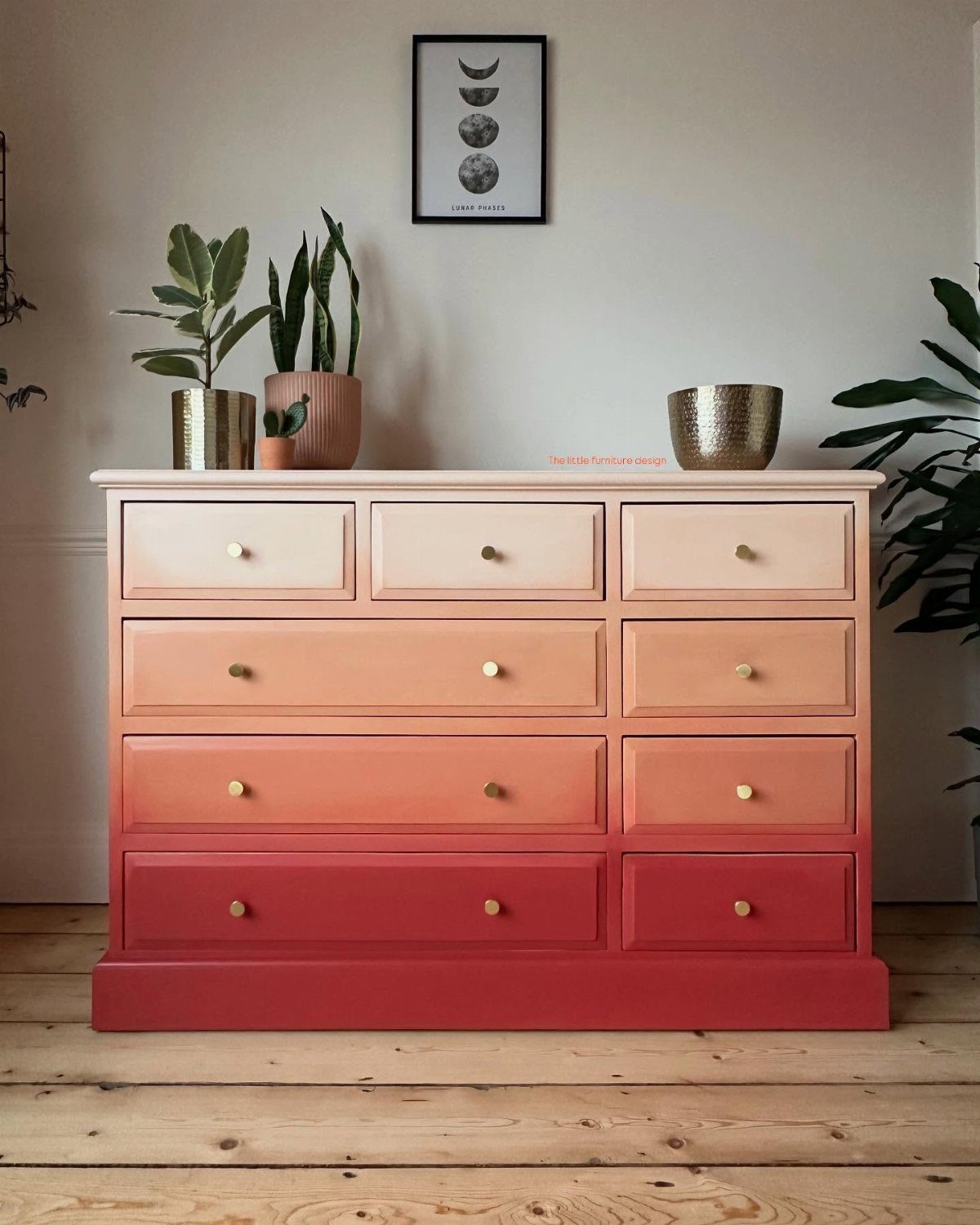
Ombre drawers turn a stack of drawer fronts into a gradient, running here from cream through pink to deep red. Each drawer gets its own shade, so the color reads as one sweep from top to bottom.
Mix your shades in small steps: start with the lightest cup and add a little of the darkest paint each time, one cup per drawer.
Mix more than you think you need, since matching a blend later is hard. Paint all drawers in the same coat order so the finish stays even.
Gold knobs suit the warm palette well.
5. Color-blocked Painted Dresser
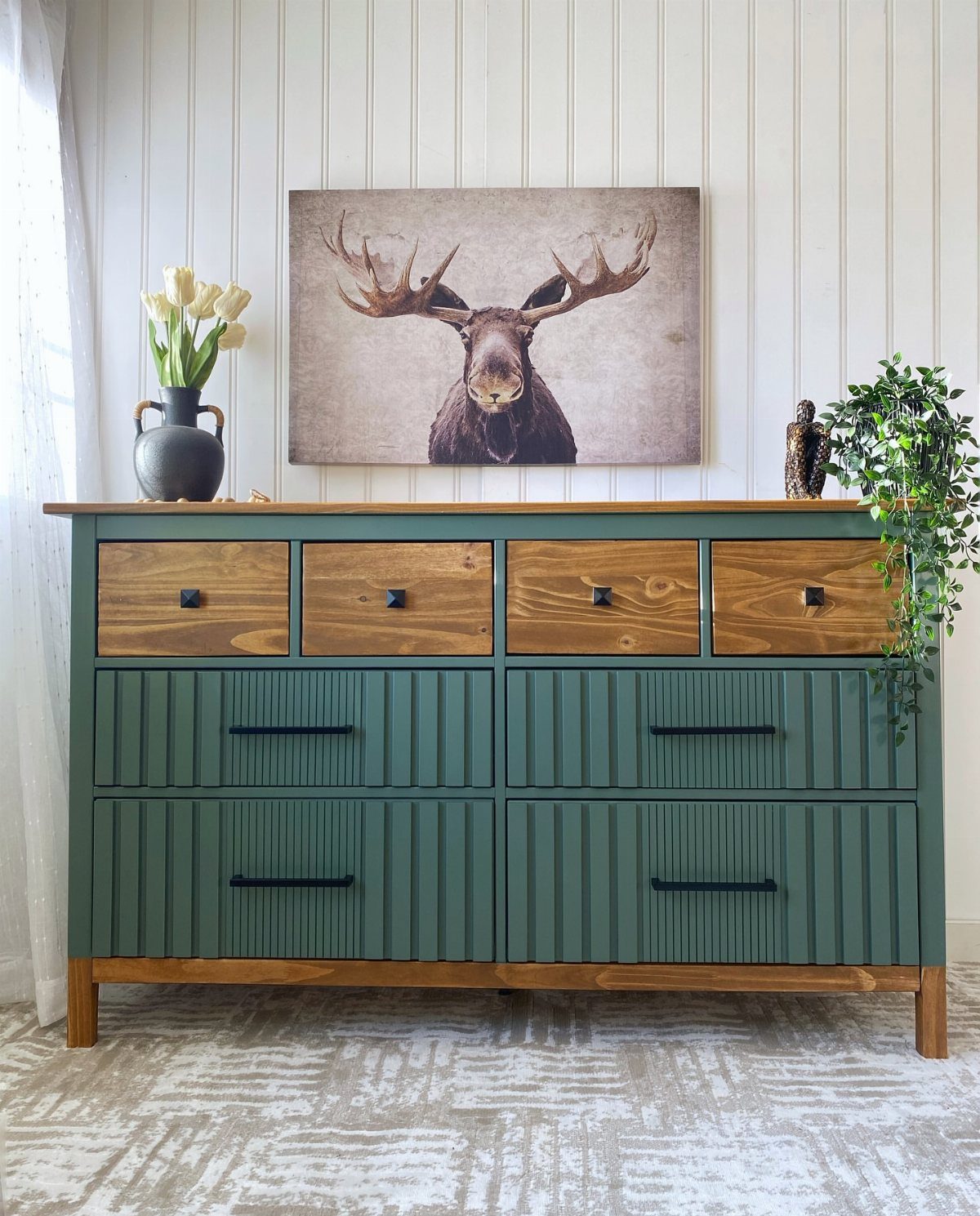
Color-blocking splits a dresser into solid zones, and leaving some of the wood bare is the easiest way to do it.
Paint the body green and leave the top drawers in natural wood: the grain stays visible and you cover less surface, so a quart goes further.
Mark the dividing line with painter’s tape and press the edge down with a fingernail to keep paint from creeping under.
Pull the tape while the last coat is still slightly tacky for a crisp edge. Sand the bare wood lightly and seal it so it matches the painted section’s sheen.
6. Painted Dresser with Unique Drawer Pulls
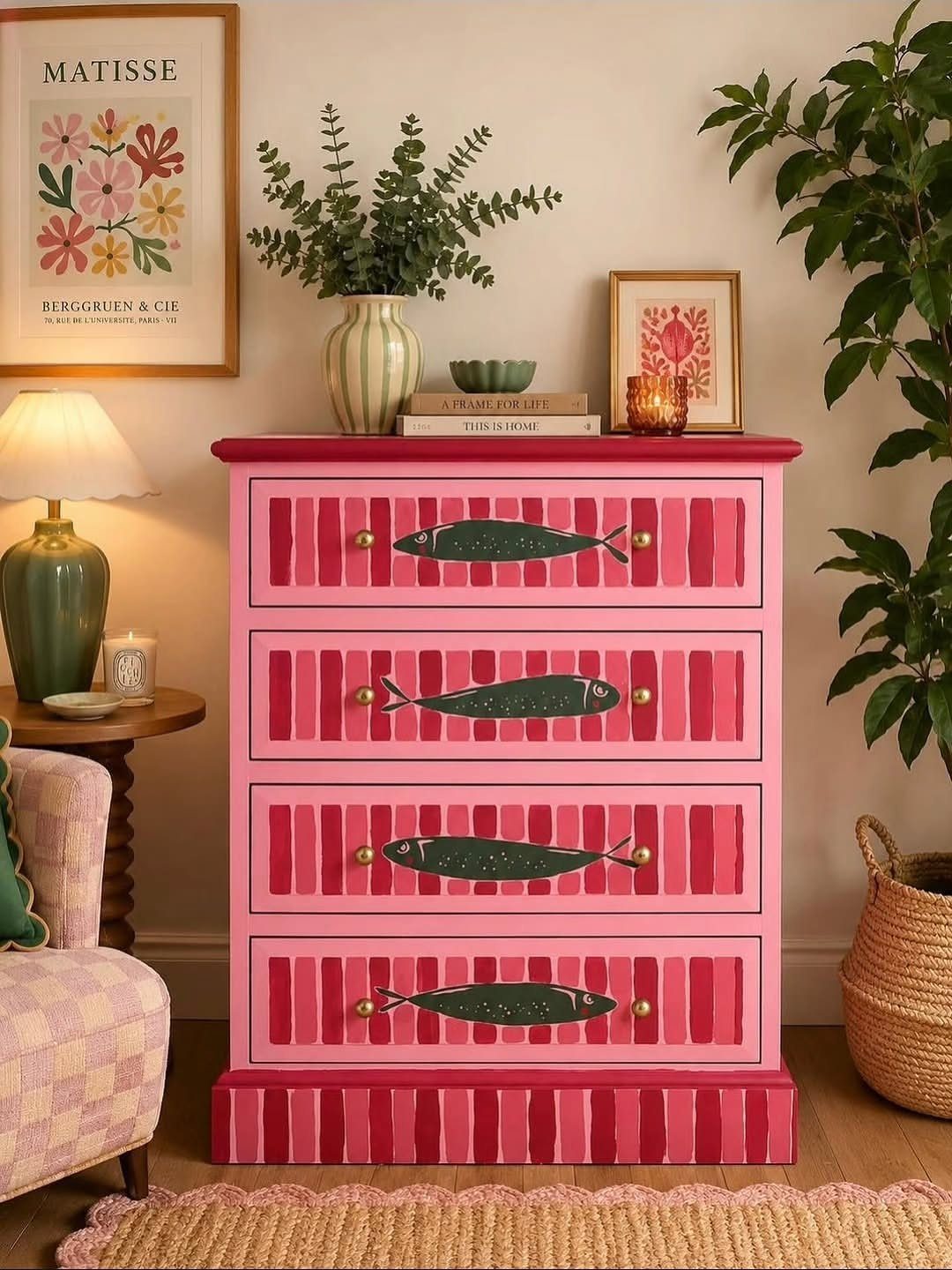
Fish-shaped pulls are a cheap swap with a lot of personality, and against pink stripes they make the dresser the focal point of the room.
Pulls in dark green with gold accents contrast well with a light painted drawer front, so they read clearly from across the room.
Choose pulls that fit your existing hole spacing, or plan to fill and redrill.
Paint the stripes first, let them cure, then attach the hardware so nothing gets splattered. Tape off each stripe edge carefully; stripes forgive nothing when the lines wobble.
For a quieter dresser, use just a few novelty pulls among plain ones.
7. Mountain Silhouette Painted Dresser
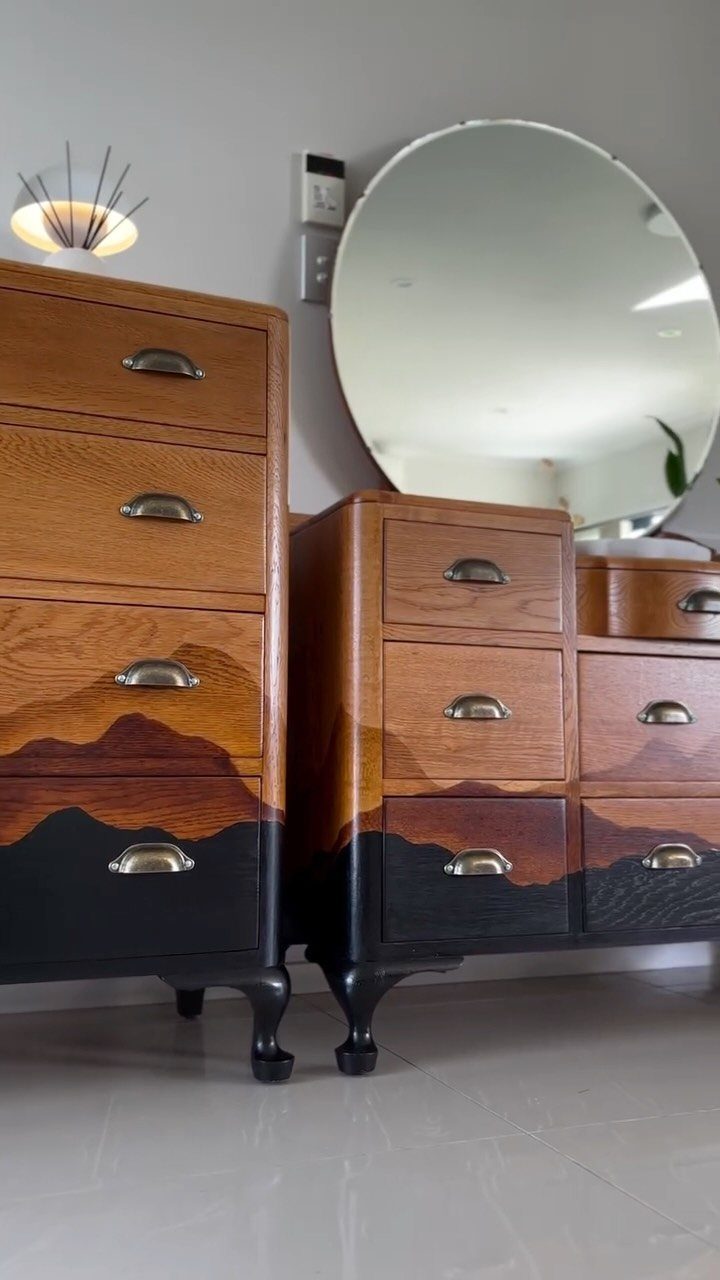
A wavy mountain ridgeline is the border between a matte black base and bare wood, and that one painted edge is the whole design.
Sketch the ridge in pencil first, then run painter’s tape along the line and press it down before you paint. Peaks of different heights look more natural than even zigzags.
Matte paint with no gloss on top suits this look.
8. Floral Mural Painted Dresser
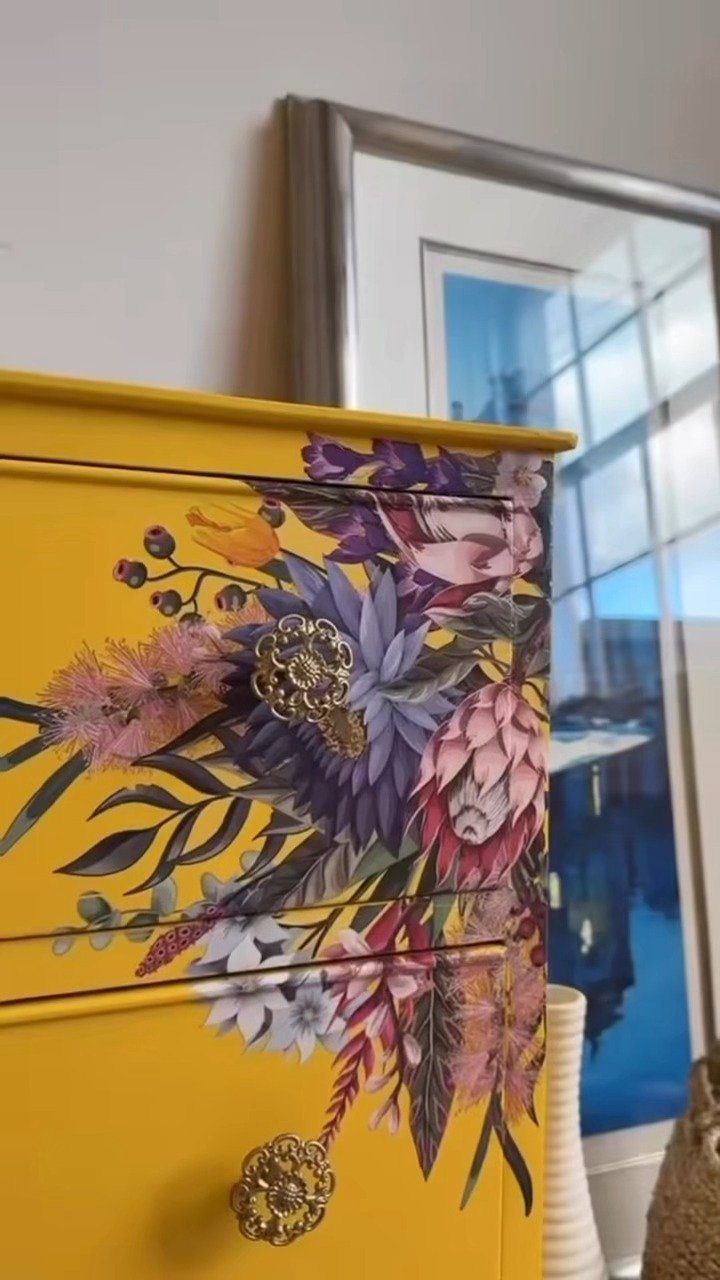
A floral mural paints a full bouquet across the drawer fronts, and a yellow base keeps every bloom bright.
Brass or gold knobs suit a warm painted background, so pick ones with some detail and let the mural stay the main event.
Paint the base coat and let it dry fully.
Then sketch the flowers lightly in pencil so the stems and leaves line up across the drawer gaps. Block in the large petals first, and add the small details last with a fine brush.
Hand-painting takes patience, and I would plan on a full afternoon. Craft acrylics in a few colors cost little, which keeps the whole project budget-friendly.
Best Paint Types
Latex and mineral-based paints both lay down smooth on wood furniture, and they’re the two I’d reach for first on a dresser. Both level out well and hold up to the daily opening and closing a dresser gets.
Skip the cheapest cans on the shelf. Budget paint tends to leave brush marks and wears faster on drawer edges, which is where a dresser takes the most abuse.
A clean, crisp white like Benjamin Moore’s Chantilly Lace gives a bright cottage look and is a safe base if you plan to add color or hardware later.
Sanding Before Painting
Sanding helps, but it is not always required. A dresser that’s already painted or sealed may not need sanding at all: scrub off the grime, then roll on a bonding primer.
Clean first, whatever you decide. Hand oils and furniture polish keep paint from gripping, so wipe every surface down and let it dry before the primer goes on.
Bare or glossy wood is where I would still reach for sandpaper. A light scuff takes the shine off and gives the primer something to grip.
Two coats of paint over the primer usually gives solid coverage, so plan on that rather than one heavy coat.
Frequently Asked Questions
What’s the best way to repaint a dresser?
Wipe down every surface before any paint goes on; skin oils and furniture polish leave a film that paint slides right off.
Primer comes next, and a bonding formula is the one to grab for a dresser with old paint or a sealed finish, while bare or shiny wood gets a quick pass with sandpaper first.
Over the primer, 2 coats of quality latex or mineral-based paint cover well, whereas bargain paint shows brush strokes and chips first along the drawer edges.
Is it better to brush paint or spray paint wood furniture?
Brushing is the better pick for most dressers because it gives you more control and a good finish.
A brush also suits the detail work in many designs, like taping off stripes, stenciling with a lightly loaded brush, or adding fine details to a hand-painted mural. Whichever you use, prep matters more than the tool.