The projects here run from a small wood slice with flat brown pine silhouettes to a long plank mountain scene, and a live edge slab forest and an etched plank sit between them.
Your pick comes down to how much practice your pen hand has, since the silhouettes on a wood slice forgive a wobble and the fine-tipped branch work on the etched plank does not.
Pine itself is resinous and scorches unevenly, so a first-timer should try basswood or birch before committing to the board they love.
1. Live Edge Slab Pine Forest
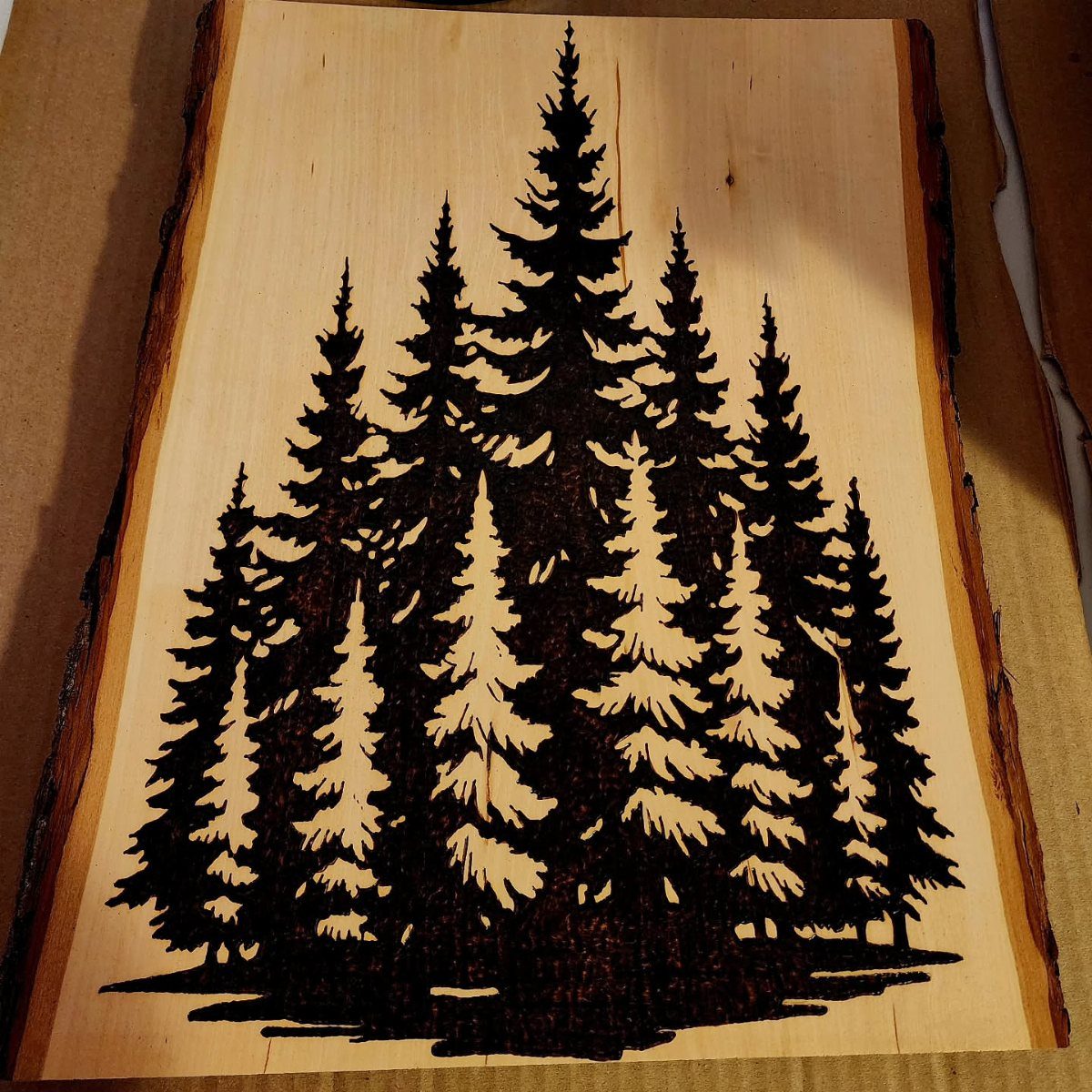
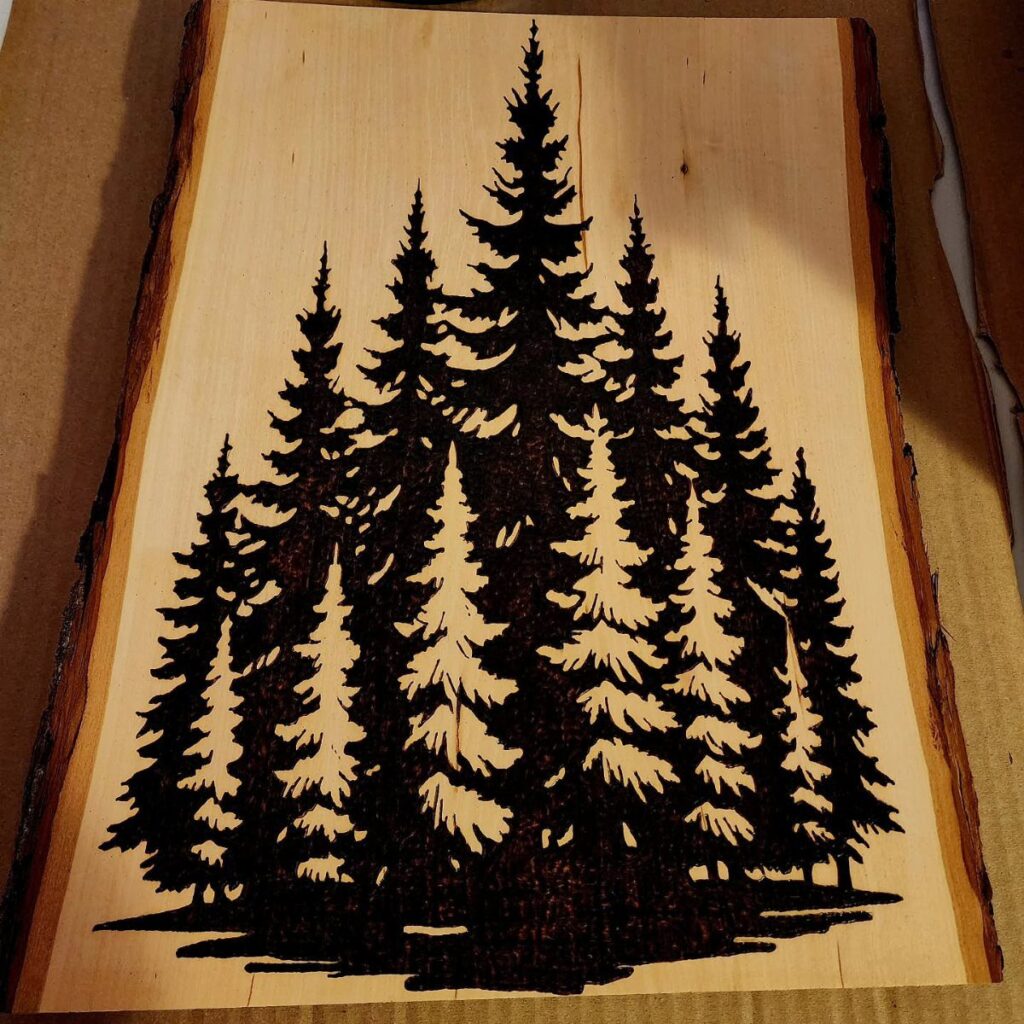
A dense stand of pines reads best when the trees overlap and the burn runs from dark to light.
Press harder or slow down for the charred foreground trunks, then lift the pen for the thinner trees behind them. That contrast gives the forest depth without a single drop of paint.
Light wood is what makes this work, because dark char shows up clearly against it.
A slab with live edges already looks like a woodland scene, so I would leave the bark edge untouched and keep the burning inside the flat face.
Lay out the tree line with a soft pencil before the burner heats up. Cheap pine boards are fine for practice before you commit to the slab.
2. Wood Slice Pine Tree Silhouettes
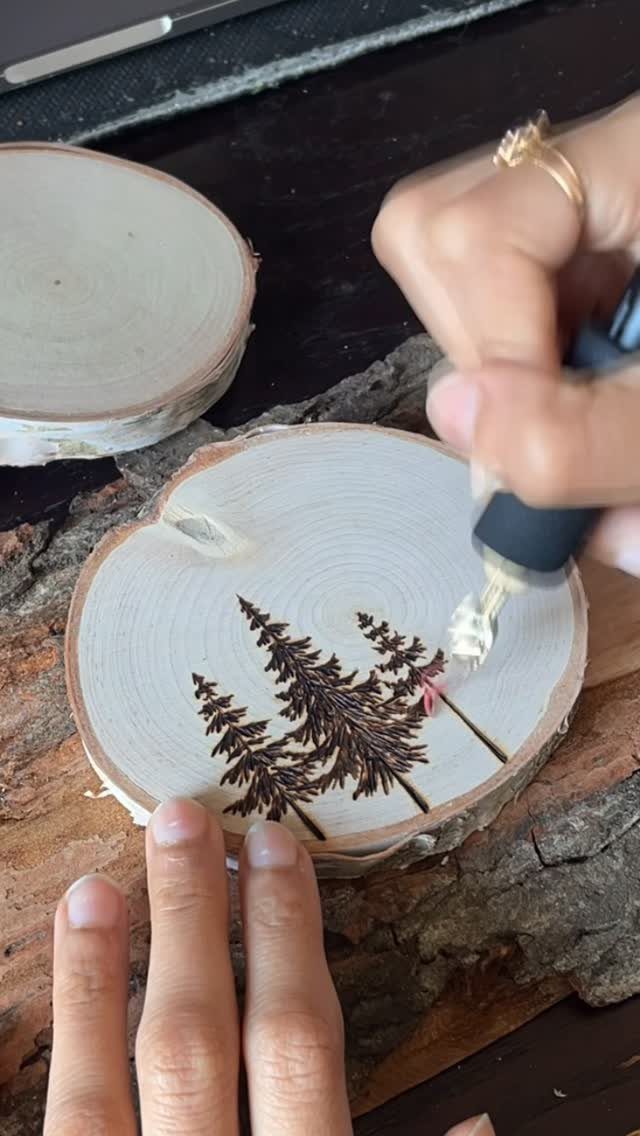
Small round slices are the friendliest place to start with burned pines. The surface is compact, so a few triangular silhouettes fill it, and the bark edge frames the design for you.
A basic pyrography pen is enough for this.
Draw your trees in pencil, then burn the outline and fill the shape with slow, even strokes. Fast passes leave pale streaks, so I slow down and let the tip do the work.
Sand the slice smooth before you start, since rough grain catches the tip and wanders off your line. Dark brown silhouettes need no shading, which keeps the whole thing doable in an afternoon.
3. Mountain Landscape on Wood Plank
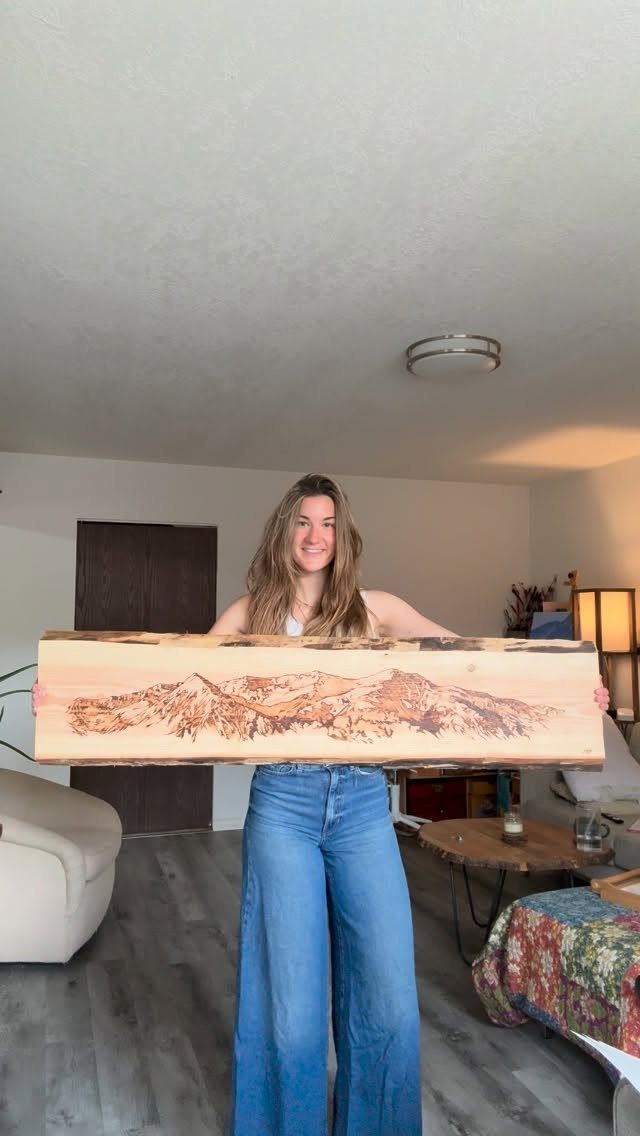
Mountains and pines on a long plank give you room to build a real scene, with ridgelines in the back and trees in front.
Burn the mountains with light, thin lines and save your darkest, heaviest strokes for the pines closest to the viewer.
A rectangular plank suits a wide composition better than a square one. Lay out the horizon and peaks in pencil before touching the pen, because a burn mark is hard to take back.
Of all the burns here, a mountain scene eats the most time, so plan on more than one sitting. For a first try, I would keep the mountains to 2 simple ridgelines.
4. Etched Pine Trees on Plank
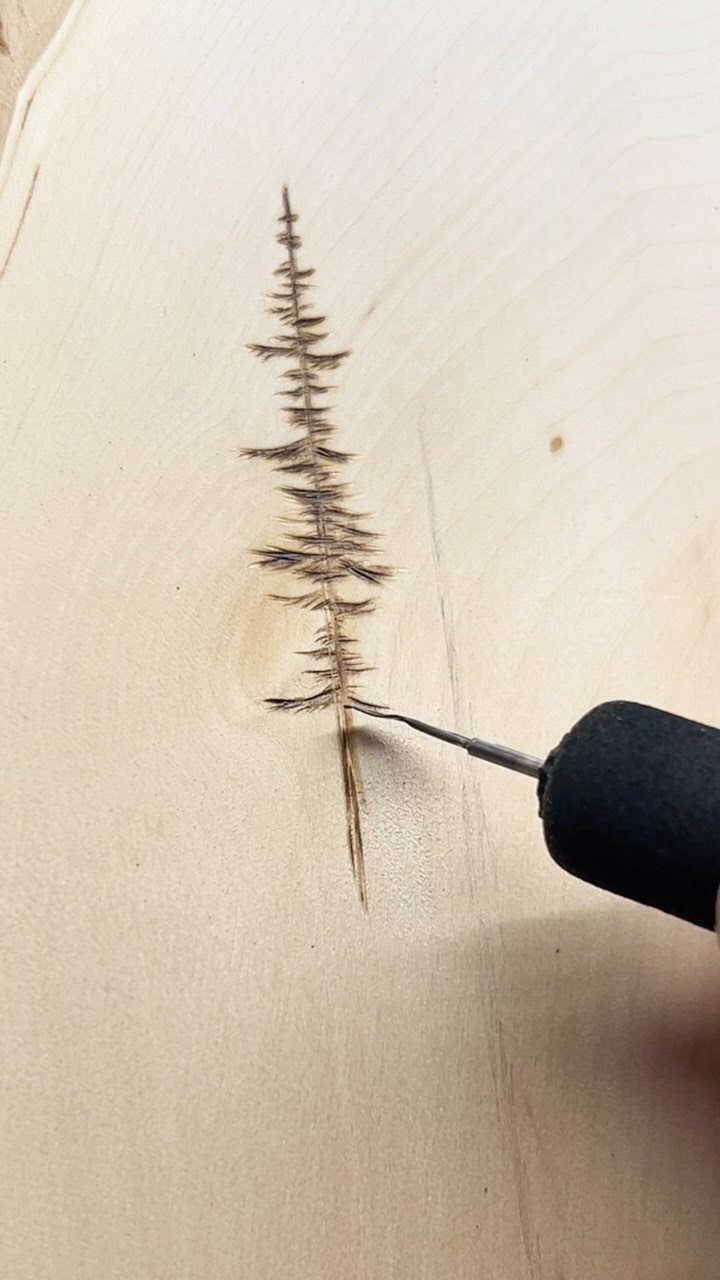
Detailed pines come from the pen tip, not from the design. A fine tip lets you burn short angled strokes for branches, so each tree has layered tiers instead of a flat triangle.
Smooth wood matters most here.
Sand the board well so the tip glides and the branch lines stay crisp. Trace or sketch your trees lightly in pencil, then burn the trunk first and work down the branches.
I would practice the branch stroke on scrap before touching the good board. Keep the pen moving, since pausing leaves a dark blot that will not sand out easily.
Pine Wood Burning Characteristics
Pine is a resinous softwood, and that sap changes how it behaves around heat.
In a fire, it burns fast, pops, throws sparks and makes more smoke than dense hardwoods like oak or maple. That is why it makes a poor choice for a long, slow fire.
A burner pen is a far gentler heat source than a fire pit, but the resin is still there.
Expect some sticky smoke at the tip, so work with a window open or a fan moving air away from your face.
Keep the pen away from anything loose on the bench, such as paper patterns and rags.
Choosing Wood for Pyrography
Sap is the reason softwoods like pine can be tricky for pyrography. Resin pockets scorch unevenly, so a line that behaves on one stretch of board can suddenly change on the next.
If you are new to burning, start on an easier wood.
Basswood and birch are both good first picks. Other woods that work well for pyrography include cherry, aspen, walnut, maple, sourwood and poplar.
You can still burn pine, and I like the look of it.
Just treat it as the second board you try, once you know how your pen behaves on something forgiving. Test a scrap piece first so you can see how the resin reacts.
Any burner will do for trees. A basic, affordable pen is enough to make good art, and trees forgive small wobbles because no 2 real ones match.
Frequently Asked Questions
Are pine trees toxic when burned?
Pine isn’t considered toxic, though the resin in it gives off thicker smoke than a dense hardwood like oak or maple.
Burning it in a stove or fireplace also leaves creosote behind, a tarry film that coats flues and closed spaces and can cause both breathing problems and chimney fires.
Outdoors, with good airflow, the risk is lower. A wood burning pen on pine puts out resinous smoke that clings and stings, so I work with a window cracked or a small fan pulling the fumes away from my face.
Can you burn pine trees as firewood?
Yes, but with caution. Because pine is a resinous softwood, a fire built from it flares up, crackles, spits sparks and smokes heavily, and that makes it a weak choice for an evening of steady, slow heat.
Many people avoid it indoors because of creosote buildup, while an open fire pit with good airflow is a safer place for it.
What’s the worst firewood to burn?
Of the woods covered here, resinous pine is the one to be wary of. It also leaves more creosote behind, so it suits a long, slow fire poorly, especially indoors.