Shop size settles this list faster than budget or skill does.
A workbench with an integrated table saw frees up floor space but takes longer to build than a plain bench, while workshop stools and a mobile cart come together in one session and roll or carry to wherever the work is.
Ideas here run from a bench with two or 3 well-sized drawers to a saw set flush into the top, and the same rule holds for each one.
In a tight room, I’d pick the workbench with built-in storage, since it handles 2 jobs at once; with space to spare, build whichever piece fixes the habit that annoys you most, whether that’s hunting for parts or standing all day.
1. Workbench with Built-in Storage
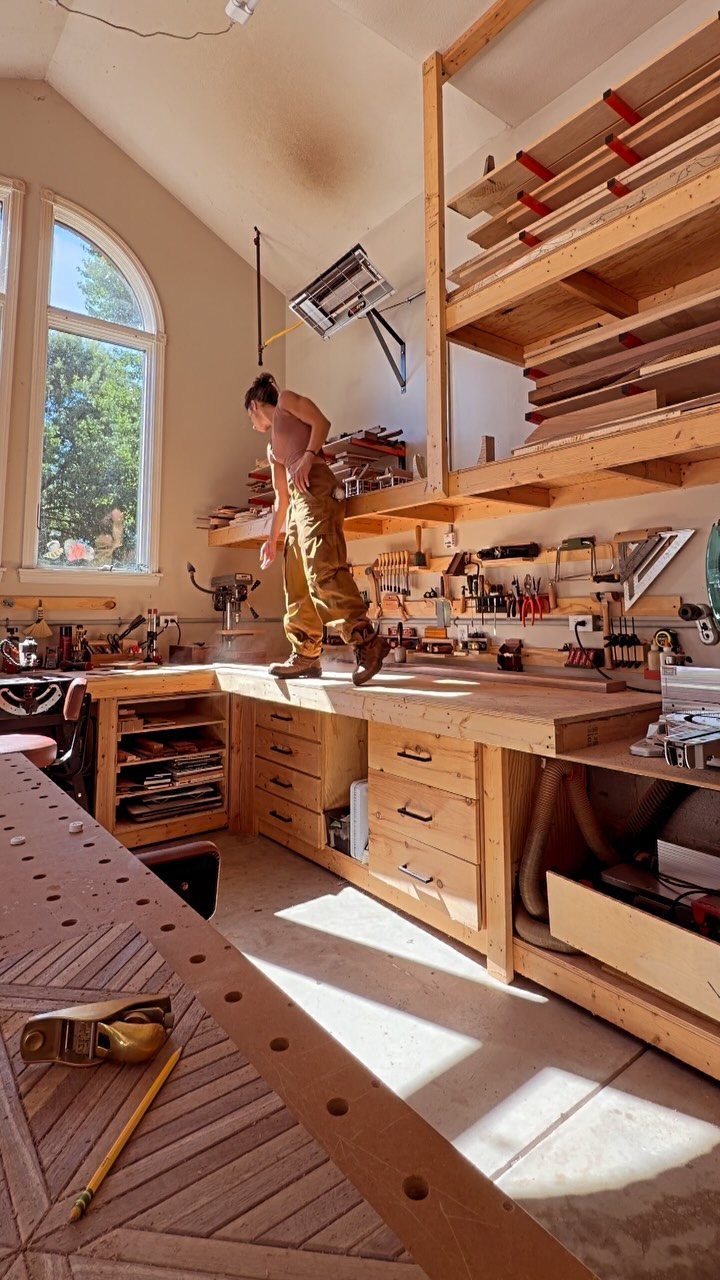
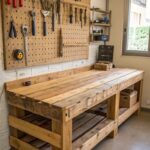
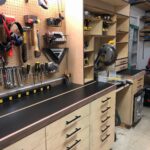
A bench with open shelving and drawers underneath keeps the tools you reach for most within one step of the vise.
Open shelves suit bulky items like planes and clamps, and drawers hold the small stuff that would otherwise roll around the top.
I would build the base heavy and fix it to the wall, so the bench stays put when you plane or pound. Skip a drawer for every item; two or three well-sized ones beat a dozen you have to search.
2. Workbench with Integrated Table Saw
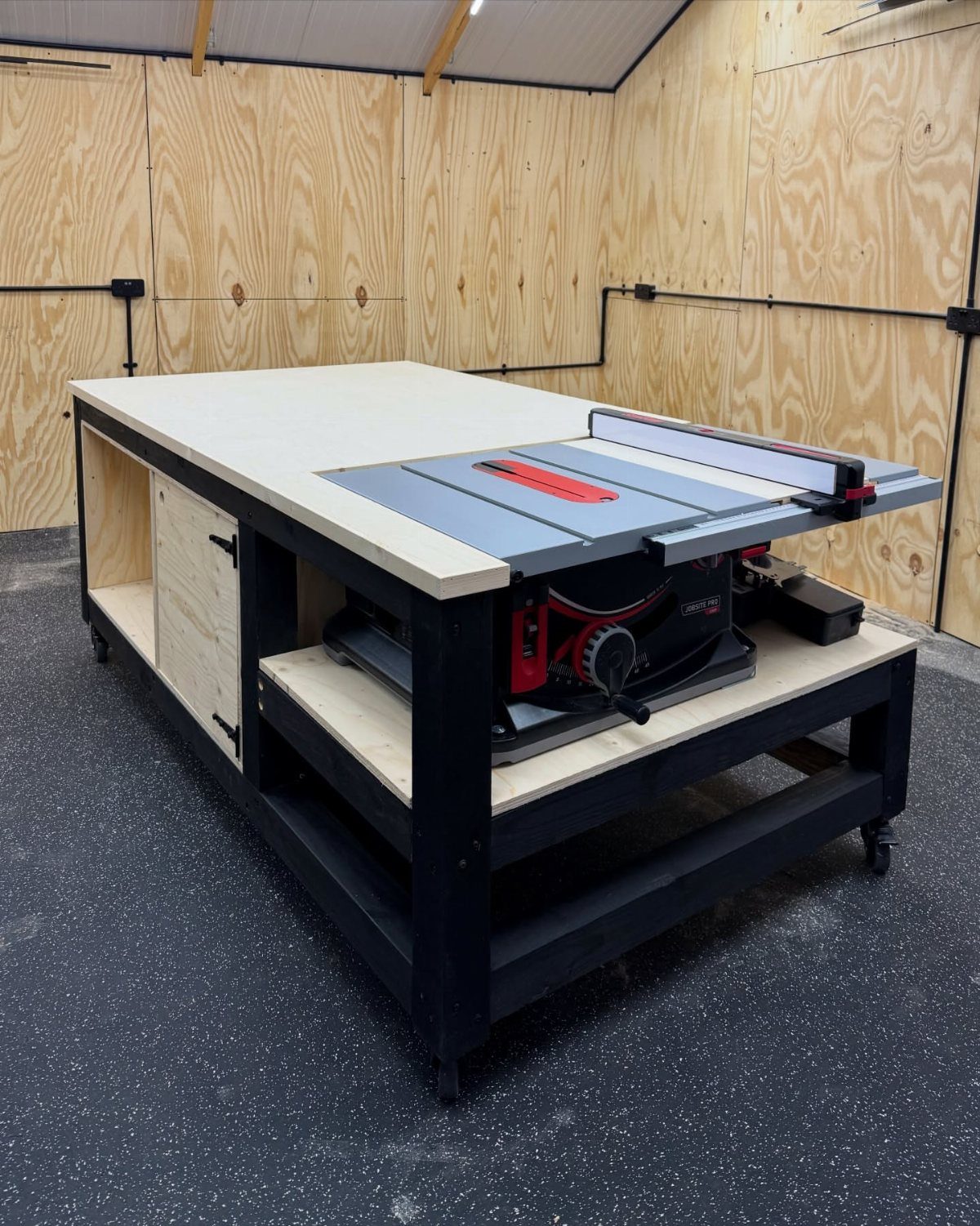
Setting a table saw flush into the bench surface turns the whole top into outfeed and assembly space.
Boards come off the blade and land on a flat surface at the same height, which beats hauling a separate saw stand around a small shop.
Lower cabinets under the top keep blades, jigs and the miter gauge close by.
Plan the saw’s dust path and clearance before you commit, because a built-in saw is hard to change later. For a tight budget, this is a bigger build than a plain bench, but it saves floor space.
3. Mobile Tool and Parts Carts
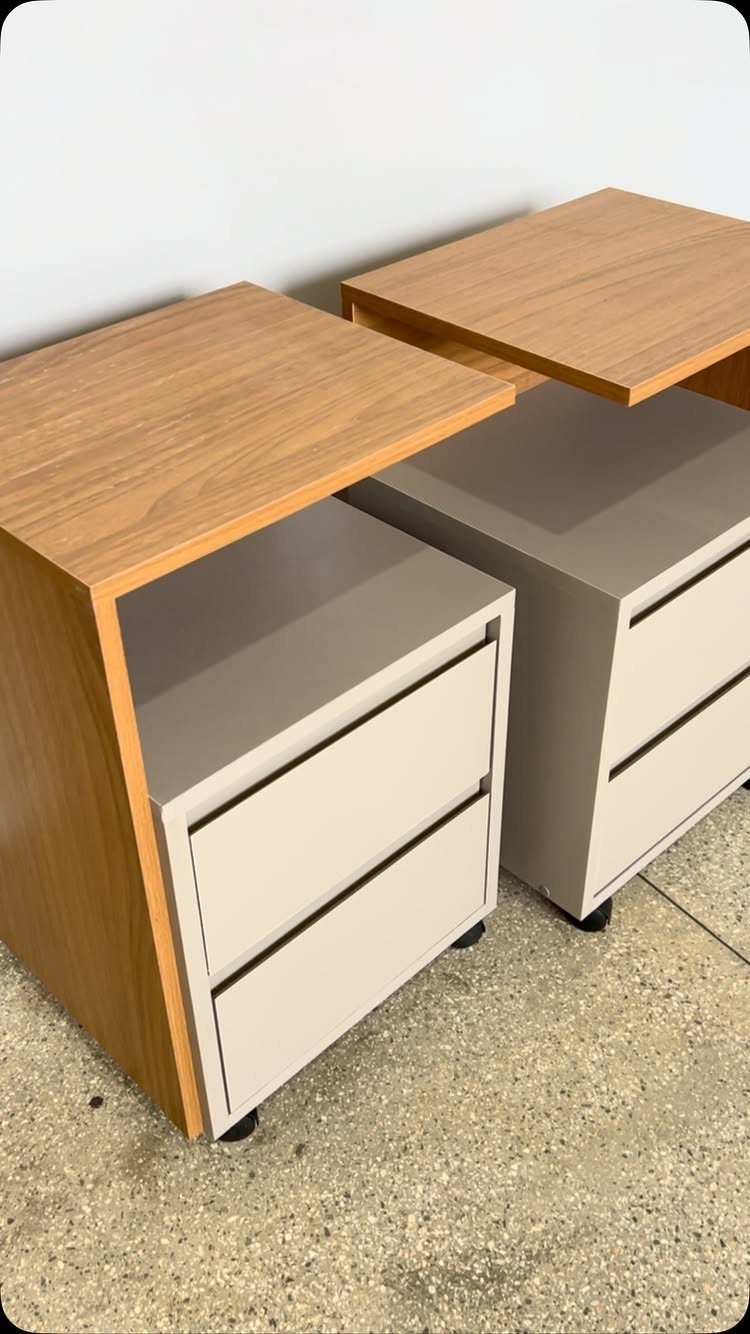
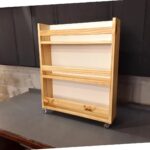
Small carts with solid wood tops and drawer bases on casters let tools follow the project instead of the other way around. Roll one beside the bench for a glue-up, then park it against the wall when you sweep.
Sort the drawers by use: screws and fasteners in one, measuring tools in another.
I like a wood top because it takes clamps and the occasional hammer blow. Choose locking casters, since a cart that drifts while you drill is more annoying than no cart at all.
4. Workshop Stools with Backrests
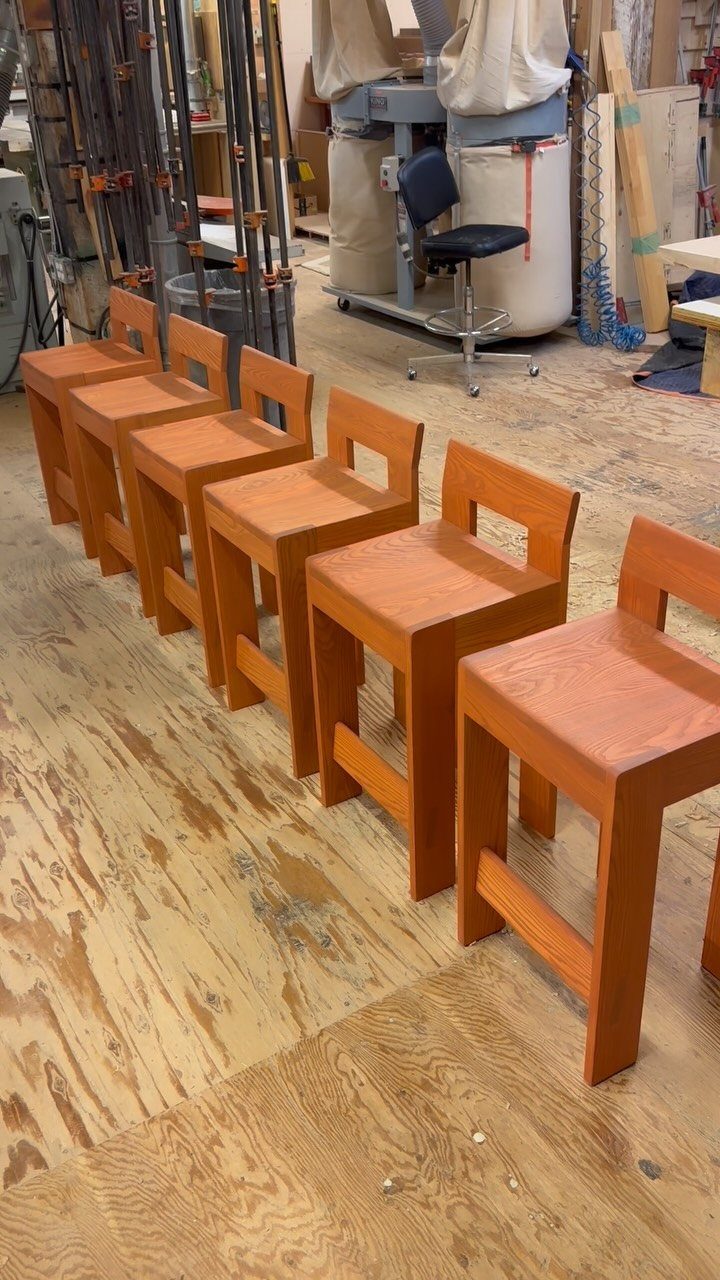
Standing all day wears you out, and a stool with a contoured backrest lets you sit through sanding, carving or detail work without slouching. Build several at once and the shop has a seat for helpers too.
Cut the backrest curve from one template so every stool matches.
Keep the legs splayed slightly for stability, and pick a seat height that lets your elbows rest at bench level. A solid wood seat is worth the extra effort over thin plywood.
Craftsmanship Importance
Skilled hands show up in the parts nobody photographs: tight joints, a flat top, edges eased so they don’t bite. Shop furniture takes more abuse than anything in the house, so those details decide whether a piece lasts.
One maker, start to finish, is the standard I like to build toward. Picking the boards, planing them, shaping, joining and finishing yourself means you catch each problem while it is still cheap to fix.
Rushing is where most shop builds go wrong.
A piece is done when the joints close and the surface feels right under your palm, and if that means coming back another day for the finish, I’d take the second session every time.
Ordering Process
If you would rather hire a maker than build, start by writing down what the piece must do: size, load, and where it will sit. A clear brief saves more time than any other step.
Ask about lead times up front. A one-person shop building each piece by hand works on its own clock, so ask the maker for a timeline before you pay and plan around the answer instead of hoping for a rush.
Ask how updates will arrive, and whether you can approve the wood and finish before work starts. Get the scope and timeline in writing, and keep questions in one thread so nothing gets lost.
Material Selection
Choose real solid wood over veneered board for anything that takes clamps, hammer blows or heavy loads. It can be sanded and refinished when it gets dented, which shop pieces always do.
Match the finish to the abuse.
A hard-wax oil rubs on easily, repairs in patches and keeps the wood feeling like wood. Some makers can also match nearly any color, so you aren’t stuck with the natural tone.
Decide the piece first, then the species. A bench top, a cart top and a stool seat each want different things from the board.