These ideas range from a hair pin you can wrap up in a single sitting to a tiki chess set that asks for far more hours, and the wood you start with matters as much as the project.
Your hands decide which one is yours: if you have only carved a few cuts, pick something with soft curves like the comfort bird or whale, where small slips disappear.
If your knife work is steadier, the chip-carved coasters and owl feather rows reward patience. Basswood blocks run $2-5 each at craft stores, so a practice piece costs little.
1. Whittled Fox
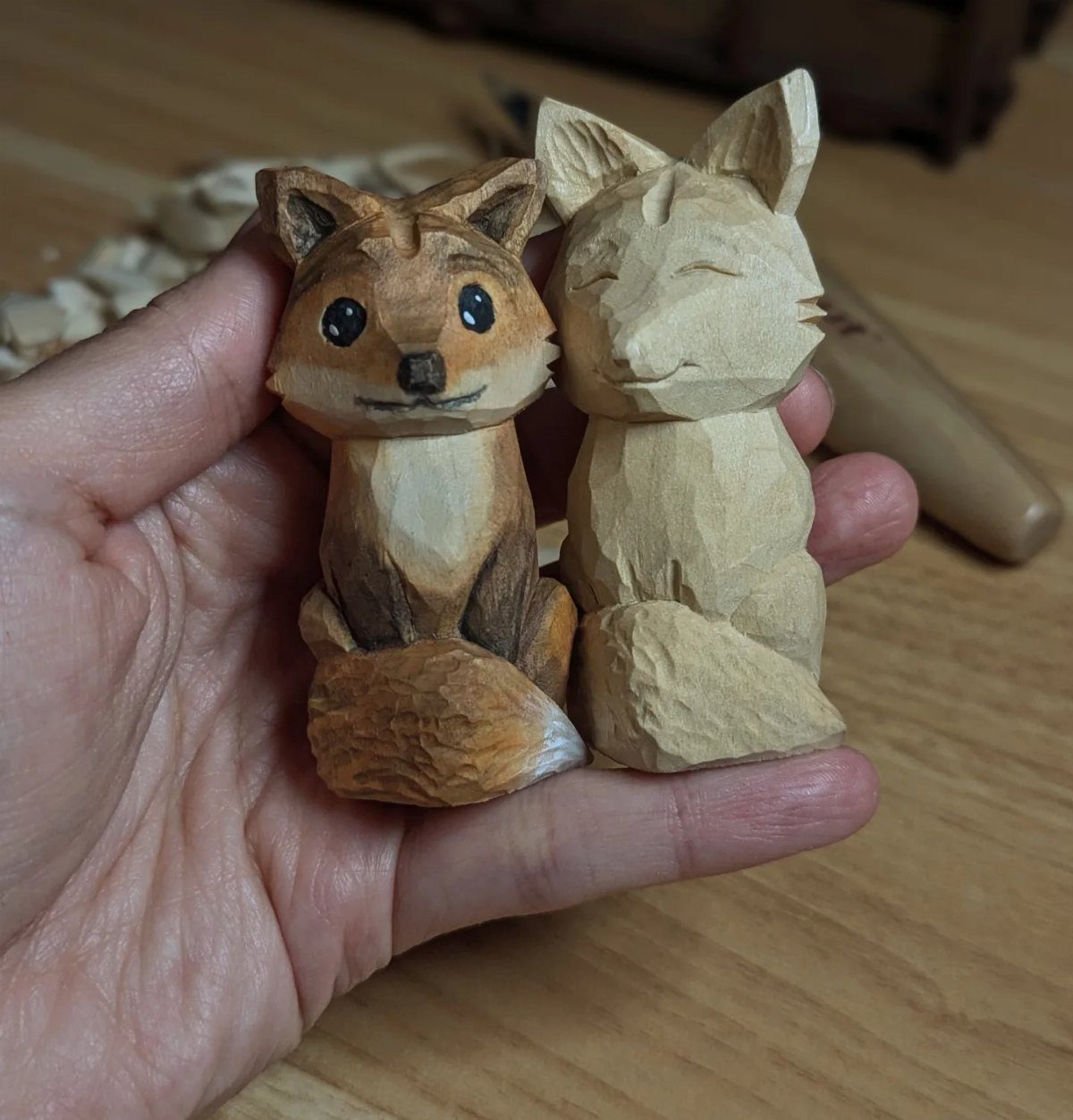
A fox is the animal I would hand to a first-time whittler. The pointed ears, long snout and bushy tail read as "fox" even when the cuts are rough, so a beginner gets a recognizable result fast.
A bare fox shows off the knife marks, while a painted orange one reads as a fox from across the room, so try one of each and see which you like.
Bare wood shows every knife cut, which is honest but unforgiving, while paint hides small slips. Start with a bare one to learn the shape, then paint the second.
2. Wooden Spoon
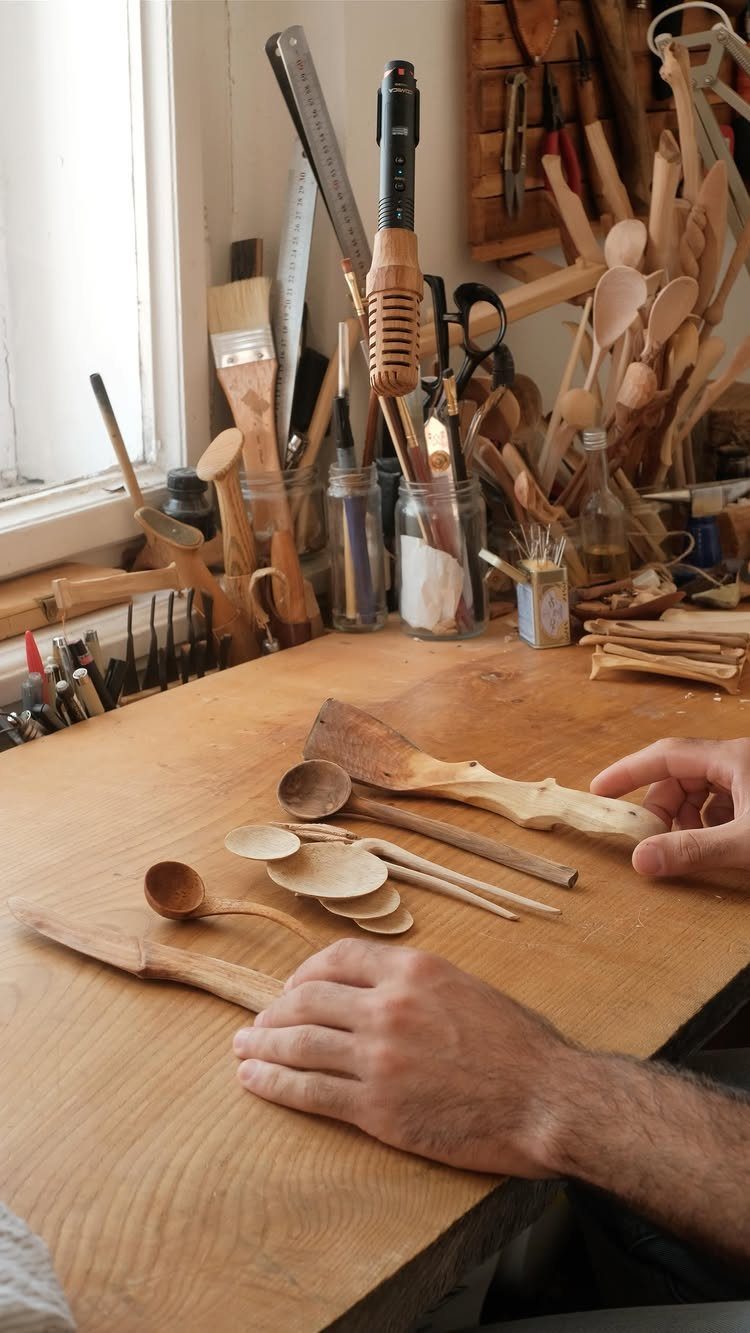
Few projects repay effort like a spoon, because you will actually use it in the kitchen. Carving one teaches you to read the wood and shape a bowl and a handle that fit together.
Expect your first spoon to look lopsided. That’s fine.
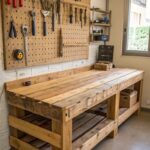
Make several, as the workbench shows, and the shape improves quickly. A spoon also makes a gift people keep on the counter rather than in a drawer.
3. Chip-Carved Coaster Set
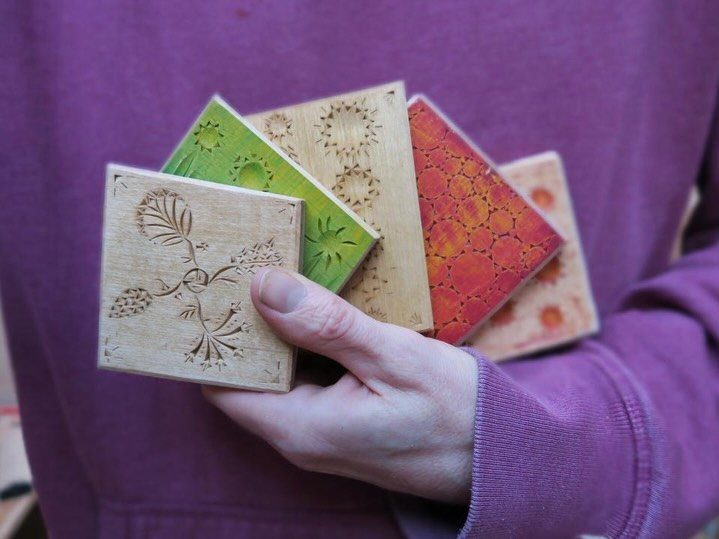
Coasters put the carving on a flat surface, so you can work slowly with a knife and never fight a curved shape.
Triangles, lines and petals cut into a square blank add up to patterns that look far more complicated than they are.
Give each coaster in the set its own chip-carved design, since a matching border keeps the set cohesive while the centers can all differ.
Practice a pattern on scrap first. Color is optional, but a little on select cuts makes the design pop.
4. Comfort Bird
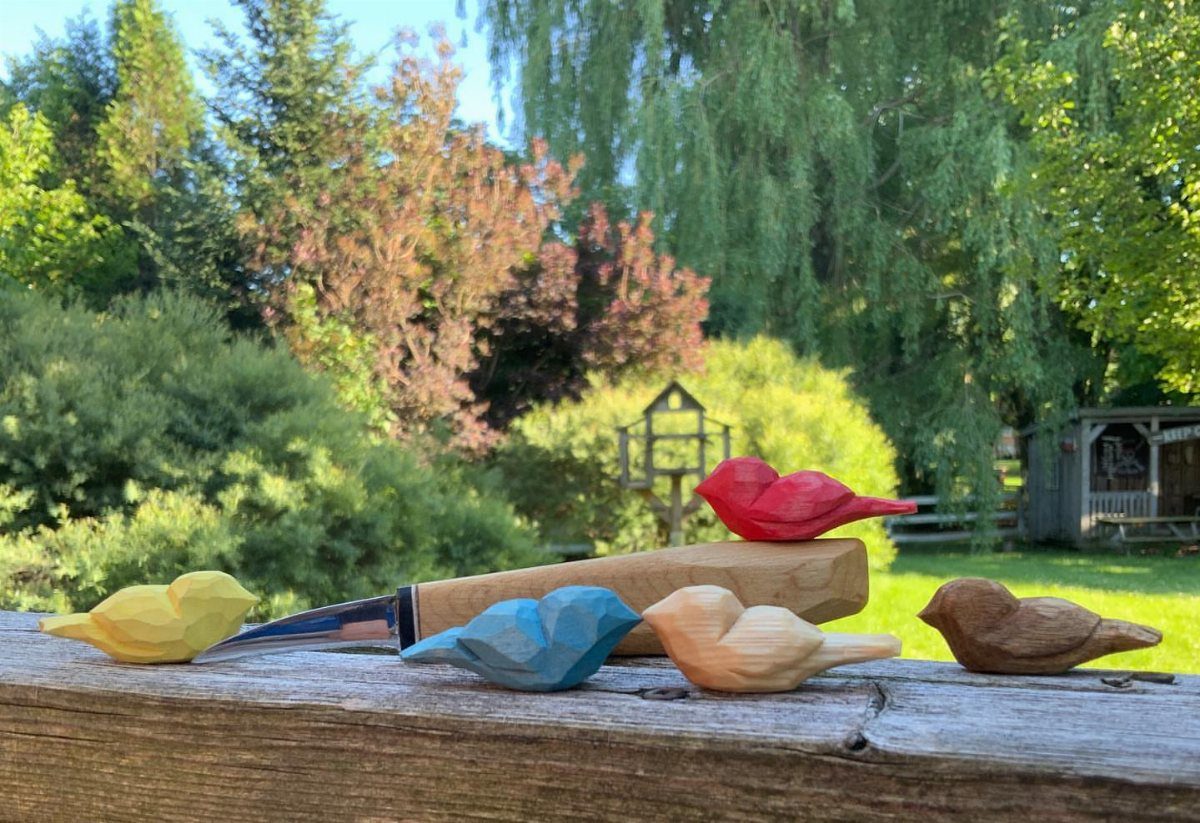
Smooth, rounded and hand-sized: that’s a comfort bird. There’s no beak detail or feather work to wrestle with, only a body that fits the palm, which makes it forgiving when a cut goes wrong.
Soft curves hide small mistakes, so a batch comes together in an afternoon.
Paint each comfort bird a different color and you have gifts ready to go. I’d carve three before deciding on a favorite shape.
5. Duck Decoy
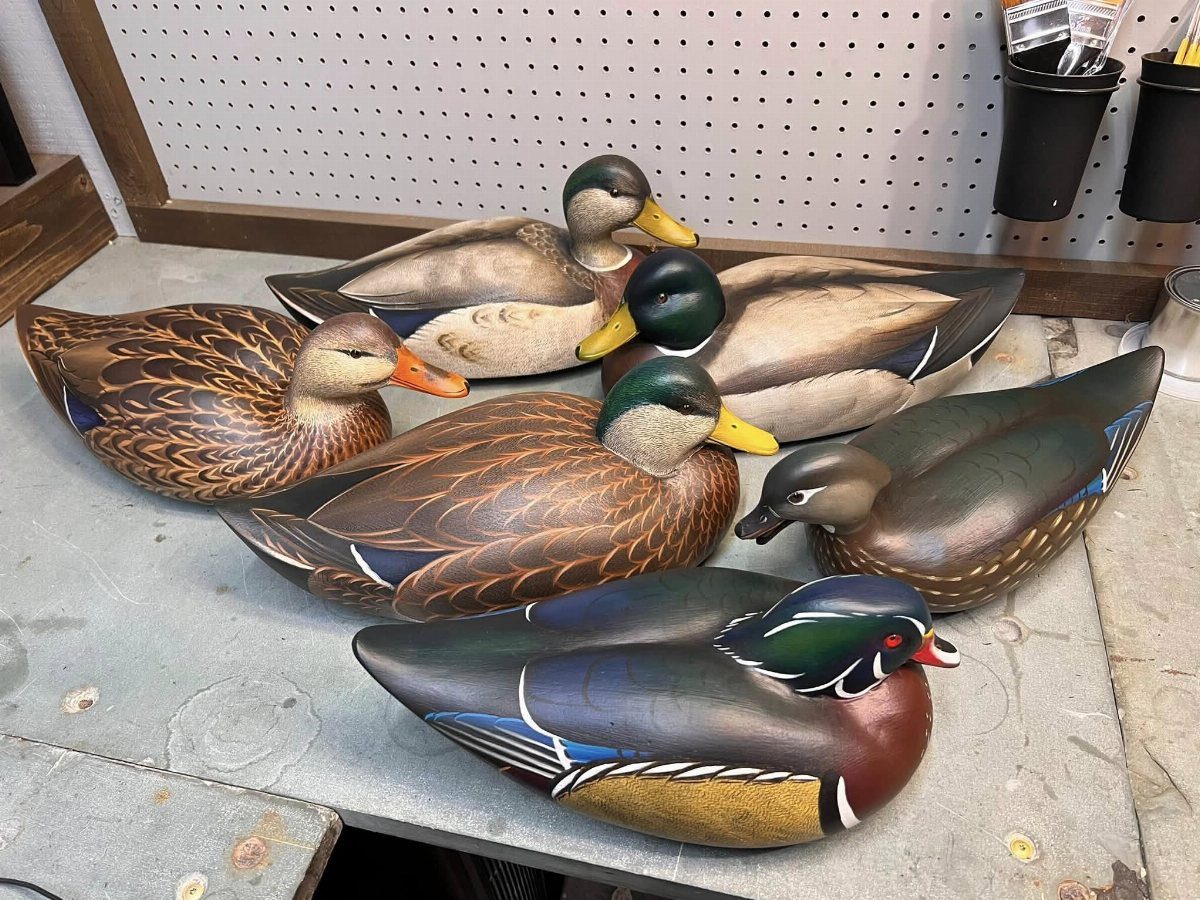
Decoys look intimidating, but the basic form is a plain body, a head and a tail, so the project is more straightforward than it appears. The reward comes at the painting stage, when each species gets its own markings.
Pick one species and carve it well before trying a flock.
Duck decoys vary a lot in color, which tells me painting is where most of the personality lives. Allow extra time for paint, since it often takes longer than carving.
6. Gnome
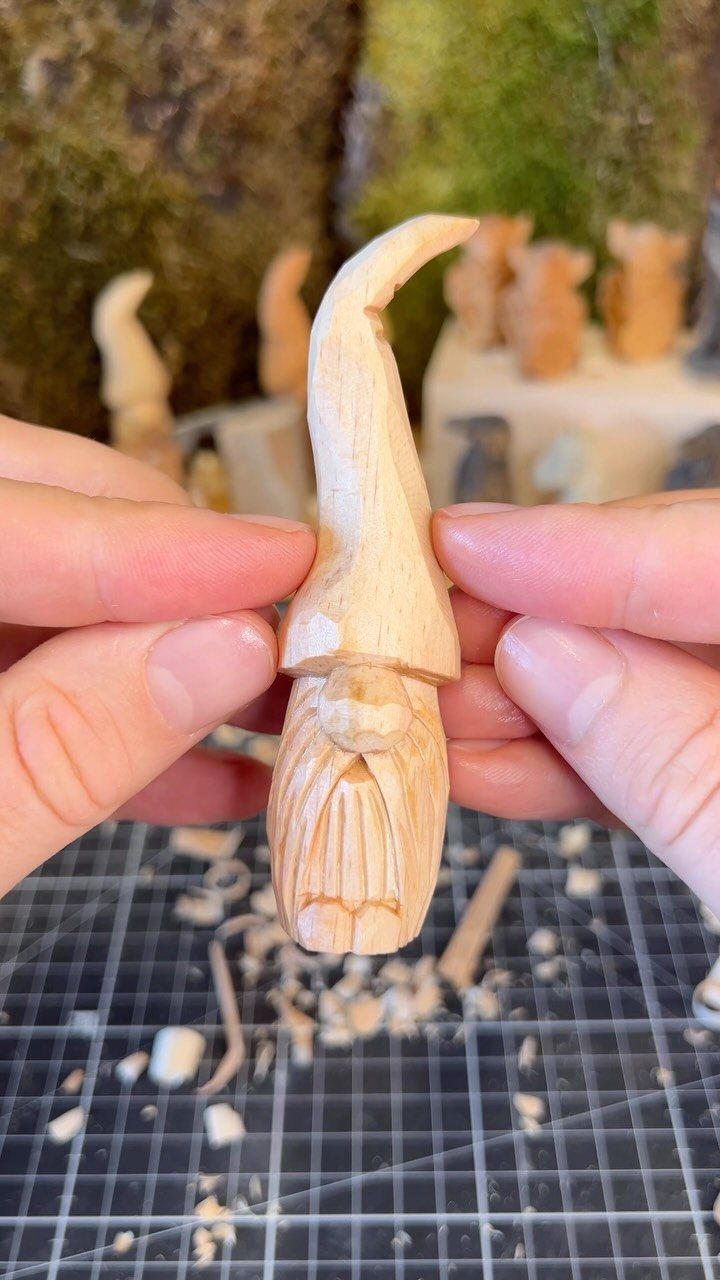
Tall hat, long beard, and not much else: a gnome is mostly a hat and a beard with a nose peeking out. That simplicity makes it a charming first character, since faces never need to be perfect.
Start with the hat’s curve, then block in the beard below it.
Leave the piece unpainted if you like the look of raw shavings and cuts. A small stack of them makes an easy handmade gift.
7. Wood Spirit Face
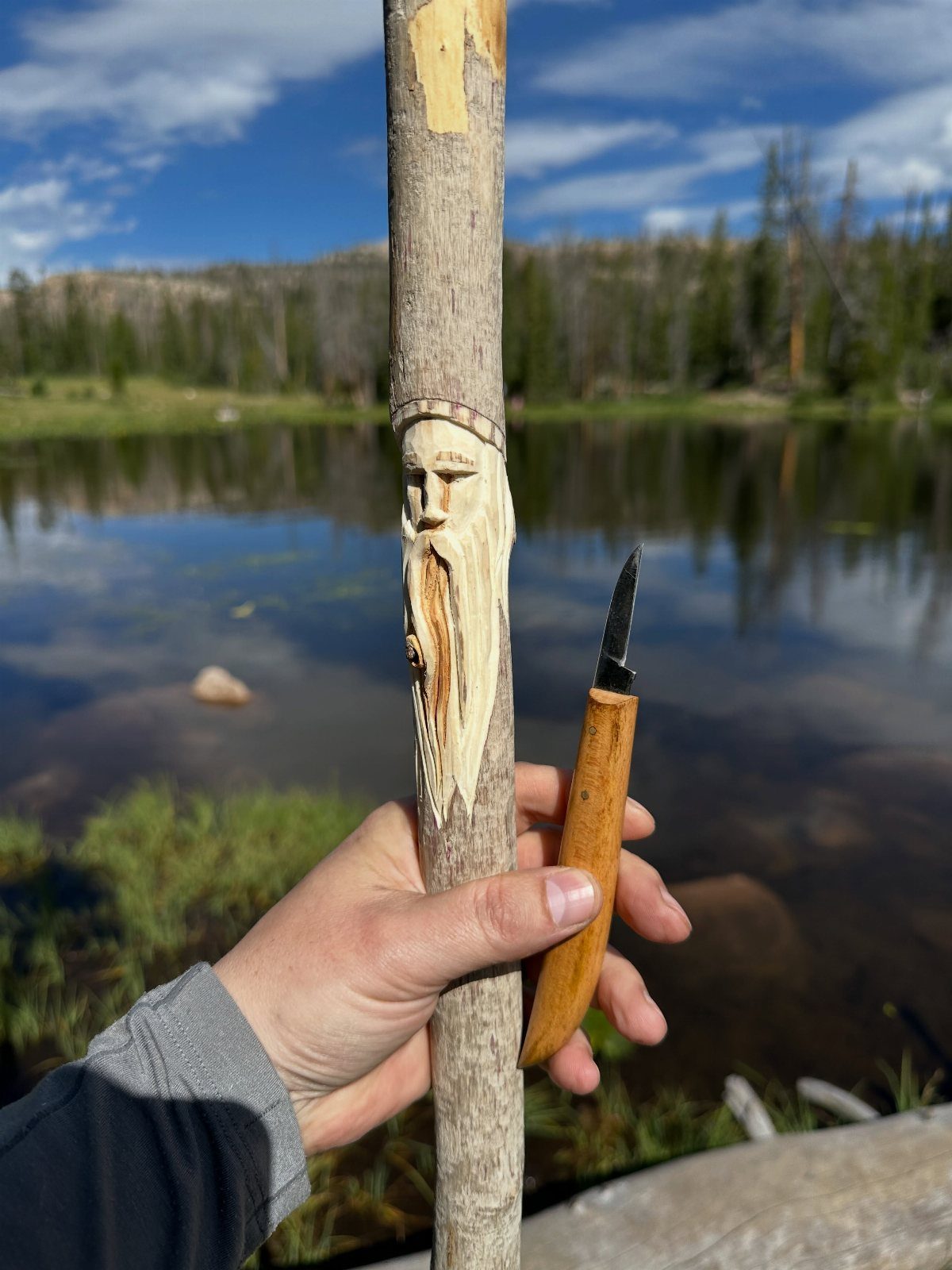
A wood spirit face grows out of the branch itself, so the bark, knots and bends do half the design work for you. A walking stick or a short length of branch gives you a ready-made canvas.
Start with the brow and nose, then set the eyes and mouth below them. Deep, simple cuts read better than fussy ones, and a face with a knot for a nose looks planned even when it wasn’t.
8. Wooden Hair Pin
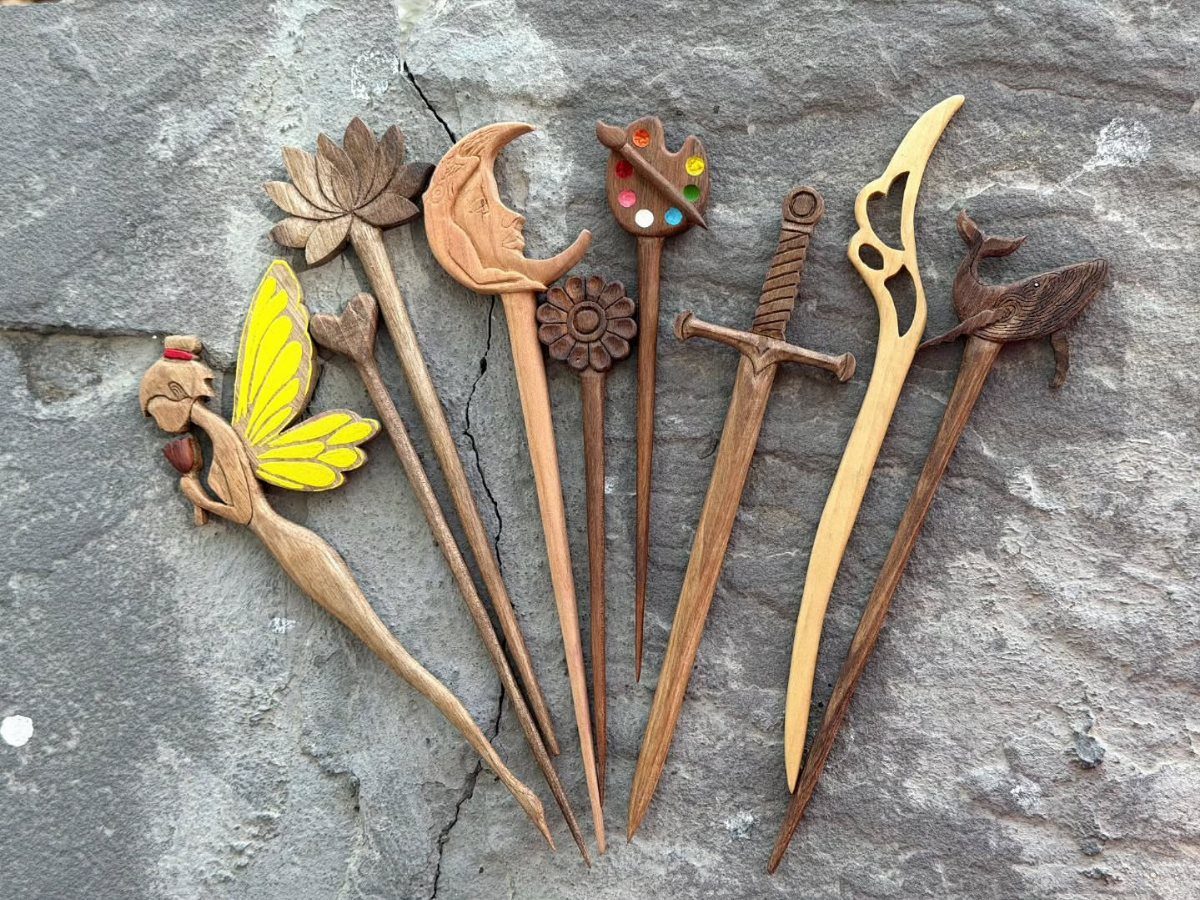
Hair pins are small enough to finish in an afternoon, and they get worn, which most carvings never do.
The top can be anything: a moon, a fairy, even a sword, so each pin is a tiny figure project with a practical job.
Keep the shaft slim and smooth, and save the detail for the head. Carve a few in different designs and you have a set of gifts that uses scraps of wood you probably already own.
9. Carved Christmas Ornament
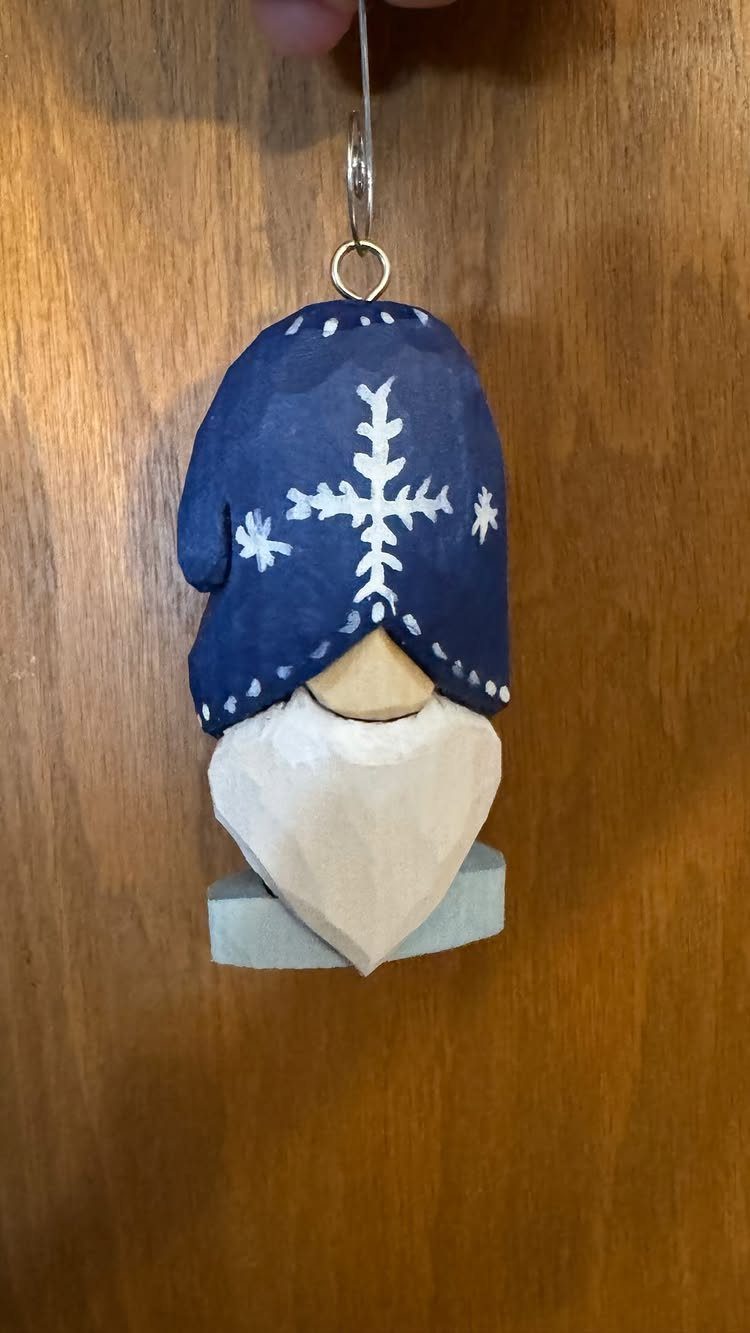
Ornaments are small, quick and made to hang, so one bearded figure with a snowflake hat is a fine afternoon project. A hat gives you a simple shape to paint, and the beard gives you easy cuts that hide mistakes.
Add the hanging string last, after any paint has dried. Carve a handful and tie each one with its own string, and you have gifts ready for the tree.
10. Wooden Bookmark
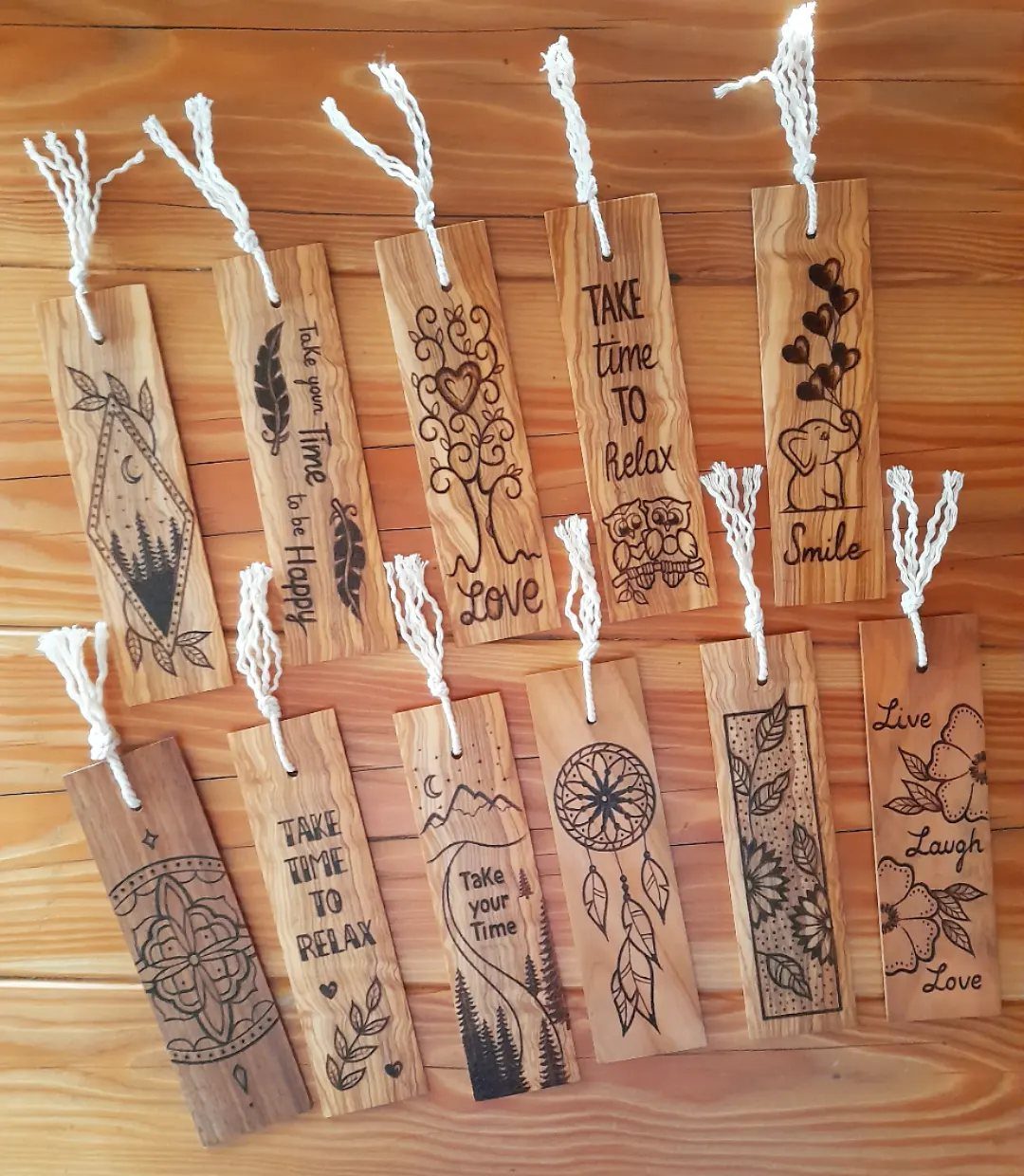
Flat, light and quick to carve, a bookmark is one of the easiest gifts you can make from a single thin board.
A thin blank takes a pattern or a short phrase, and a string tied through the top finishes it.
Keep quotes short, since fewer letters means fewer chances for a slip. I’d make a stack in one sitting and vary the designs, so each person gets something that feels chosen for them.
11. Simple Whale
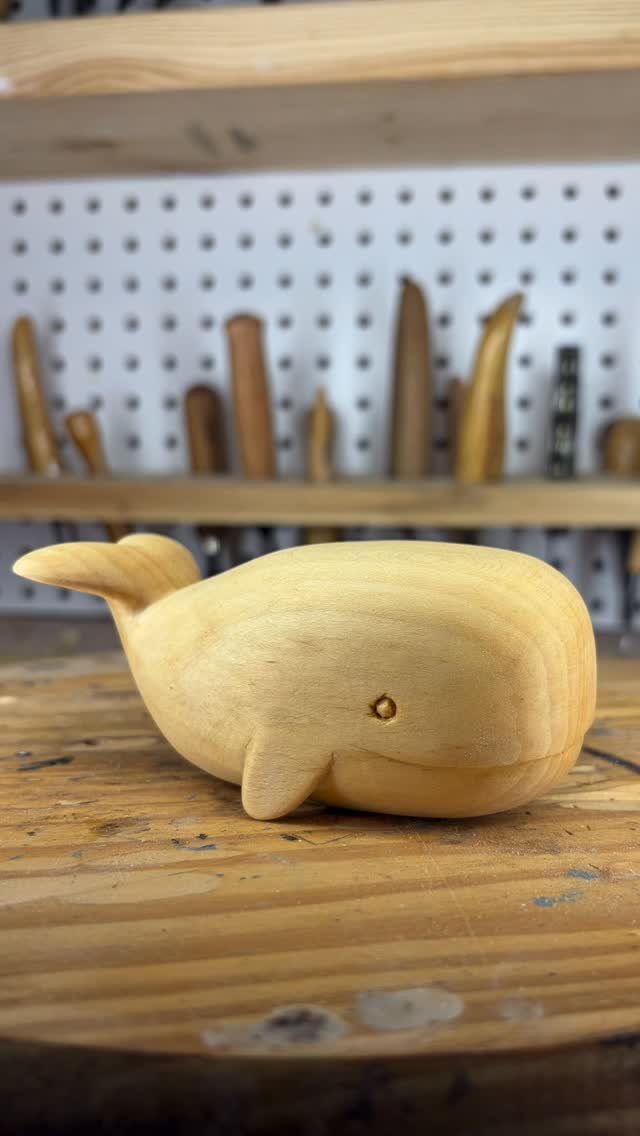
The body is one smooth, rounded shape with a tail on the end, so a whale leaves very little room for mistakes. That makes it a cute, forgiving animal for a beginner with a knife and a small block.
Round the body first, then shape the tail and keep the surface smooth.
Leave it unfinished if you like the plain wood, or add a little paint for the eye. It sits happily on a desk or shelf.
12. Owl Figurine
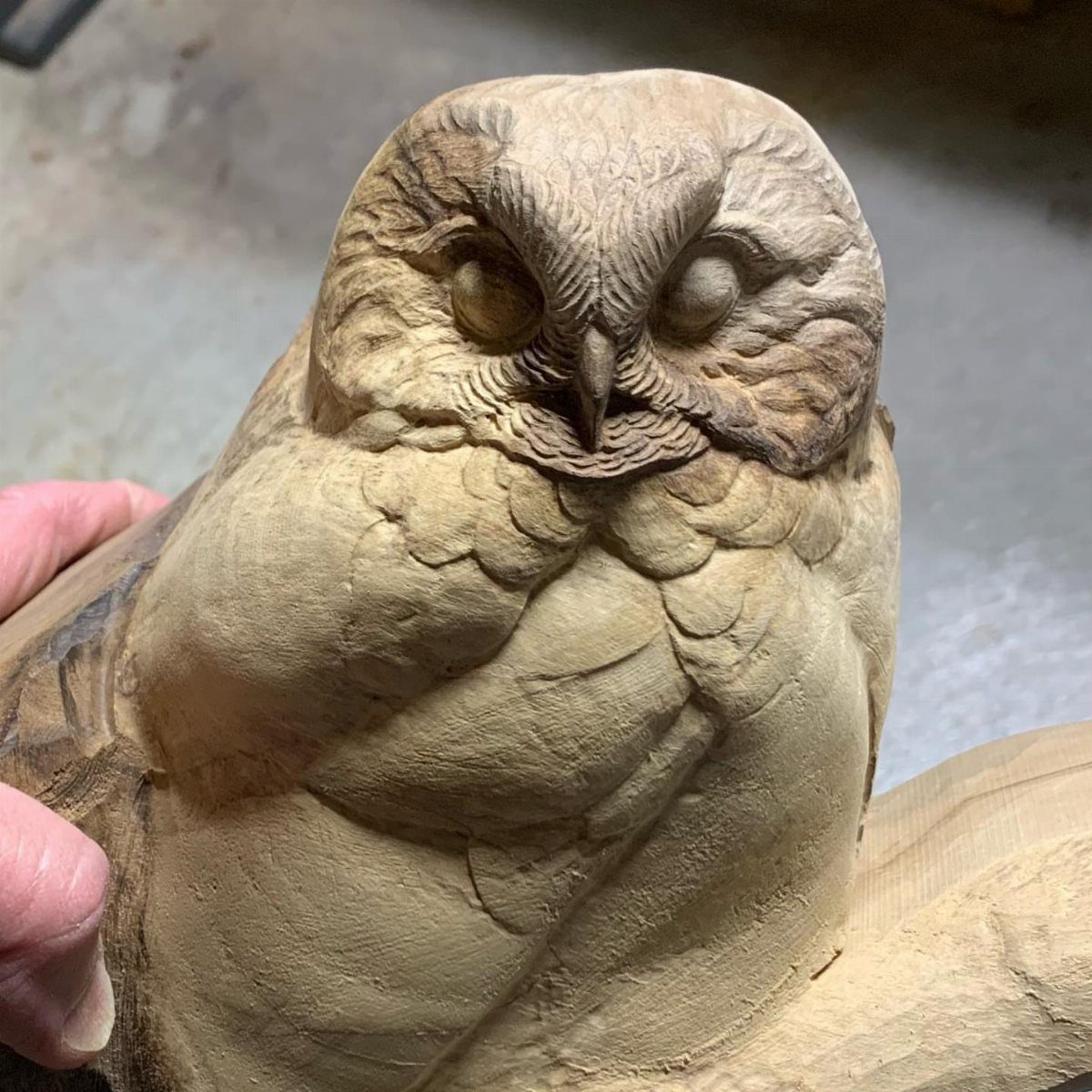
An owl is recognizable the moment the face disc and the feather rows appear, which is why it’s such a popular carving. Those 2 details do all the work.
Cut the feathers as repeating rows of small, even notches, and take your time on the face.
Closed eyes are easier than open ones, since a simple curved cut is all they need. Practice the feather rows on scrap before touching the figure.
13. Tiki Chess Set
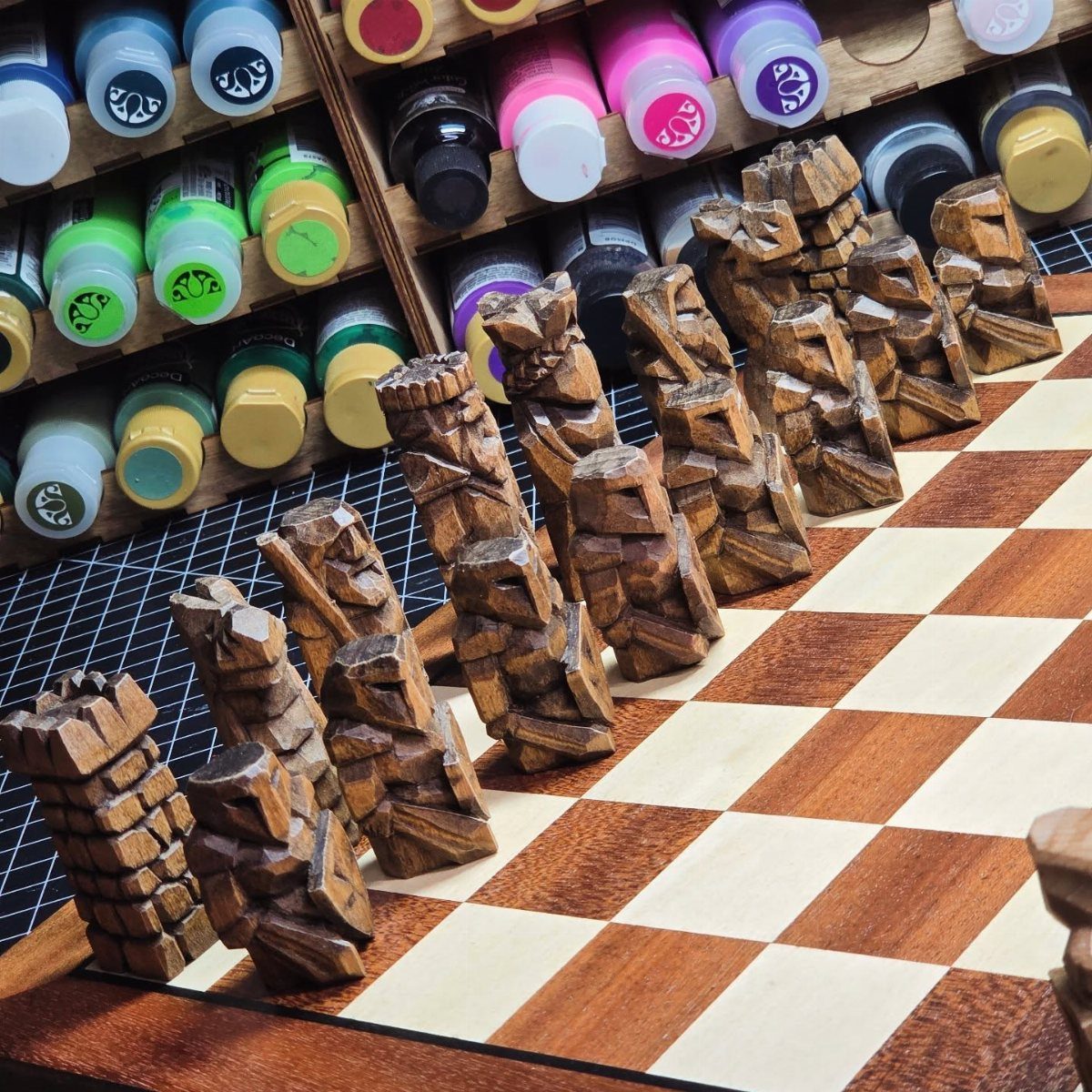
A chess set gives you a whole board of little characters to carve, and a tiki theme lets each piece wear a different grimacing face.
Pieces in a set only need to be told apart, so the 2 armies can differ in color or style while the kings and queens keep their height.
Carve the pawns first. They repeat most often, so they teach you the face before the pieces that matter.
Acrylic paint does the sorting work, with one color family per side, and it can cover a stray cut. Plan on more time than one afternoon for the full set; a single king and queen make a fair first try.
Best Wood for Beginners
For a first carving, my pick is basswood, and I’d buy it before anything else. It’s soft, the grain is tight and even, it resists splitting, and craft stores sell blocks for $2-5 each.
Butternut runs a close second, and its stronger grain pattern gives the finished piece a little more character. Pine and aspen are good choices too; both are softwoods that cut easily and go gently on the blade.
Leave oak and walnut on the shelf for now. Hardwoods like oak or maple dull a knife quickly and push back on every cut until your hands and blade control improve.
Essential Tools for Carving
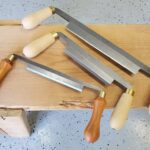
The saw trims a blank down to size before the knife ever touches it, which saves a lot of slow whittling.
Chisels are a fair addition to that set, and a basic knife, gouge and chisel combination is enough to start almost any project.
Sharpness matters more than the number of tools. A dull blade slips and forces you to push harder, so keep the edge keen and let soft wood like basswood or pine do the easy part.
Carving Techniques
2 techniques cover most of what a beginner needs: whittling and relief carving. They build different skills, so it pays to try both.
Whittling a simple project by hand teaches you how the blade moves through the grain, and it needs almost no setup.
Relief carving cuts figures into a flat surface so they stand up from the background and look three-dimensional. Start with a plain shape, and save the intricate patterns for after your cuts feel steady.
Frequently Asked Questions
What is the easiest thing to carve for a beginner?
A comfort bird or a simple whale is a forgiving first carving.
Neither a spoon nor a simple animal like a bird has fine detail to worry about, and the soft, rounded curves let a slipped cut disappear into the shape.
A whale is just a rounded body with a tail, and a batch of comfort birds comes together in an afternoon.
After that, try a fox: the ears, snout and tail still look right when the cuts are a little rough.
Can I really carve with only one knife?
Yes, one sharp knife is enough for many projects. Keep it sharp, because a dull blade slips and makes you push harder.
One knife only narrows the shapes within reach; it puts no ceiling on how good the finished piece looks. A gouge earns its place only when a curve is more than the knife can handle.
What wood should I use for small carving projects?
Basswood is my first pick for small carvings.
Butternut comes right behind it, with a little more grain to look at, and pine and aspen carve easily too. Skip oak, walnut and maple until your blade control improves, since hardwoods dull a knife fast and fight every cut.