Your time with a carving knife decides which of these bears to pick: a first-timer should start with the small block bear, cut in big flat planes from a single piece of basswood, and leave the stump bear to someone who already runs a chainsaw with confidence.
The list runs from a shelf-sized figurine finished before dinner to a bold one-piece bear and trunk, with a balloon-holding gift bear and a purple-hatted wizard in between.
A small bear needs just 3 things from the tool drawer: a sharp carving knife, a block of wood, and a fine awl to poke in the nostrils and eyes.
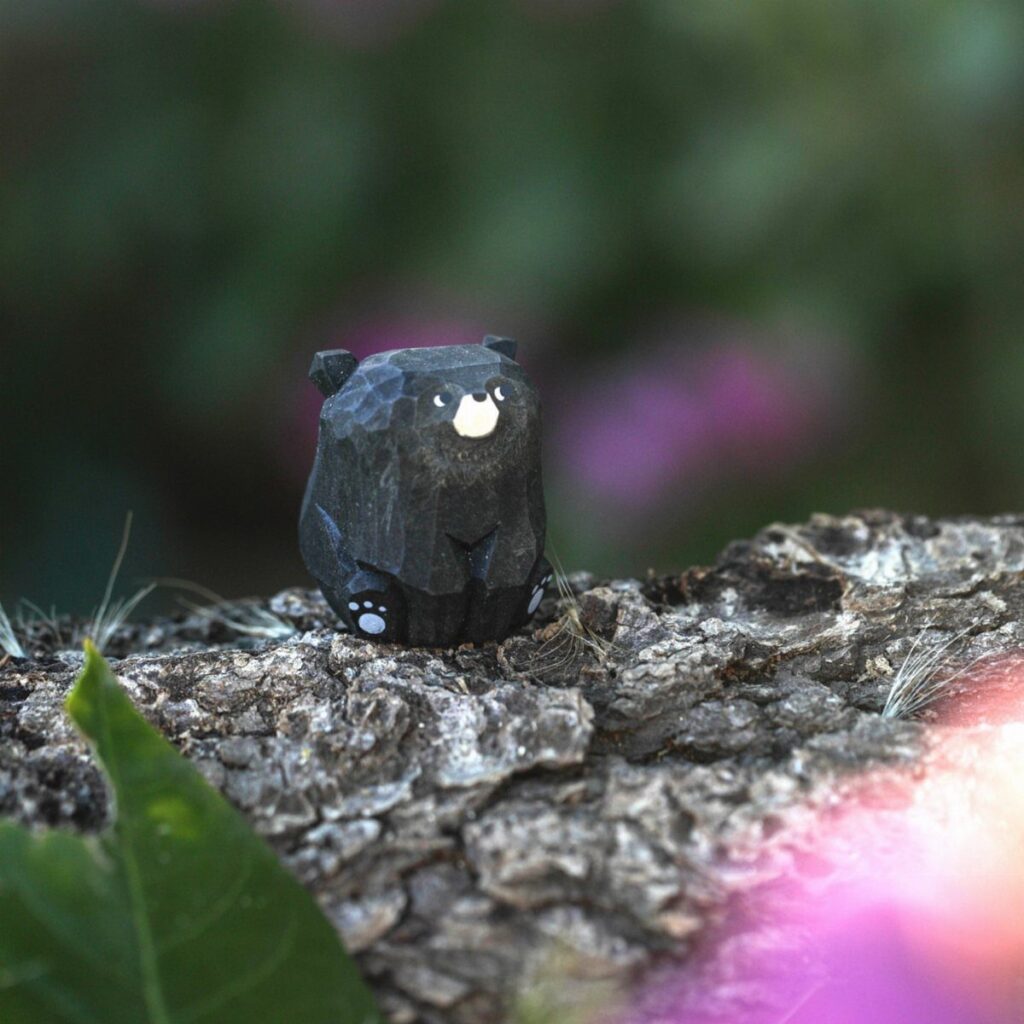
1. Miniature Wood Bear Figurine
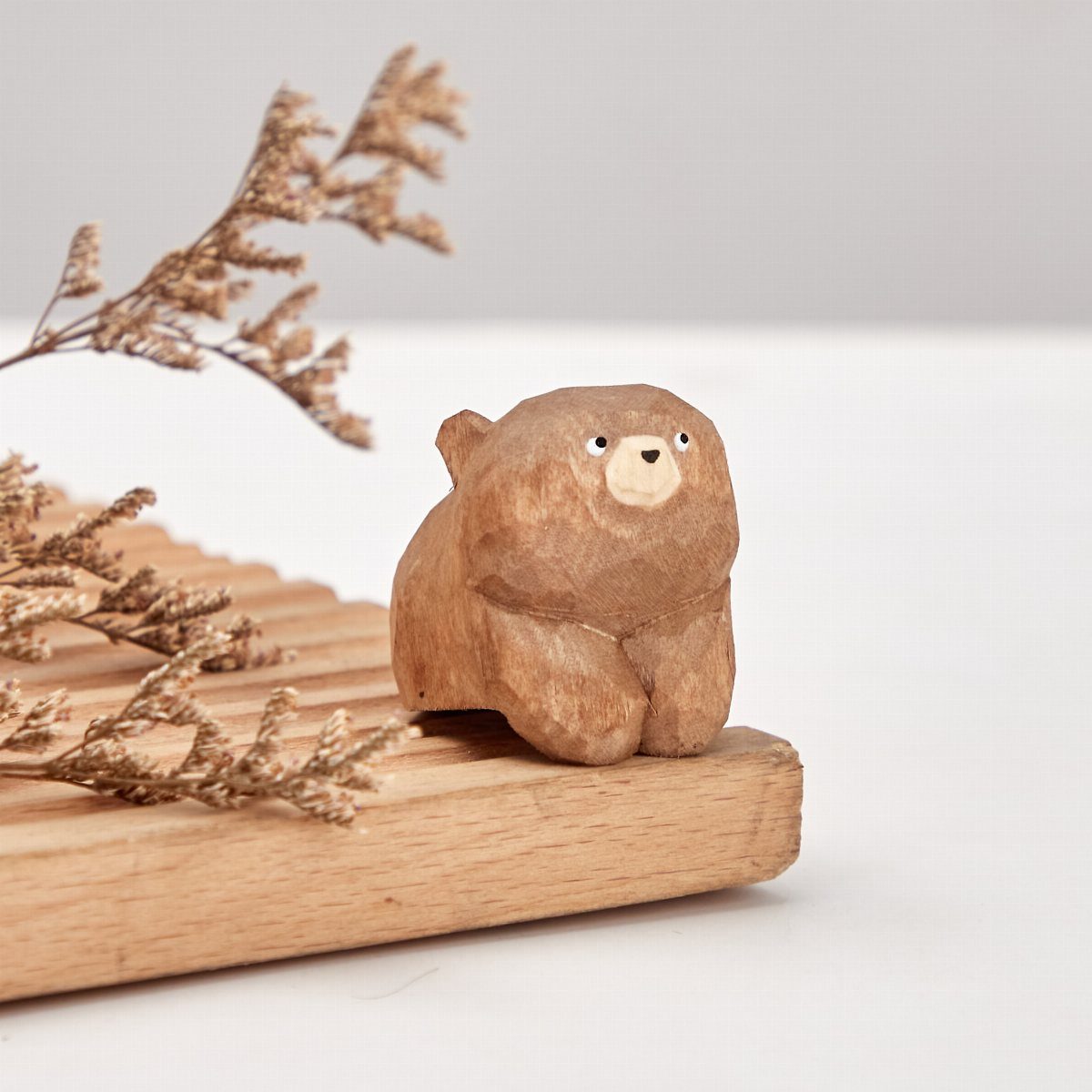
A bear this small works best as a shelf or windowsill piece, and the plain wood does most of the talking. Leave the surface unpainted and let the grain and the tool marks show.
Pair it with a few dried sprigs and a light wood surface, and it reads as décor rather than a toy.
Once the small block bear is behind you, this miniature figurine makes a good second carving: no costume, no props, just a simple bear shape you can finish before dinner.
2. Small Block Bear Carving
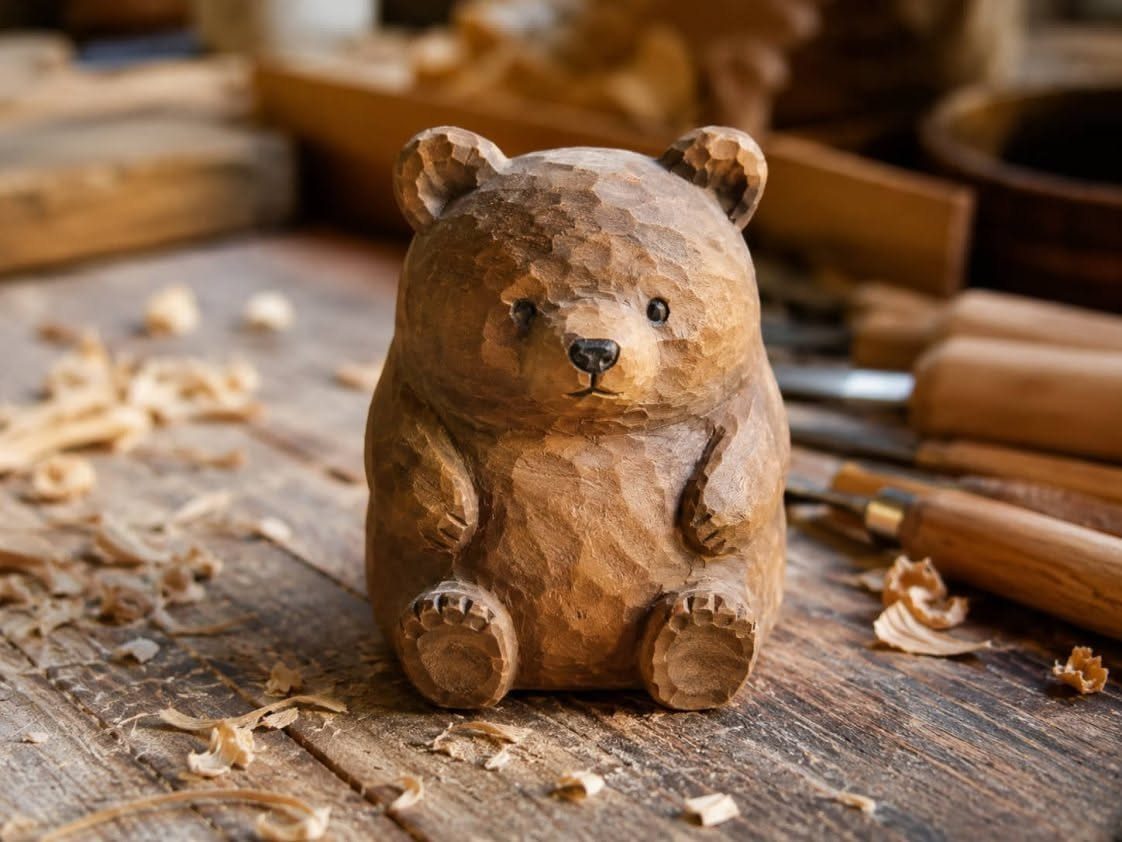
Start with a single block and cut the bear in big, simplified planes instead of chasing fur and fine detail.
That stylized shape forgives wobbly cuts, which is why I recommend it to anyone holding a carving knife for the first time.
Rough out the head, body and legs first, then round the edges a little at a time.
Keep a pile of shavings near, since they tell you how much wood you are removing. Stop while the shape still feels chunky.
3. Carved Wood Bear with Balloon Figurine
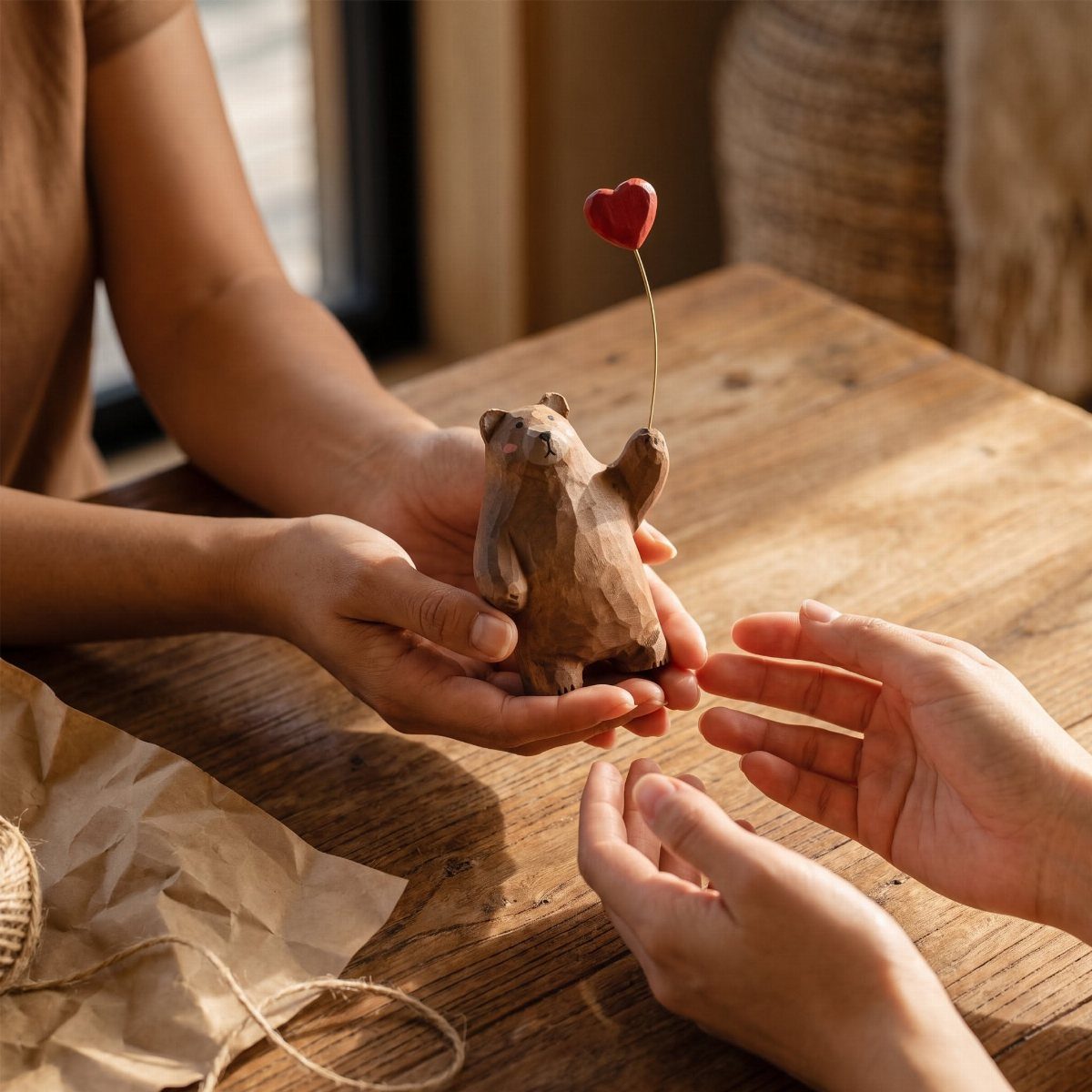
Giving the bear a balloon to hold turns a plain figure into a small gift. A heart shape suits anniversaries and Valentine’s Day, and the paws do the storytelling.
Carve the balloon as part of the bear if you can, with the arm raised and the string short and thick.
Thin strings snap, so I would keep it chunky. Paint only the heart red and leave the rest bare wood.
4. Carved Bear Wizard Figurine
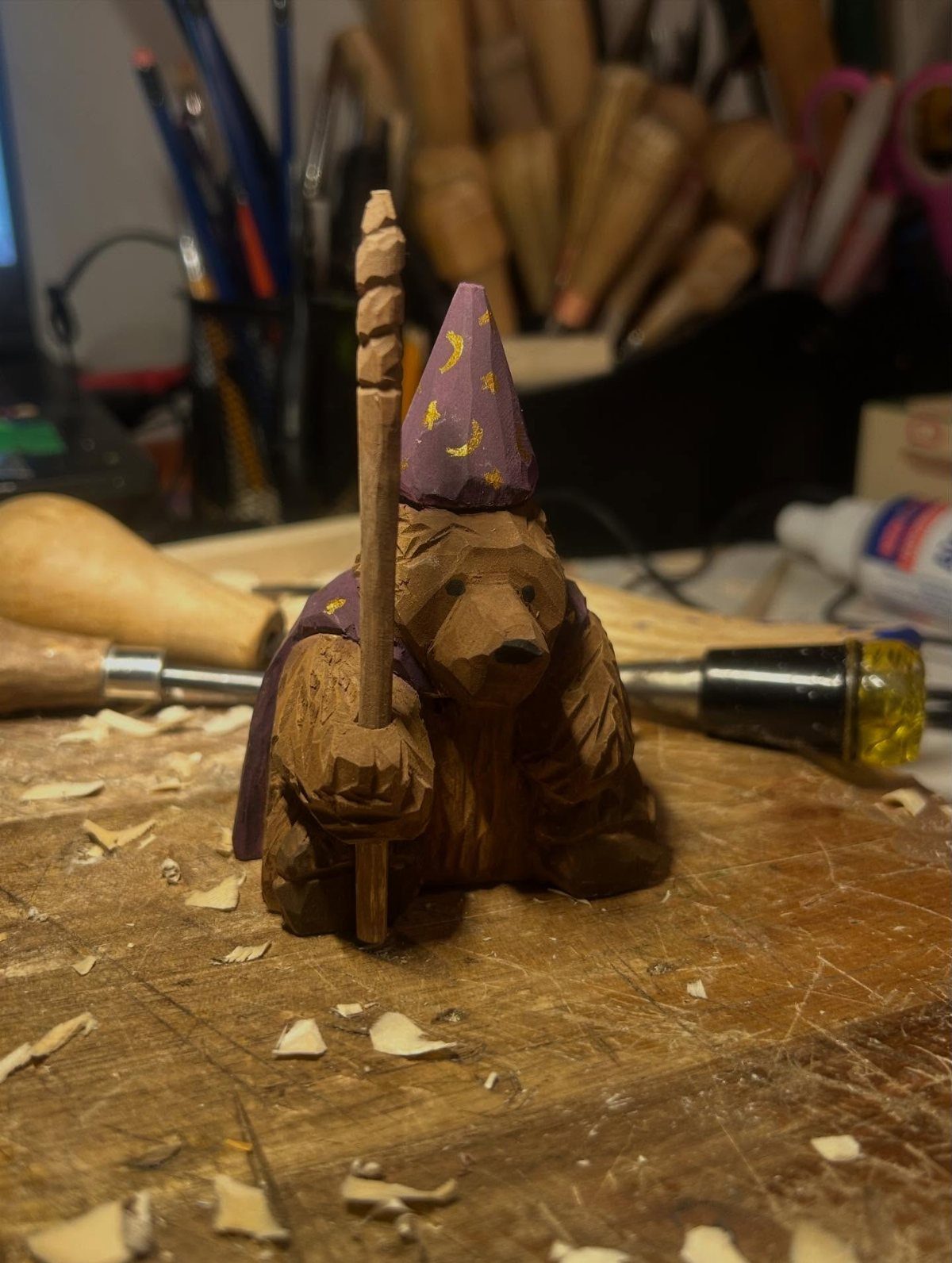
Dressing a bear as a wizard gives you a character, not just an animal. Think of the hat, cape and staff as separate pieces layered over a simple bear body.
Carve the bear first, then shape the hat as a cone on top.
Paint the hat and cape purple, which makes the wood tone of the face and paws stand out. A thin dowel makes a sturdier staff than carving one from the block.
5. Chainsaw Carved Bear by Stump
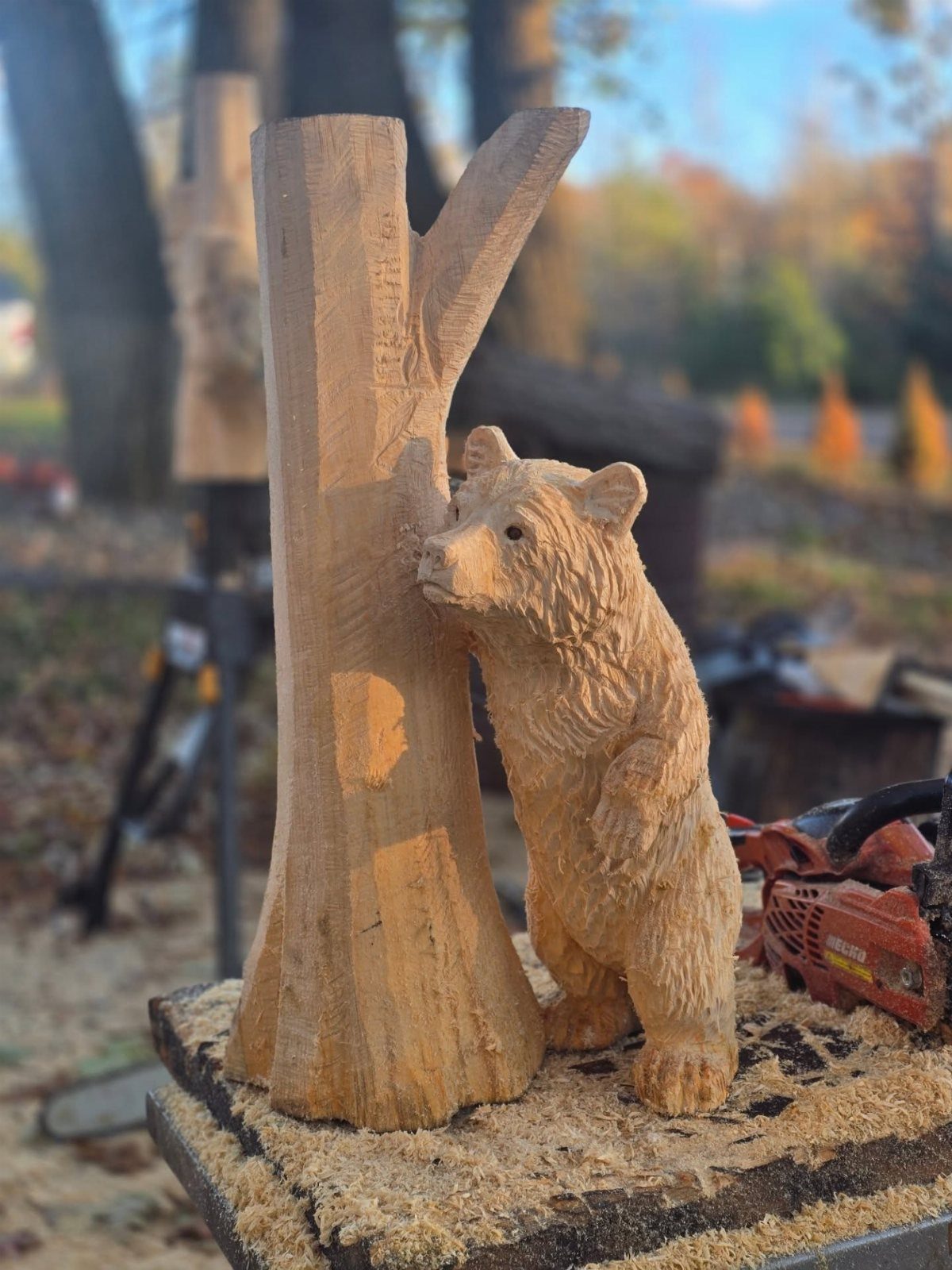
A chainsaw bear is the big-tool cousin of the other carvings here, cut from one piece of wood so the bear and its tree trunk stay joined. That single-piece build means no gluing and no loose parts.
Expect rough, bold cuts and a sawdust-covered work area. I would only try this with chainsaw experience; otherwise, carve the same bear and trunk pairing by hand at a smaller scale.
Materials for Bear Carvings
Basswood is the wood I point beginners toward.
It is light-colored, soft and even-grained, so a knife moves through it without fighting you. Linden is the same family of wood, which is why you will see both names on carved bears.
Hardwoods last longer and hold crisp edges, but they take more effort and sharper tools. Choose one only once your cuts are steady.
A natural log suits a larger bear with a base, as in chainsaw work, where the bear and its base come from one piece.
Light wood also takes a dark accent well, such as a black nose or darker shading in the fur.
A sharp carving knife and a fine awl or needle for the nose are all a small bear asks for once the wood is picked.
Carving Techniques for Beginners
One tool is enough to start. A single knife and a block of basswood will get you a little bear, and learning what that one blade can do beats buying a set you don’t yet need.
Practice basic shapes before detail.
Free beginner patterns are easy to find, and many include simple animals, leaves and trees. Carving a few of those teaches you how the grain pushes back.
Save the awl for last. Save the nose for last: once the body shape feels settled, a fine awl or needle pricks in the detail cleanly without risking a slip on a rough form.
Take thin slices rather than deep bites. If a cut goes wrong, a thin slice leaves you something to fix, and a deep bite does not.
Decorative Uses for Bear Carvings
A bear carving can do a job, not just sit there.
A wooden bear holding a mailbox arm is a practical piece for a front walk, and it greets everyone who stops by. Treat anything left outdoors with a weather-rated finish.
Small bears suit desks and offices. Tie a loop of red string around the neck and hang a small gold bell from it, and a plain bear gets a spot of color and looks ready to give as a gift.
Faceted cuts, left as they are, give the surface its own texture, so you can skip sanding and save time. Pair that with black eyes and a black nose for a clean, finished face.