Which of these wooden animal carvings suits you depends on who ends up holding the piece: Wooden Animal Toys call for chunky shapes with softened edges, while Decorative Wooden Animal Figurines and Handcrafted Animal Sculptures are made to sit on a shelf and be looked at.
The list runs from Easy Wooden Animal Carvings, about as forgiving as a first project gets, up to Handcrafted Animal Sculptures, and Natural Wood Animal Carvings let the grain do all the decorating.
If you have never held a carving knife, start with Easy Wooden Animal Carvings or a set of Animal Carving Patterns, since simple shapes hide a slip.
1. Stylized Wooden Animals
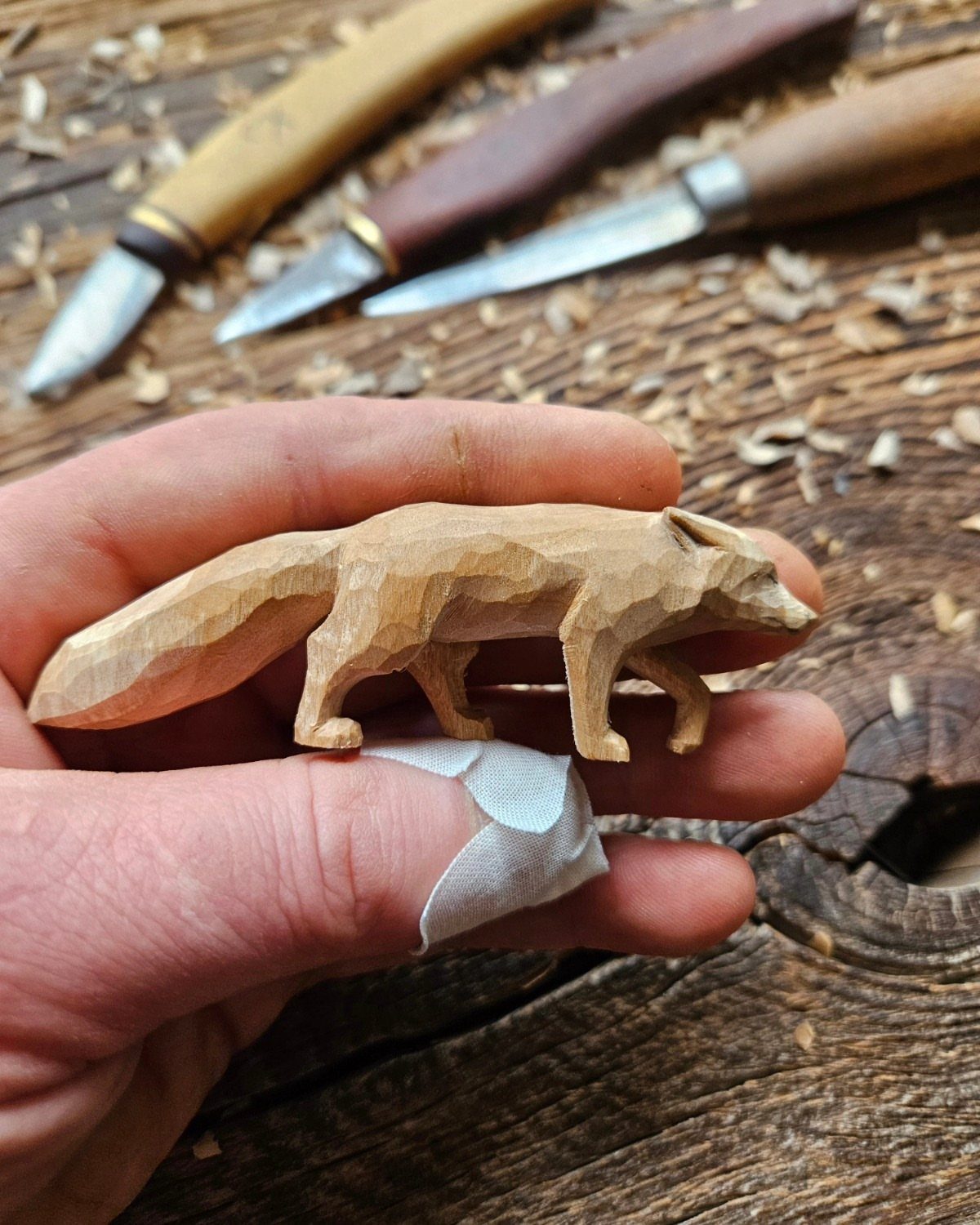
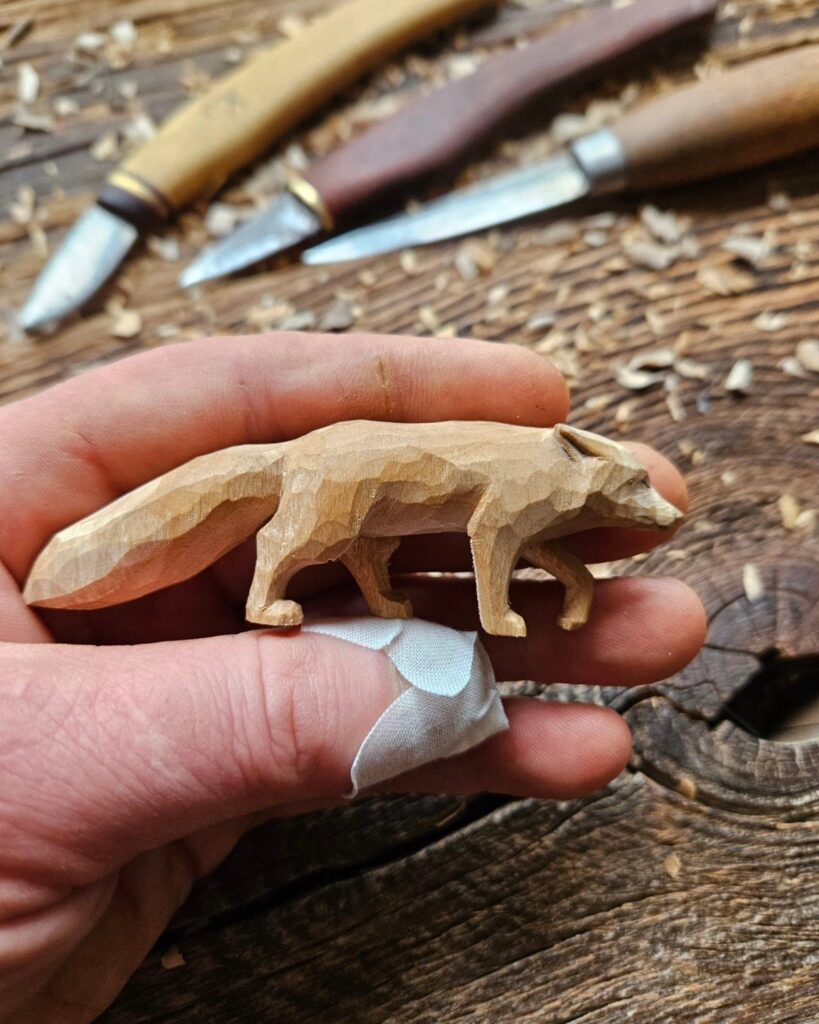
A fox reduced to a wedge of a head, a sweep of a back and a tail needs very few cuts, and that is exactly why it works.
Minimalist carving rewards restraint: pick the two or three features that say "fox" and leave the rest of the block alone.
I’d skip fine detail entirely. A smooth, simple form hides small knife slips better than a realistic one, so it is a forgiving way to practice.
2. Animal Carving Patterns
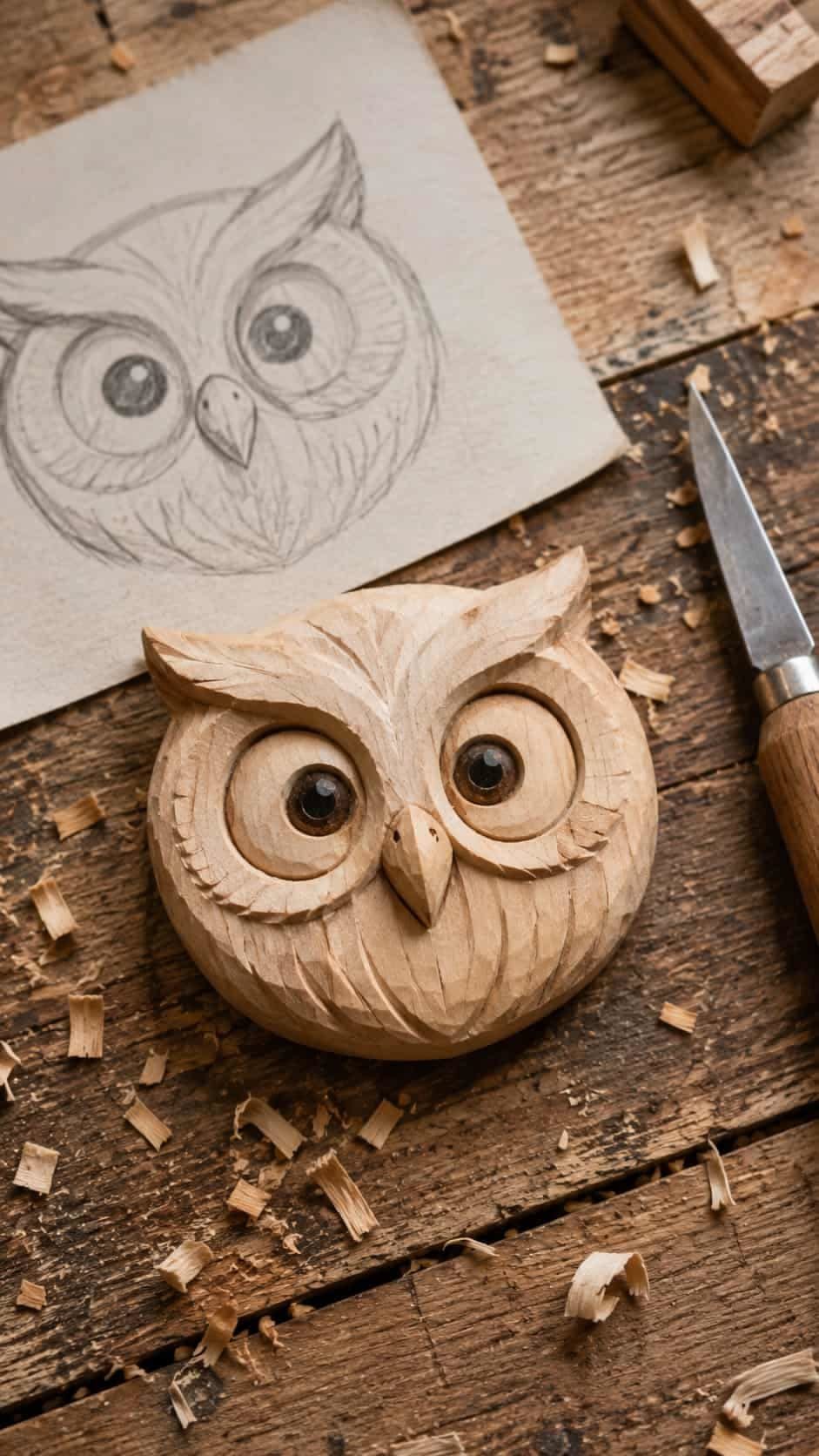
Sketch first, carve second. A pencil drawing of the animal, like the owl’s, sets the proportions before any wood comes off, and a pattern is just that drawing made reusable.
Draw the front and side views, then trace both onto the block so you know where the head and body sit. I keep one finished pattern per animal; the second carving always goes faster than the first.
3. Wooden Animal Toys
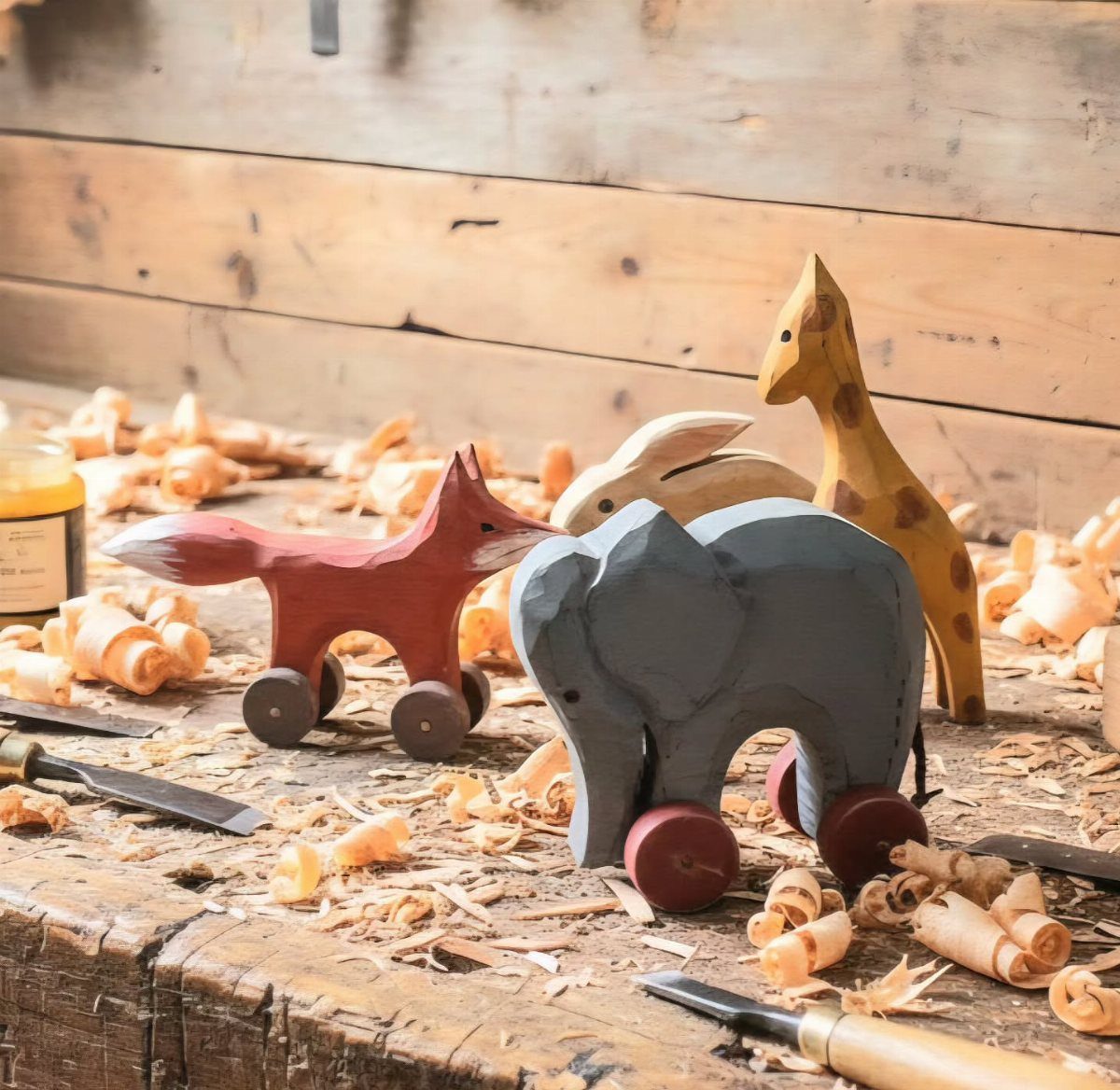
Toys for children ask for rounder shapes than display pieces do. Skip thin ears, trunks and legs that can snap off, and keep every edge softened.
Wheels turn a carved animal into something a child will push across the floor, which makes a chunky giraffe or elephant a good gift.
Sand more than feels necessary, and leave the surface plain or finish it with something made for children’s toys.
4. Easy Wooden Animal Carvings
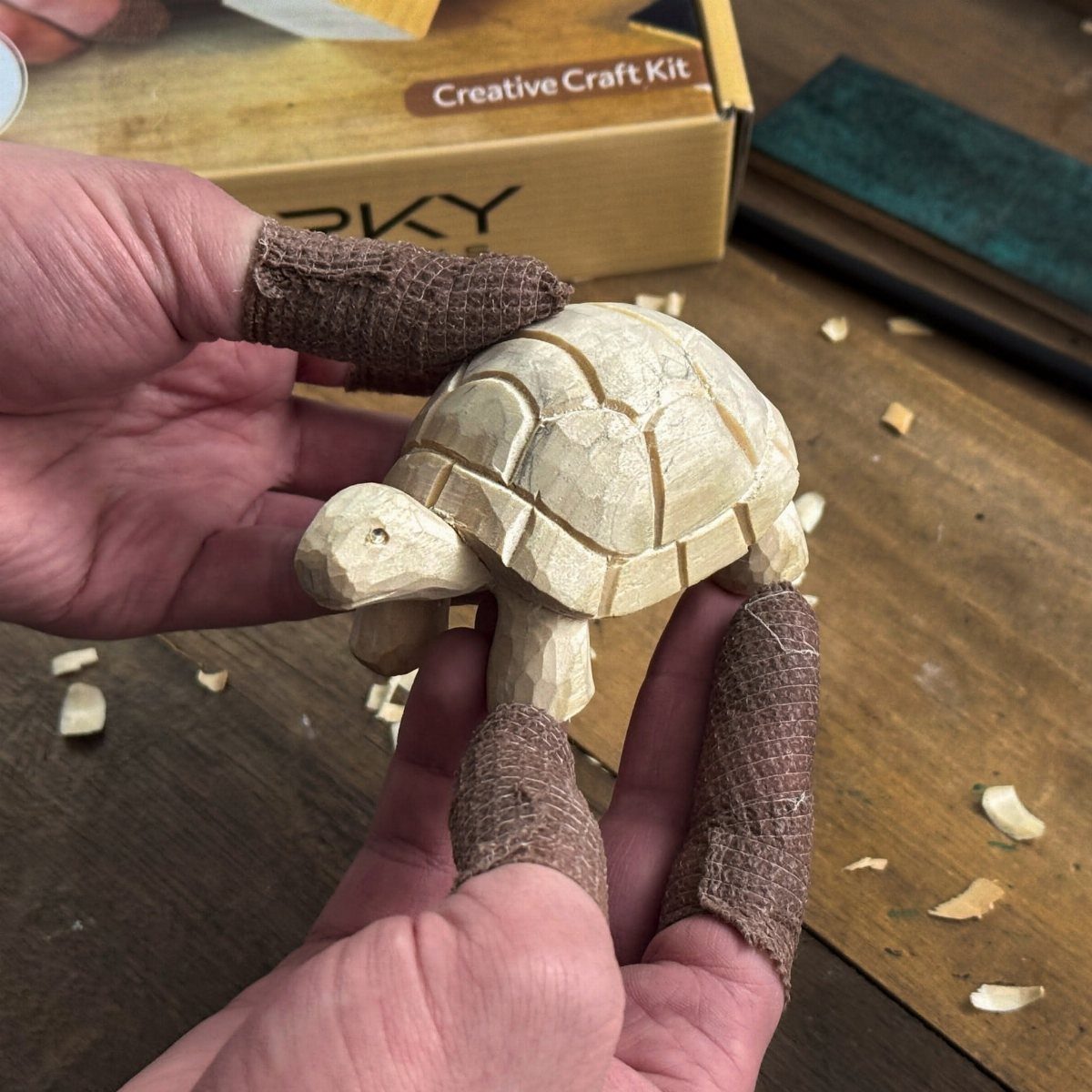
A turtle is about as friendly as a first carving gets: a domed shell, a small head, and stubby feet that don’t need much detail. Little of it is delicate, so one slip rarely ruins the piece.
Wear finger protectors on the hand holding the wood, and take thin shavings instead of forcing deep cuts. A boxed craft kit is a fine way to start if you don’t want to hunt down wood and tools yourself.
5. Decorative Wooden Animal Figurines
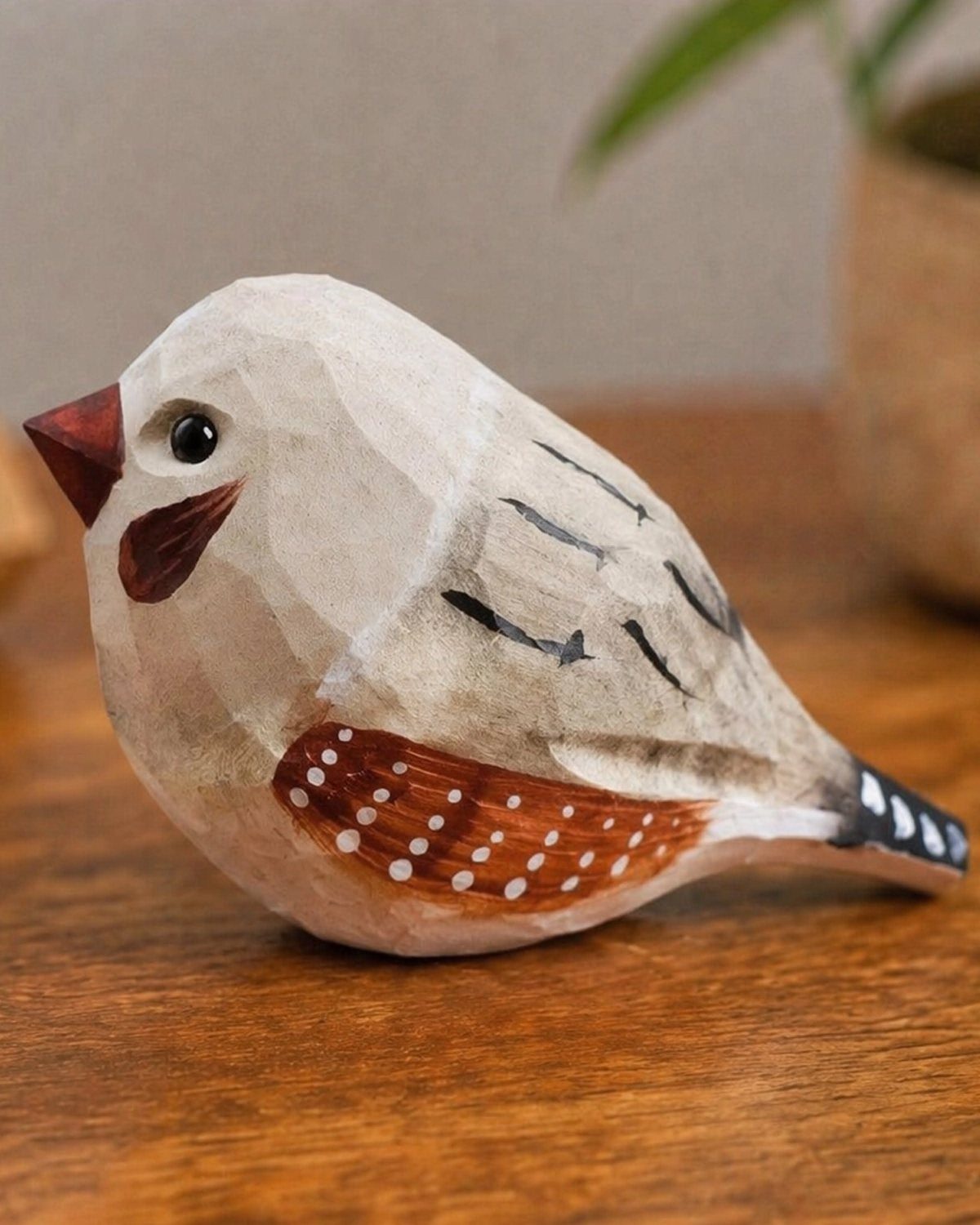
Paint is what makes a small bird figurine feel finished. Brown and white details, kept to a few clean areas, give the carved shape its character without hiding the wood underneath.
Carve the form first and keep the surface smooth so the paint goes on evenly. A fine brush matters more here than any expensive supply, since the markings are tiny.
6. Natural Wood Animal Carvings
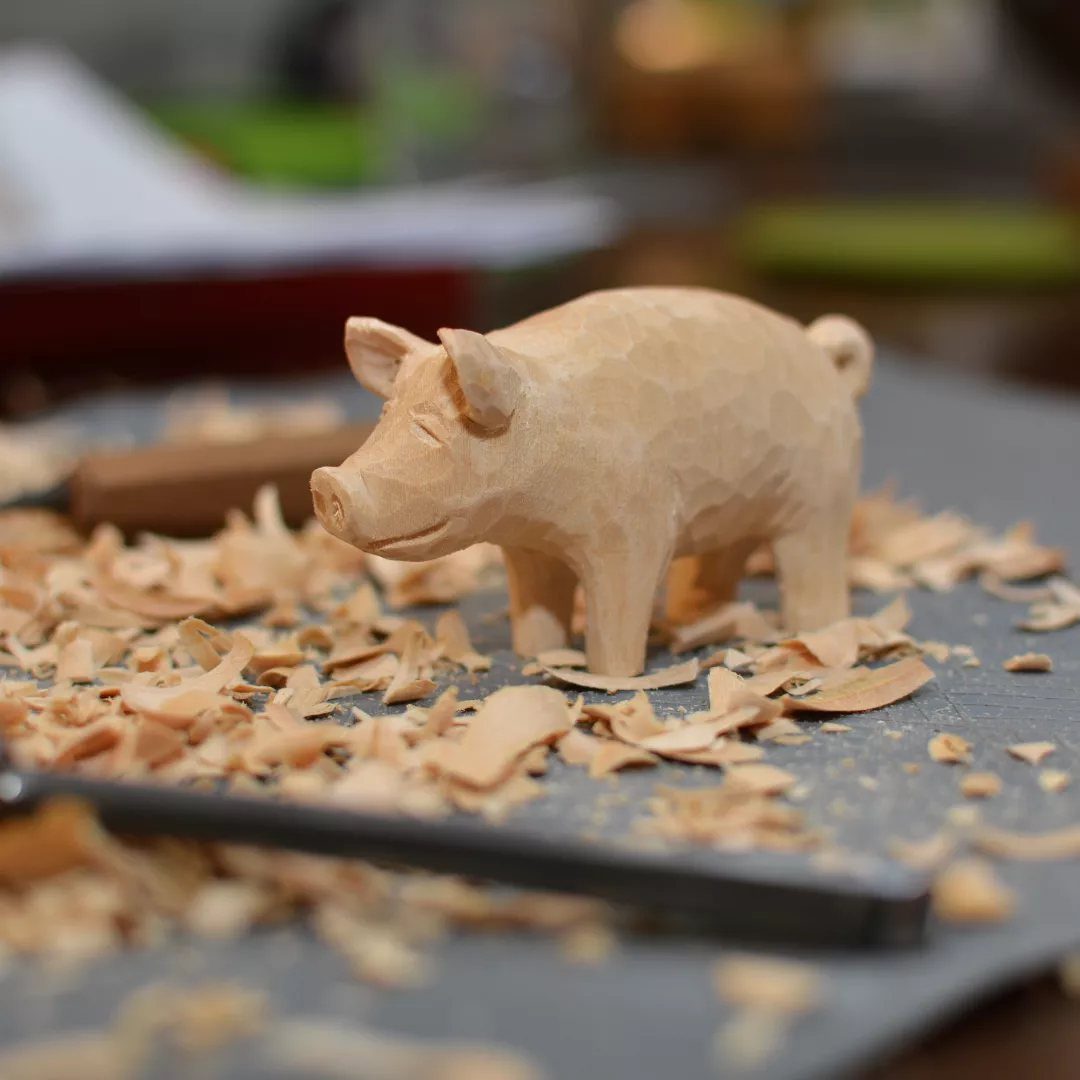
Leaving the wood untreated puts the grain and the knife marks in charge. A pig suits this well, since its plump, simple body needs no paint to read clearly.
Choose a piece of wood with grain you like, because it is the only decoration.
Finish with careful sanding, or leave the facets from the blade showing. Bare wood picks up dirt and handling marks more easily, and that is the price of leaving it natural.
7. Handcrafted Animal Sculptures
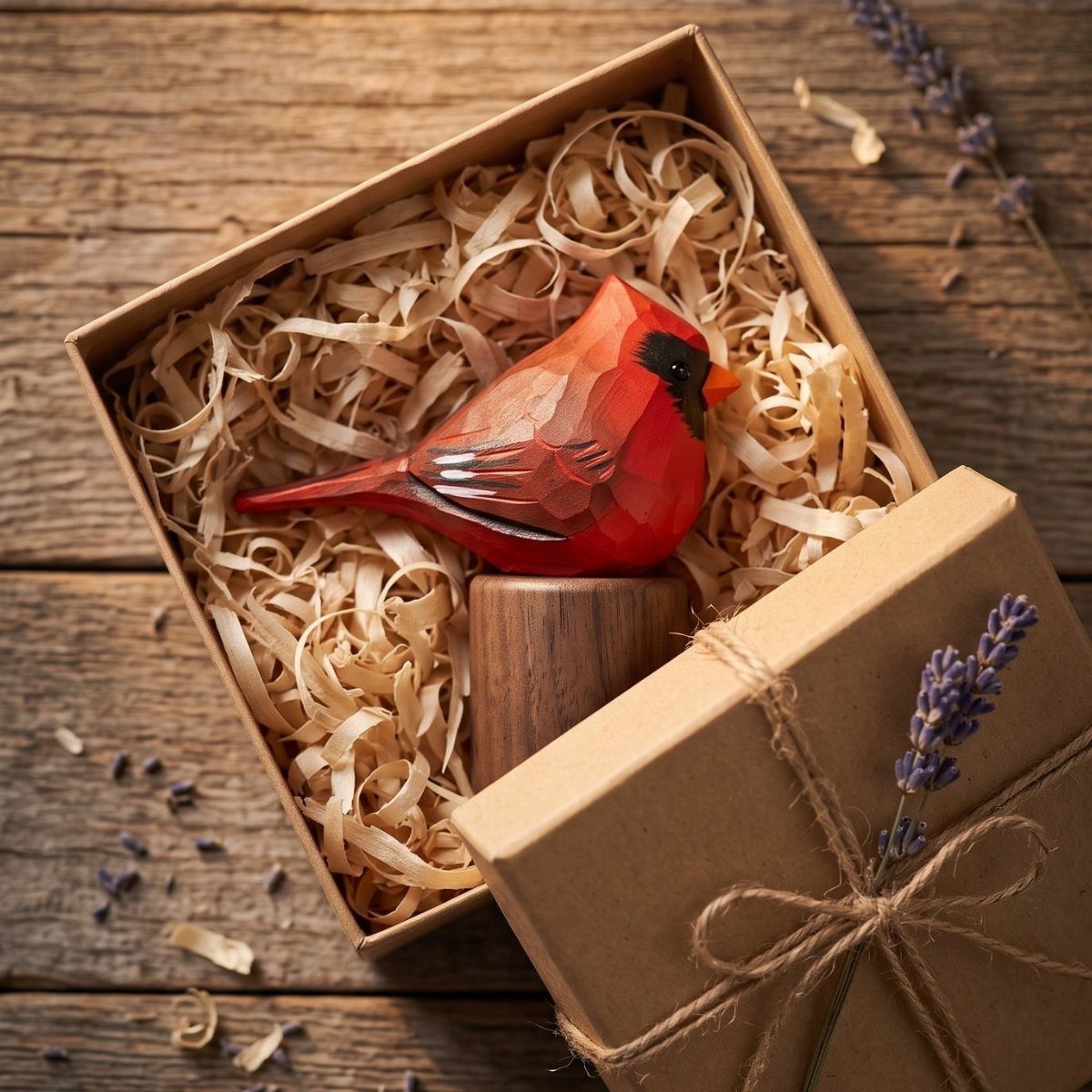
A single cardinal on a small pedestal reads as a finished sculpture rather than a craft piece. The base gives the bird a place to stand and gives the maker a spot to hold it while carving.
Red does the work here, so keep the body smooth and the shape simple. Paint can bring that color out, though I’d leave the pedestal in plain wood so the bird stays the focus.
Packed in a box with wood shavings, it is ready to give. Tuck in a sprig of lavender if you want a little extra.