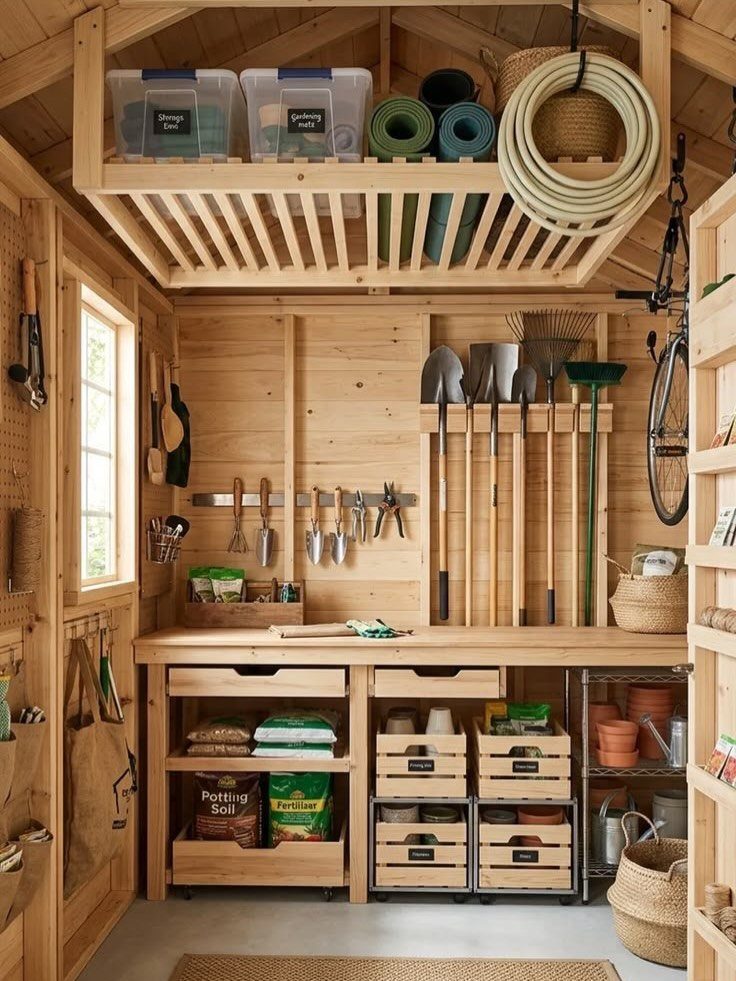
Where the tools live decides which idea fits: a wall you can drill into suits the wooden wall rack or storage hooks, a rental patio calls for the freestanding wooden organizer, and a damp garage corner is better served by a cabinet or outdoor locker with airflow around the tools.
A wall rack fits a tight nook well, because it sticks out only a few inches from the wall.
1. PVC Garden Tool Storage
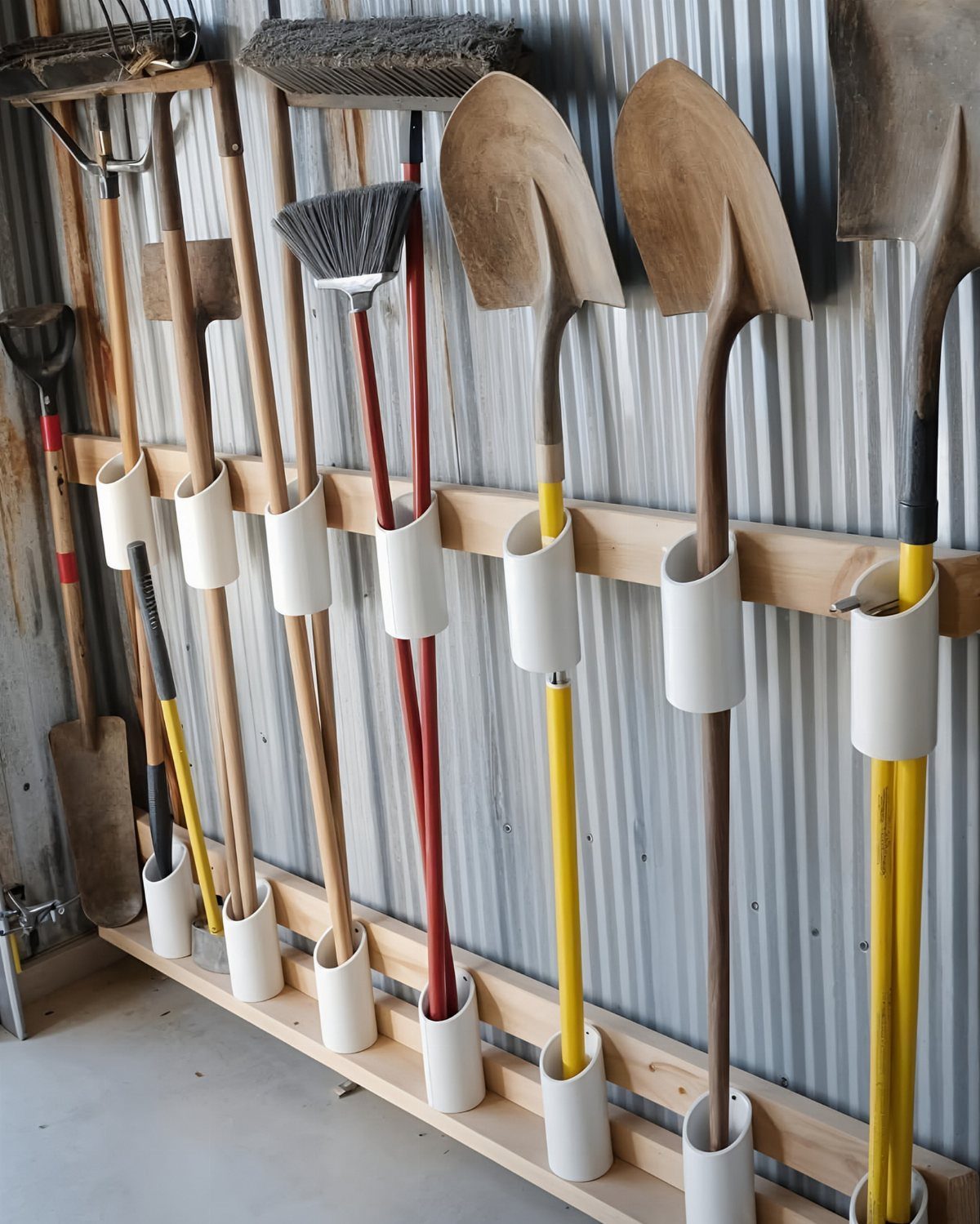
A length of white PVC pipe screwed to a wooden rail makes a tool holder for almost nothing, and it costs far less than a commercial tool tower.
Cut short sections, mount them in a row, and drop long handles through them so shovels and brooms stand upright against the wall.
Size each pipe to the handle it holds. A snug fit keeps tools from rattling loose, and wooden rails give you solid wood to drive screws into.
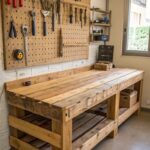
2. Wooden Wall Rack for Yard Tools
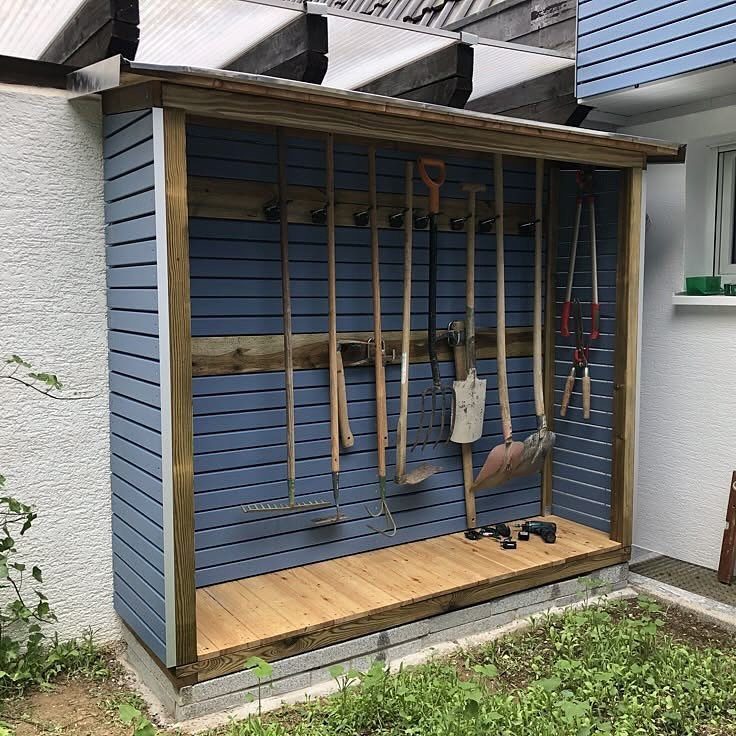
Tools that hang flat against a wall leave the floor clear, which matters in a narrow nook beside the house. A wooden rack with rakes, shovels and shears hung in a row takes up only a few inches of depth.
Mount it to studs or solid backing, since long-handled tools pull harder than they look. I would hang the heaviest ones lowest and keep shears at hand height.
3. Pallet Storage Rack
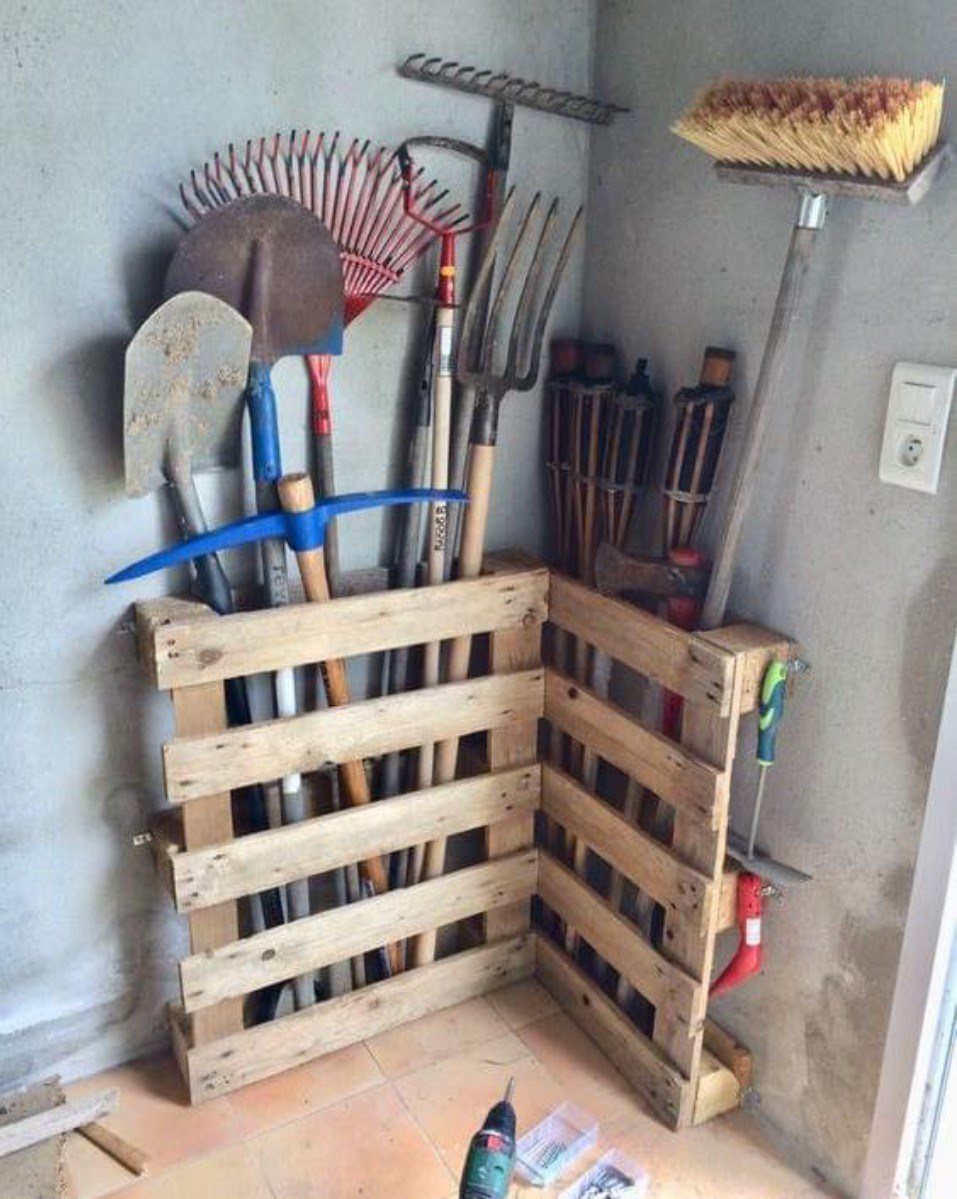
2 wooden pallets propped in a corner turn the slats into slots for handles and the gaps into places to hang smaller tools.
Slots between the pallet slats hold long-handled tools like shovels, rakes and a broom as they are, so no cutting is needed.
Pallets are usually free or cheap, so this is the lowest-cost rack on the list. Lean them securely against the wall and load both sides evenly so they stay put.
4. Wire Shelving for Garden Tools
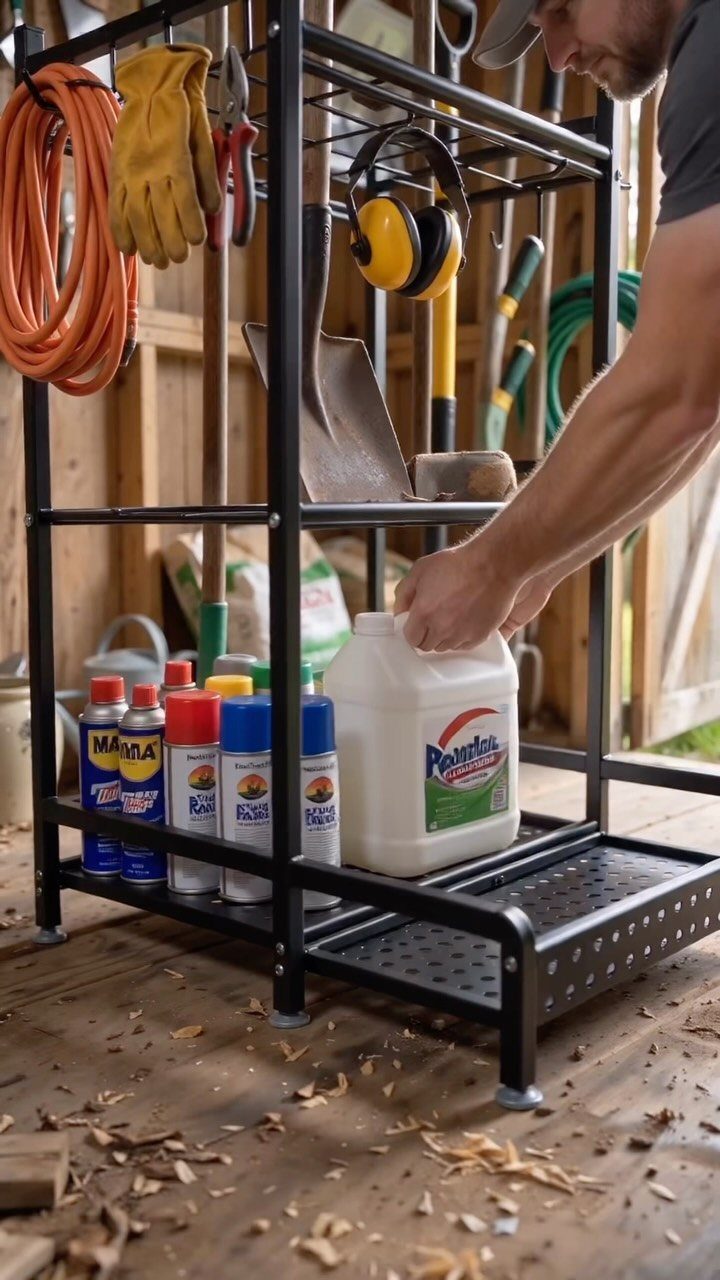
Black wire shelving is the fastest way to get a messy shed under control. Assemble the unit, set it against a wall, and sort by use: chemicals and small tools on shelves, a coiled hose on the end.
The open wire lets dust fall through and keeps everything easy to see. I would keep jugs on the lower shelves so a spill never drips onto tools below.
5. DIY Garden Tool Storage Shed
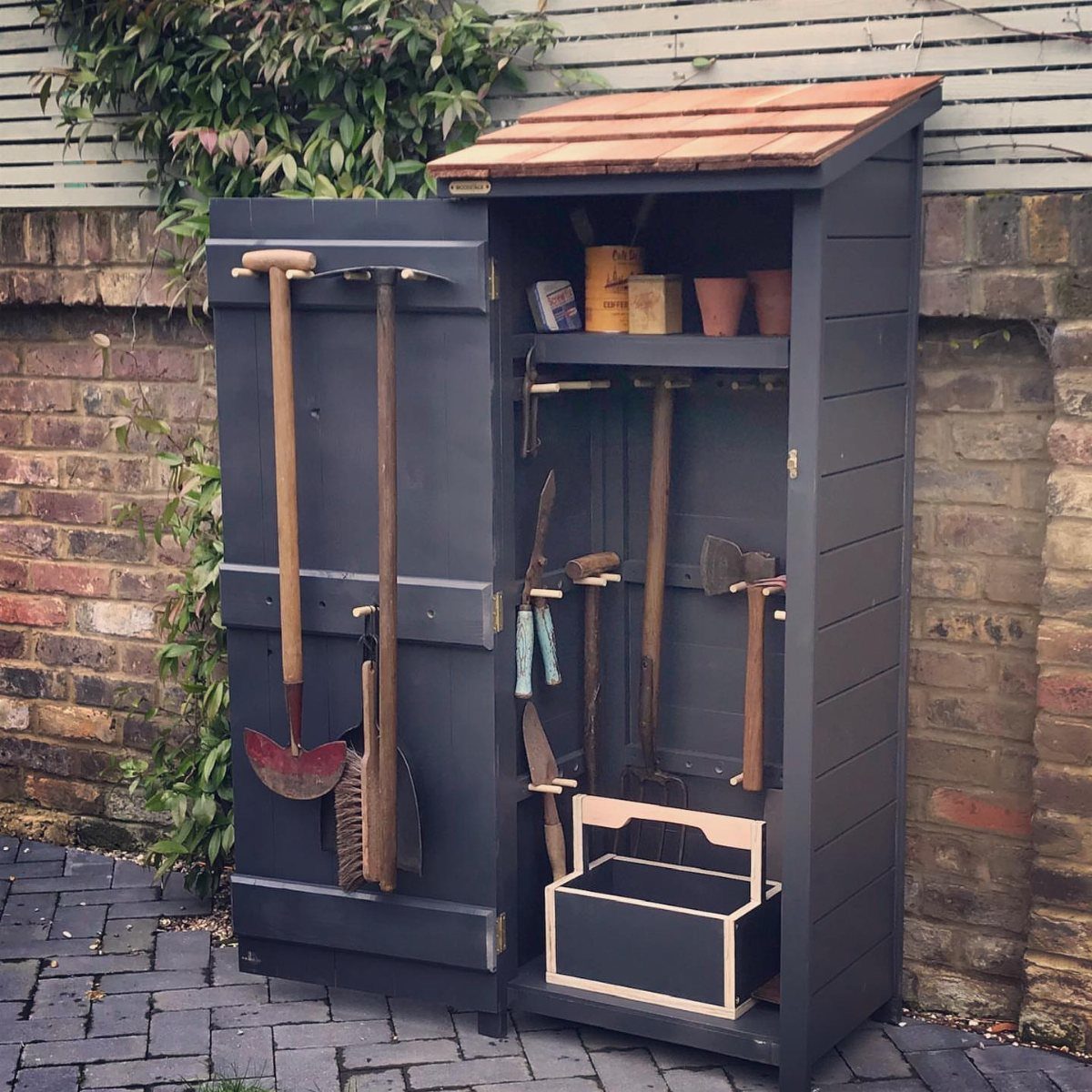
Building your own shed lets you size the interior around the tools you actually own instead of settling for a stock box. A sloped roof sheds water, and hanging hand tools on the walls leaves floor space for a bin.
This is the biggest commitment here, in time and in money, so plan it over several days rather than one afternoon. If space is tight, one of the wall racks does most of the job.
The Rubbermaid Garden Tool Storage is an efficient, innovative solution to organizing long-handled tools. From rakes and shovels to brooms, this tower rack can hold up to 40 tools at once and is perfect for home, outdoor, or shed storage applications.
6. Storage Hooks
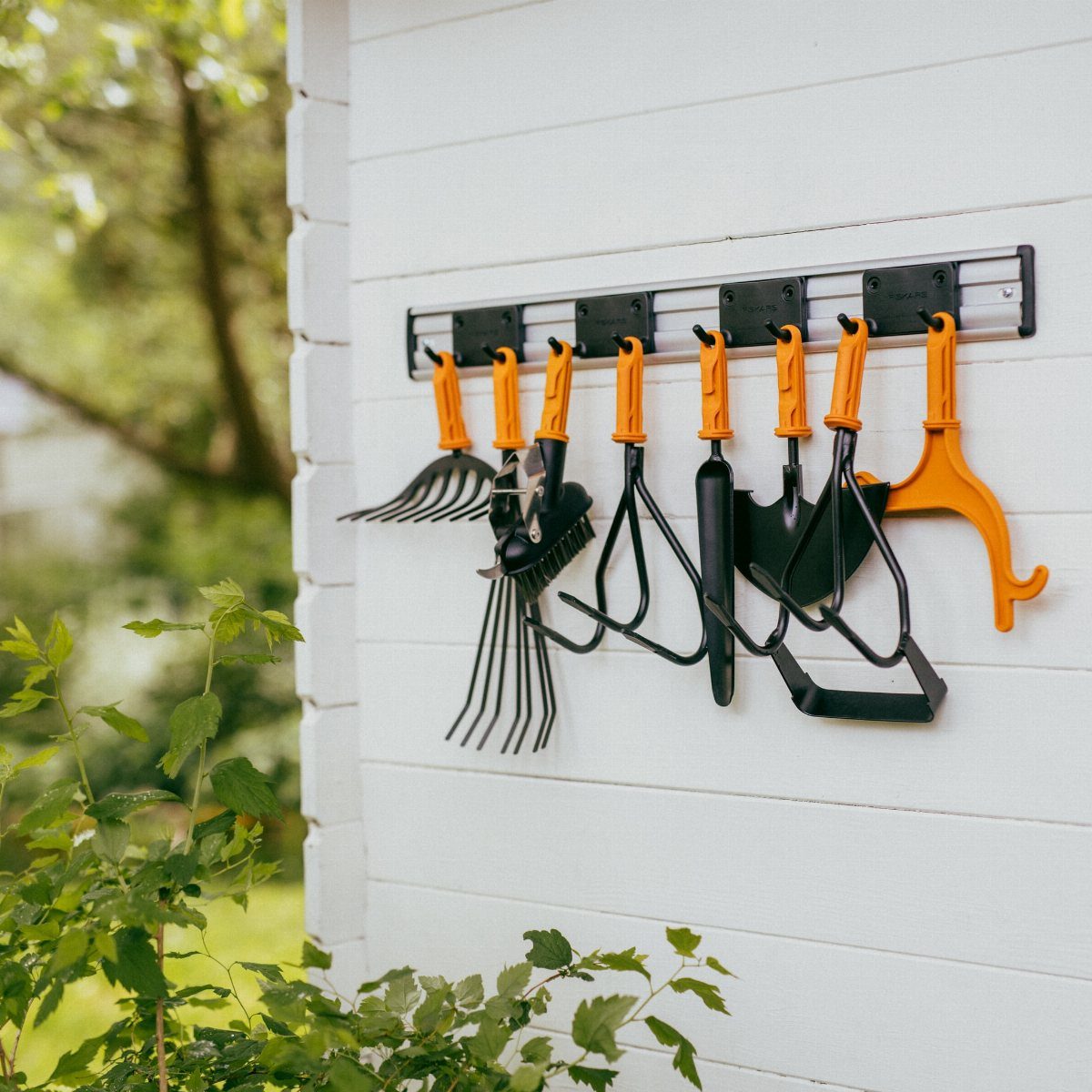
Hooks lift tools off the ground, and a metal rail with sliding hooks lets you rearrange them whenever your collection changes. Mount the rail level, then hang each tool by its handle.
Bright handles are easy to spot at a glance, which speeds up putting things back. Space the hooks so the tool heads do not bump each other.
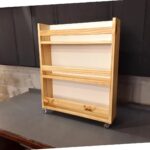
7. Freestanding Wooden Tool Organizer
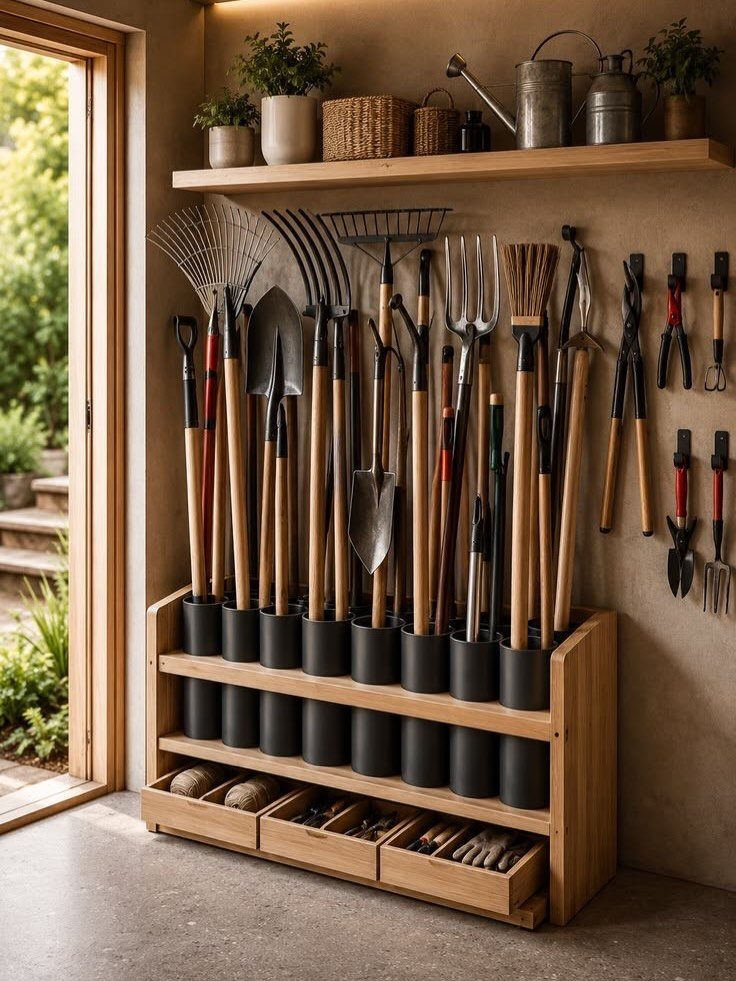
A freestanding frame with upright slots keeps long-handled tools standing in a row, and it needs no wall mounting at all. That suits a rental, a patio, or a shed wall you don’t want to drill into.
Drawers under the tube slots give small items like gloves and twine a home, so one piece holds both the long and the short.
I would set it against a wall and keep the heaviest tools in the slots closest to the floor.
8. Garden Tool Storage Cabinet
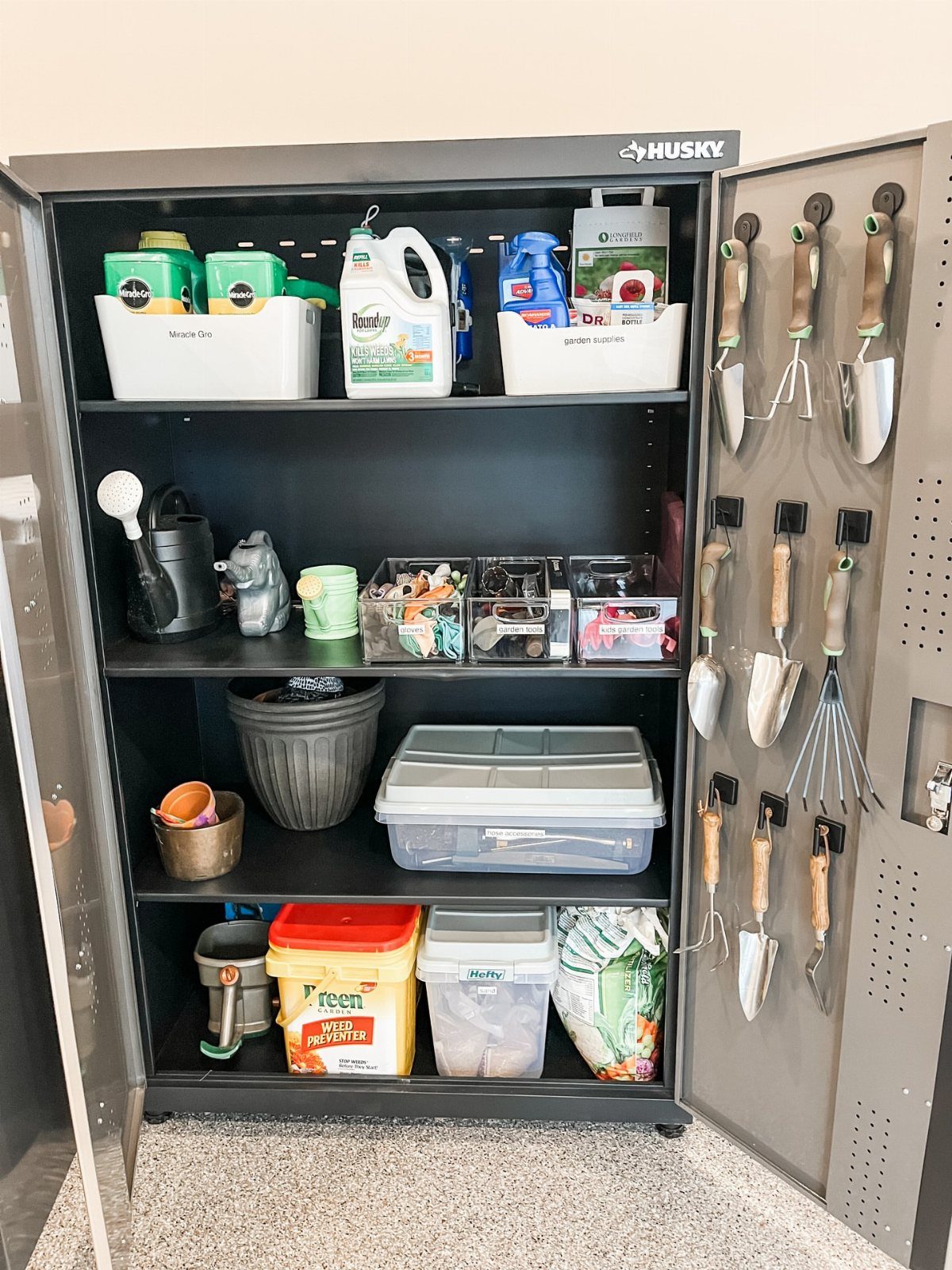
A tall metal utility cabinet gives a gardener shelves, a door, and a lock-ready closed front in one footprint. Hand tools hang on door-mounted organizers, while pots, soil amendments and gloves sit on the shelves.
A cabinet like this works well in a garage corner where floor space is limited.
Group by use before you load it: trowels and pruners on the door, bagged supplies on the shelves. Cheap hooks or a pegboard strip inside the door add more hanging room.
9. Wall-Mounted Garden Hose Holder
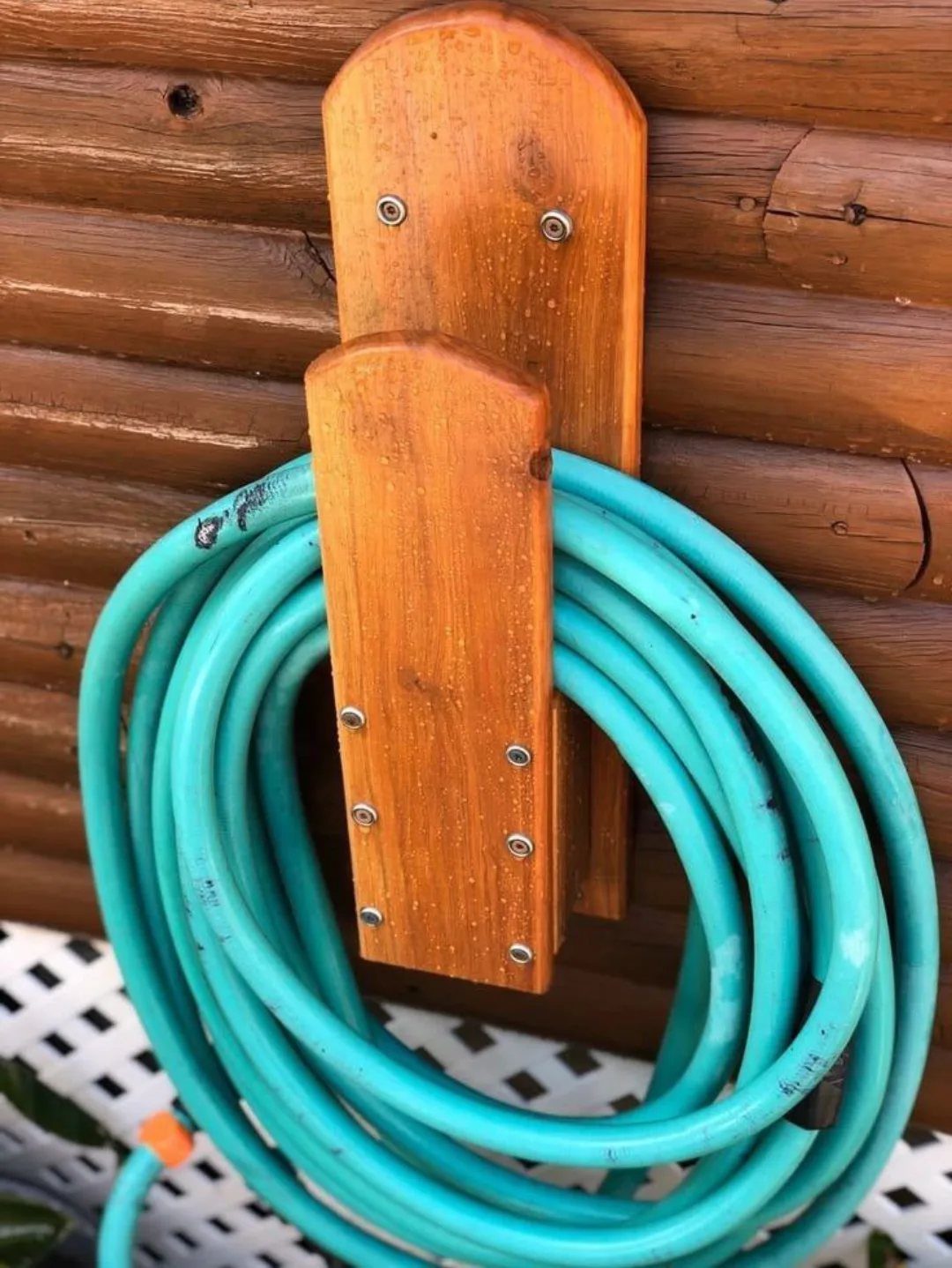
2 wooden pieces screwed to a wall make a hose holder that cradles the coil off the ground.
A hose left on the ground kinks and gets stepped on, so a wall cradle is a small fix that clearly earns its spot on the siding.
Mount it near the spigot so the hose reaches the garden without dragging.
Drive the screws into solid wood or a stud, since a wet hose is heavier than it looks. Wind the hose in even loops before you hang it.
10. Outdoor Storage Locker
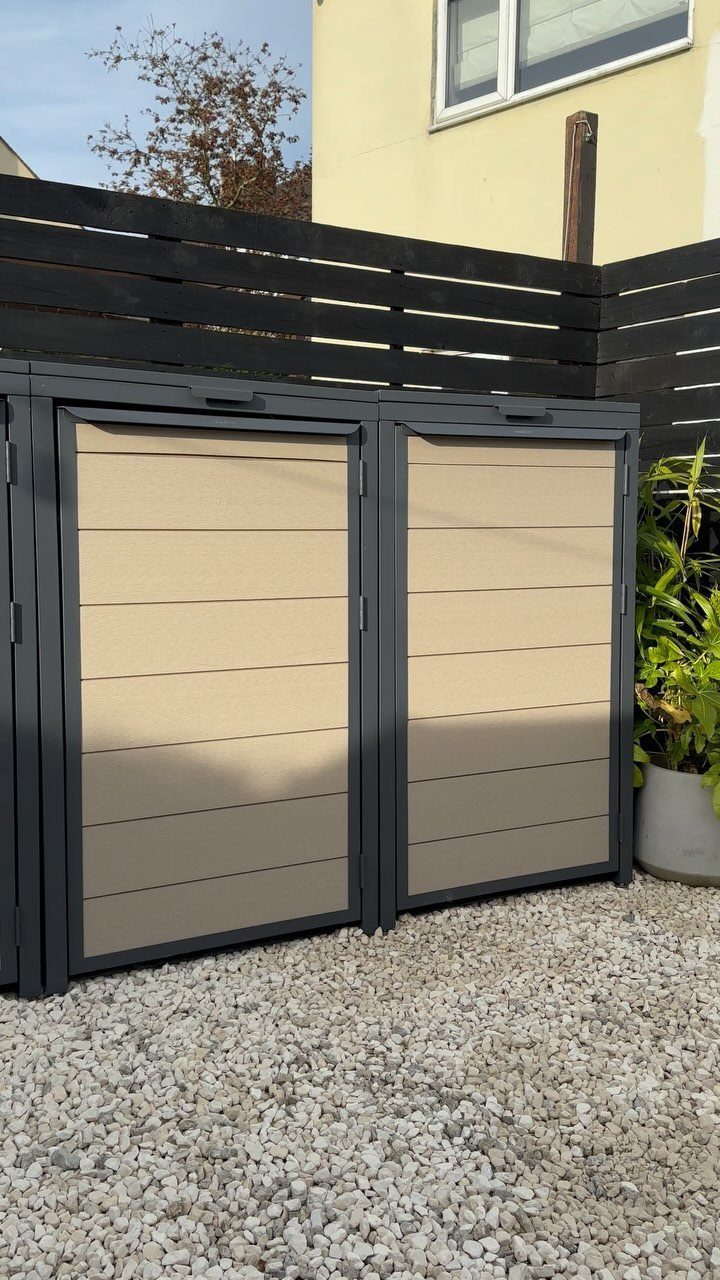
A compact outdoor locker with slatted sides stands in a side yard and shelters tools without a full shed build.
It is the right call when the budget is small and you want something you can set in place and fill the same day.
Level ground matters, and gravel under it keeps the base off wet soil.
Put long tools in the tall side and small ones on shelves. Check how much it holds before buying, because lockers fill fast.
Preventing Tool Damage with Proper Storage
Damp is what ruins tools. A garage corner that stays wet will put rust on steel faster than any amount of use, and wear follows once the surface pits.
Weatherproof containers and good airflow are the 2 fixes that matter most. Airflow keeps moisture from sitting on metal, so leave a gap around a container or cabinet instead of packing it tight against a wall.
Wipe metal parts dry before they go away, and coat them with paint or rust-inhibiting oil. A few minutes of that saves you repair time later and protects what you paid for.
Maintaining Garden Tool Storage
Make a quick inspection part of the routine. Check each tool for cracked handles, loose heads and weather damage a couple of times a year, since a small split fixed early costs far less than a new rake.
Check the metal parts first. Bare steel needs a coat of paint or a wipe of rust-inhibiting oil, and I’d redo it any time the finish starts looking thin or patchy.
Clean tools after use, let them dry, and put them in a dry spot. Dirt holds moisture against the metal, so a tool put away muddy will rust even in a decent space.
Indoor vs Outdoor Storage
Indoors or out depends on the tool. Heavy ones like shovels and rakes can live outside in shaded areas, though inside keeps them dry and rust-free, which I prefer when there is room.
Hand tools, gloves and twine are light and used often, so keep them indoors in a spot you can reach without a trek across the yard.
Outdoor storage works if the box is weatherproof, and a small cabinet built from pressure-treated lumber is a solid way to get there. Give it good ventilation and keep it off wet ground, since ground moisture creeps up into everything.
Frequently Asked Questions
What is the best way to store garden tools?
Match the storage to the tool. PVC pipe sections screwed to a wooden rail make a cheap holder, as long as each pipe fits its handle snugly.
What is the best tool box for home use?
For garden tools, I would pick a tall metal utility cabinet with a door. It gives you shelves for pots, soil amendments and gloves, plus door-mounted organizers for trowels and pruners, all in one footprint.
A corner of the garage with little floor space suits this one well, and a hook or pegboard strip screwed to the inside of the door gives you extra hanging room.
How can I effectively organize my garden shed?
Sort by use first, then match each group to a spot. Jugs go on the bottom shelves so a leak can’t drip onto tools below, and long handles go up on wall hooks to clear the floor.