Of these 5 beds, the ones that suit you depend on how much of a build you can finish in an afternoon: a low-profile platform bed or a grid panel headboard made from narrow strips glued to a backer board is within reach, while a traditional paneled bed with rails and stiles takes patience, and a live edge slab means paying more for lumber and finding a helper to move it.
1. Live Edge Slab Bed
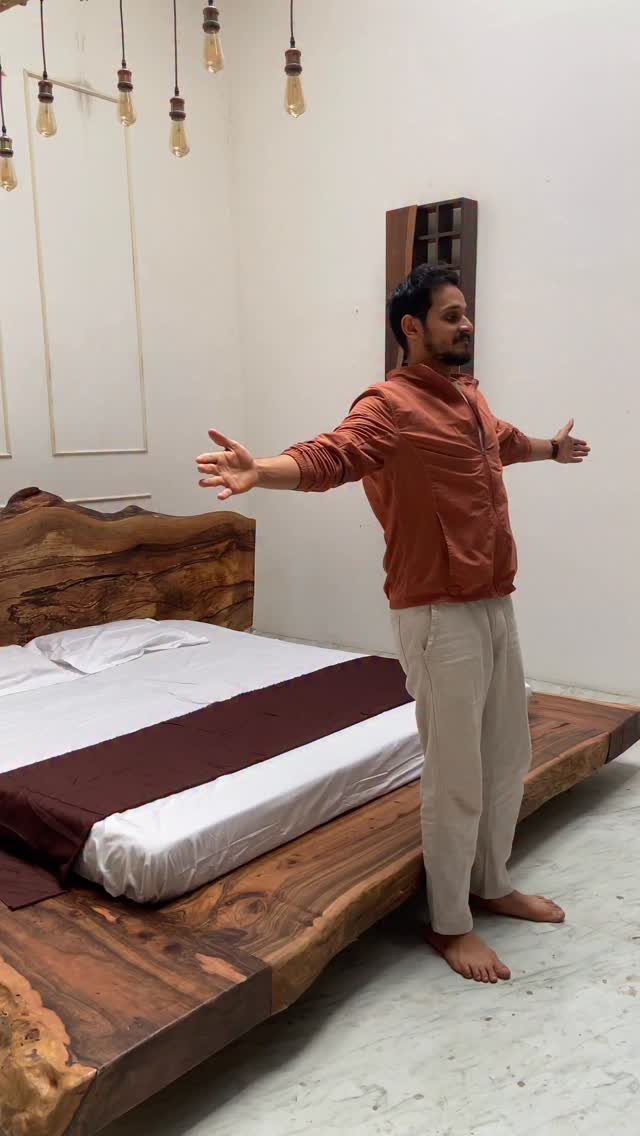
A live edge slab keeps the tree’s natural outline as the headboard’s top line, so no 2 beds come out alike.
That makes the slab the whole design, and I’d leave everything else plain, the way the matching frame does here.
Choose a slab with an edge you like before you think about anything else, since you can’t change its shape later.
Sand the face smooth and finish it so the grain shows. A clear finish keeps the wood looking natural.
Expect slab lumber to cost more than standard boards, and plan on a helper for moving it.
2. Wood Frame with Upholstered Headboard
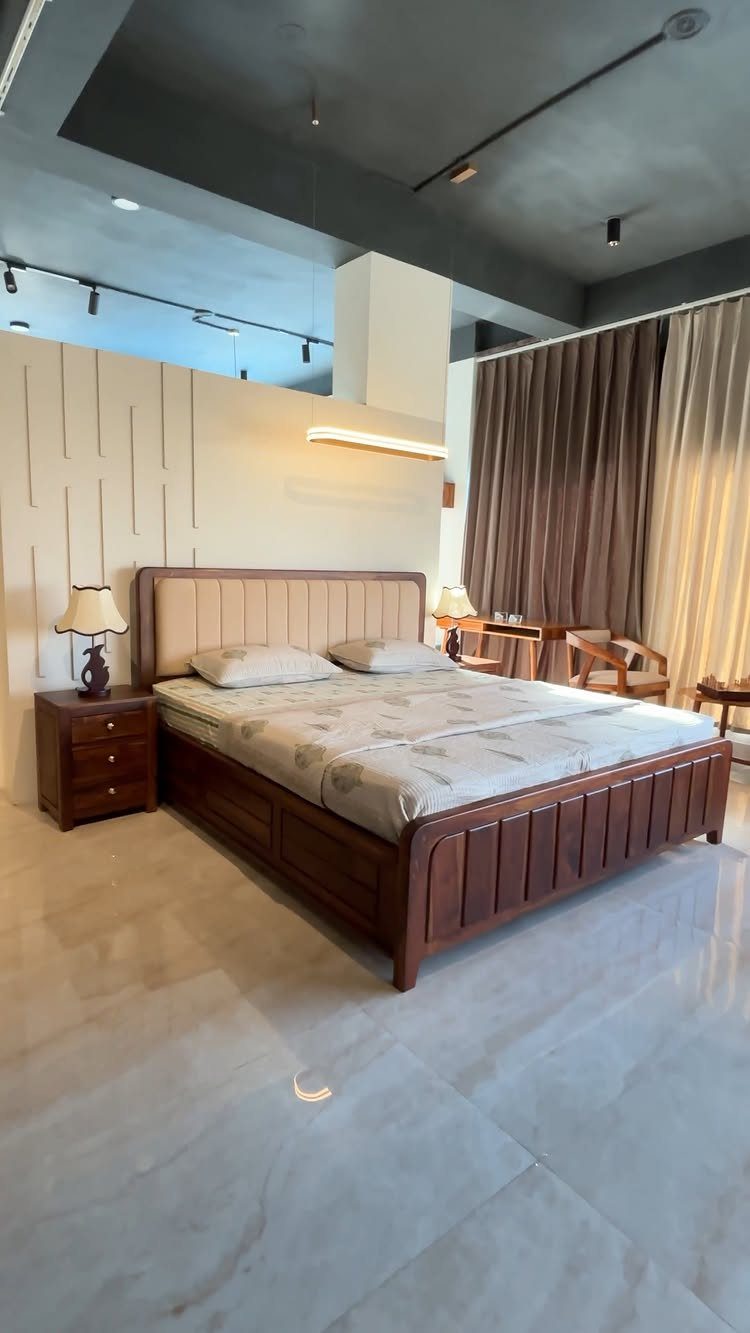
Dark wood below and soft fabric above is a pairing I like for a bedroom that needs to feel calm.
The frame gives the bed weight, while a tall, cushioned headboard gives you something comfortable to lean against when you read.
For an afternoon build, make the wood frame first. Then pad a plywood headboard panel with foam and batting, and wrap it in fabric with a staple gun.
A beige fabric stays quiet next to dark wood. Choose a tightly woven upholstery fabric, because it pulls smooth and hides staples better.
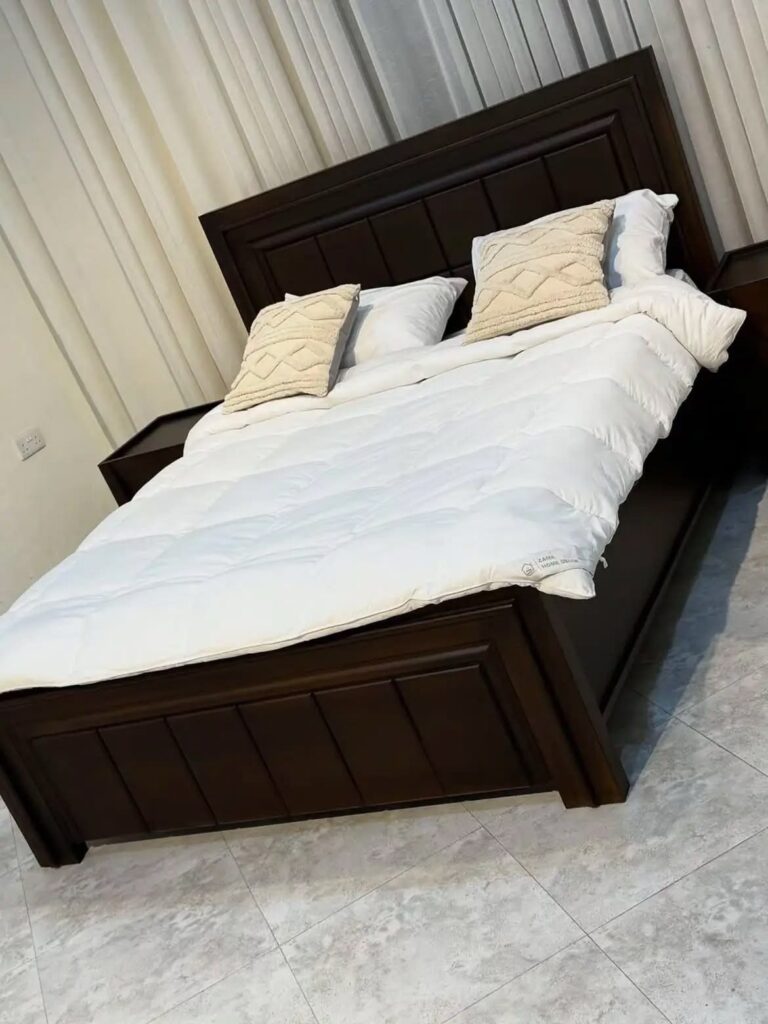
3. Traditional Paneled Dark Wood Bed
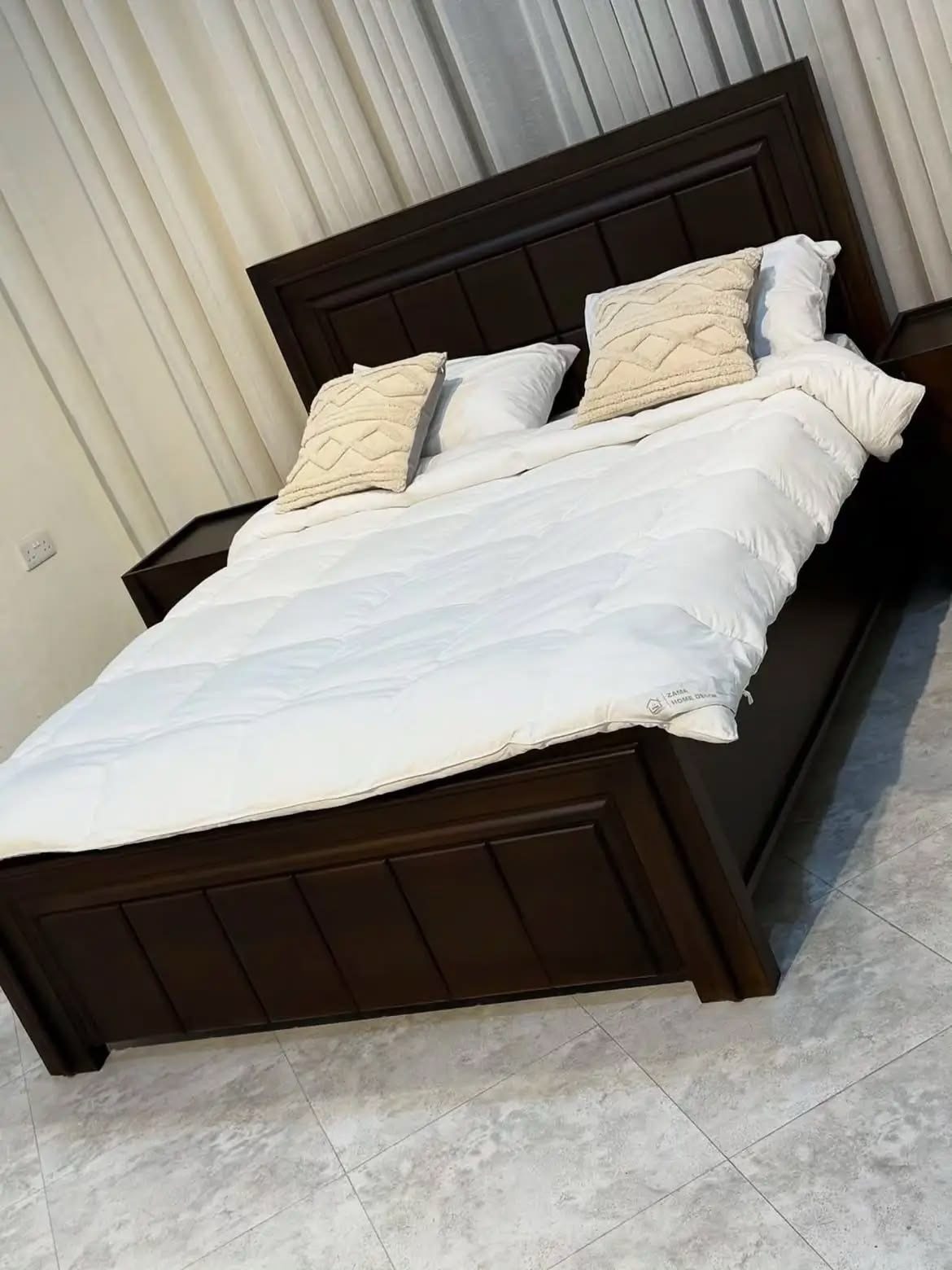
Raised panels on both the headboard and footboard give this bed its classic, furniture-store look. Dark brown stain makes those panel edges read clearly, even with plain white bedding on top.
Building one takes patience: each panel sits inside a frame of rails and stiles. If that feels like too much for one afternoon, you can fake the look by attaching trim to flat boards.
A matching footboard looks complete, but it does block the view from the foot of the bed and makes the bed harder to walk around. Skip it if your room is tight.
4. Grid Panel Headboard Bed
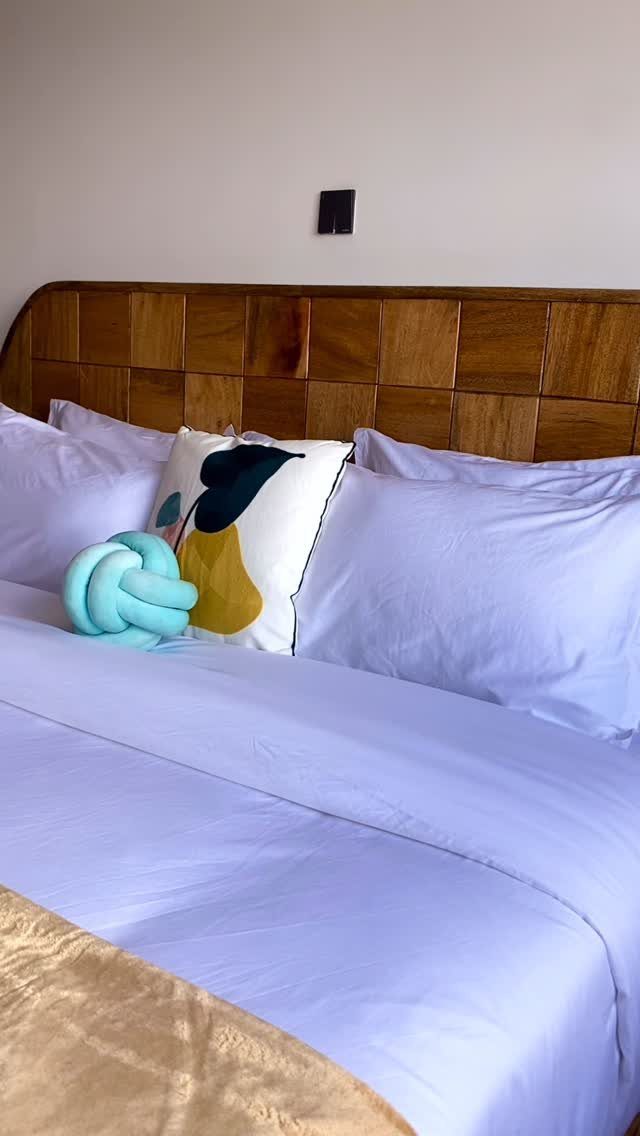
Recessed rectangles turn a plain brown headboard into something with real structure, and the grid does the decorating for you.
A headboard this graphic already carries the room, so I’d keep the bedding simple: white linens and a single accent pillow in one color pulled from the wood.
For a quick build, cut a backer board and glue on a framework of narrow strips, so the openings read as recessed panels. Keep the rectangles an even size and check each strip with a square before the glue sets.
Stain everything after assembly so the color matches. A wall that stays plain lets the pattern stand out.
5. Low-profile Wooden Platform Bed
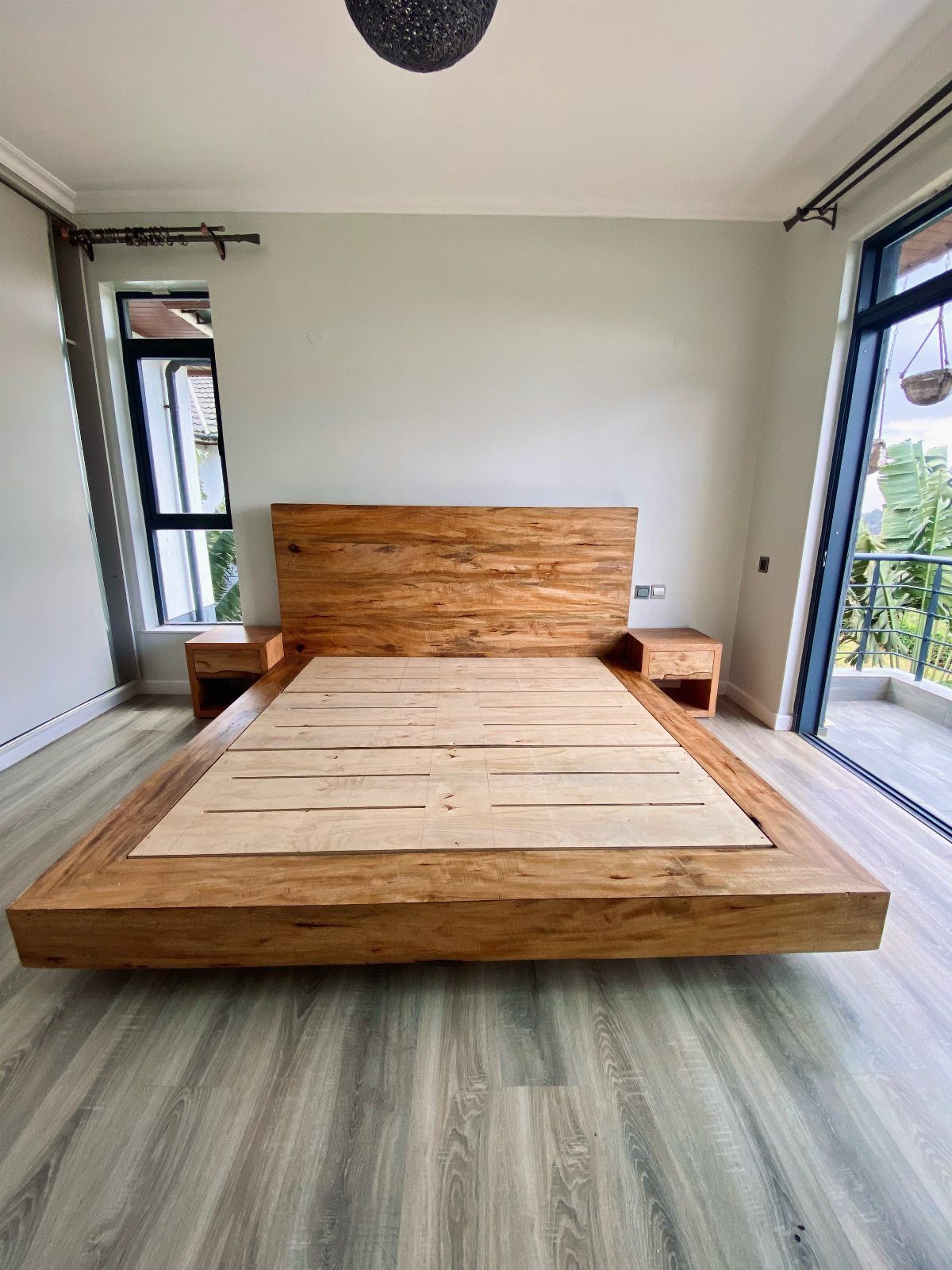
Sitting close to the floor, this natural wood platform bed keeps the room feeling open and bright. A flat headboard and attached floating nightstands mean one piece of furniture handles the whole bedside.
Attaching the nightstands to the frame saves floor space and keeps the lines clean. Make sure they are fastened to the frame securely, and keep the headboard flat with no trim.
A low bed does mean a lower climb in and out, so think about how that suits you.