What decides your idea is the surface you’re starting with: wood takes paint, stain or a faux marble top with little prep, while laminate, Formica, metal and plastic each need a primer made to grip them first.
Projects here range from an afternoon job, like repainting just the drawer fronts on a worn dresser, to a faux marble console top sealed with 2–3 thin coats of water-based clear polyurethane.
Check what the piece is made of before you pick a color.
1. Paint and Stain Furniture
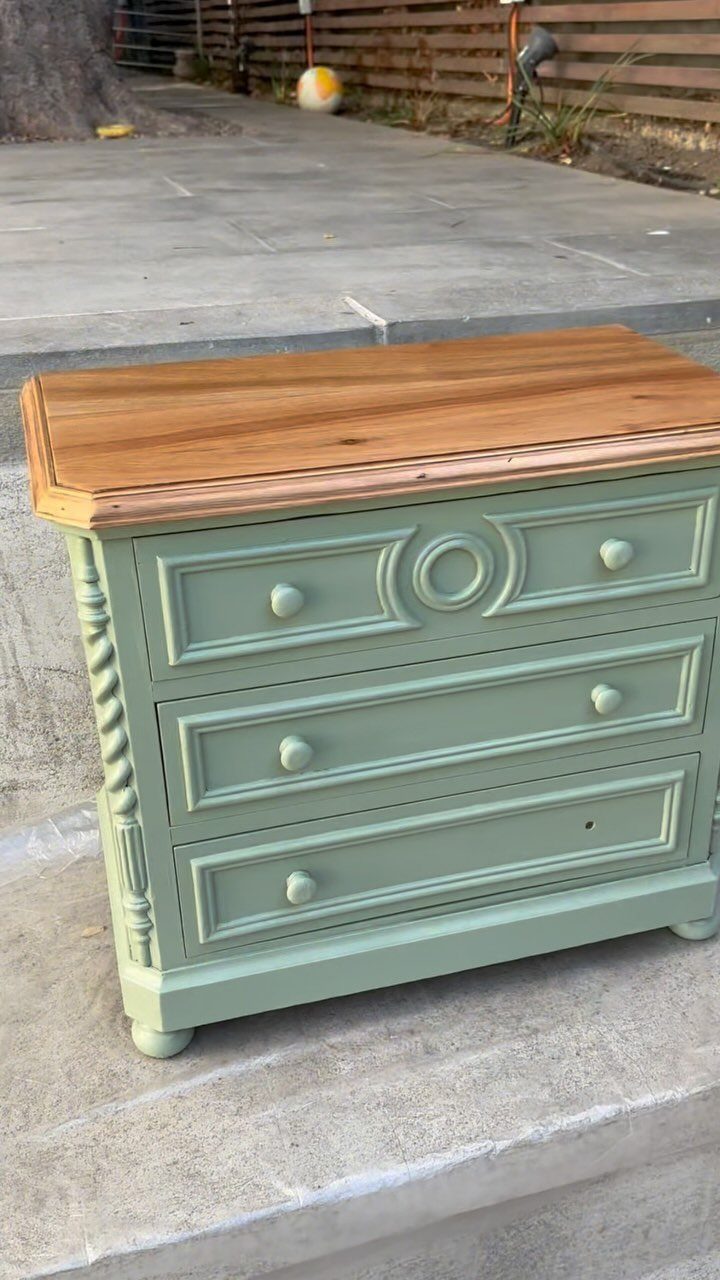
Paint the body, stain the top: that split is what makes a plain chest of drawers look designed. A sage green body next to warm wood grain gives you two textures from one piece.
Strip or sand the top down to bare wood before staining, and tape the edge where the 2 finishes meet. Stain the top first, let it dry, then tape over it before painting the body.
I’d pick a muted green like this one. Louder colors fight the wood.
2. Purple Painted Furniture
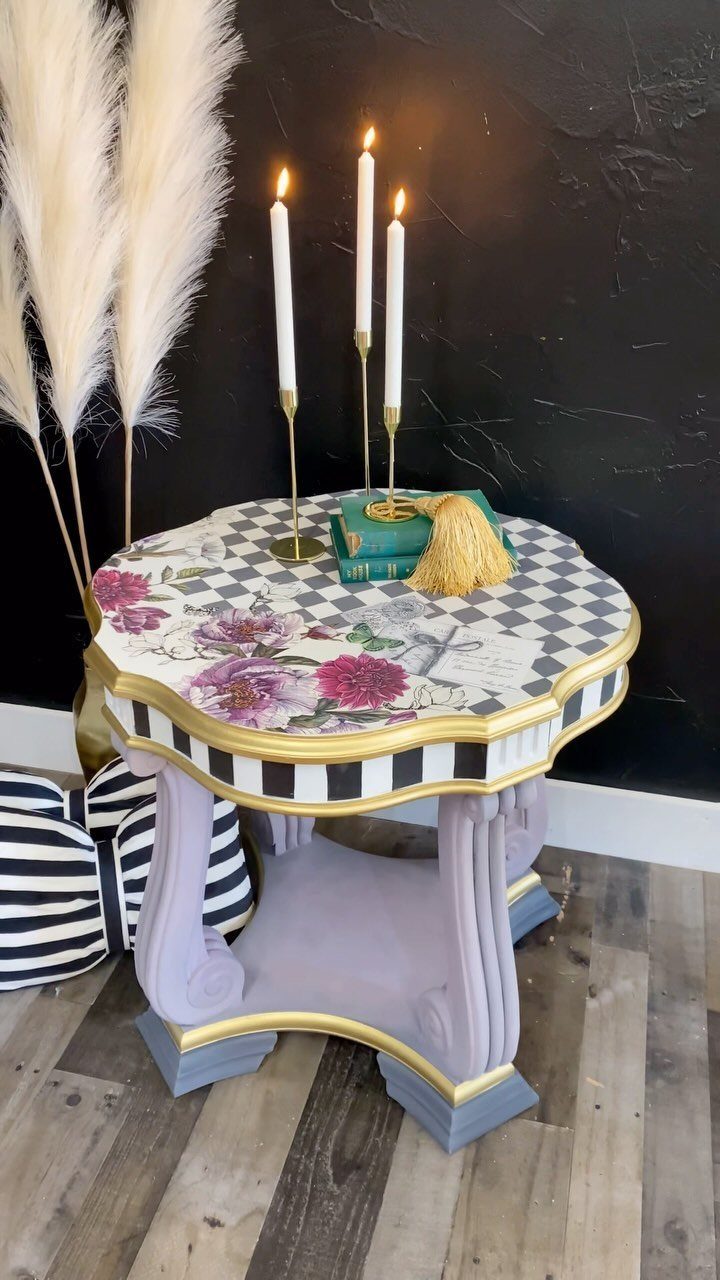
Purple works best on a small piece with plenty of detail, and an ornate octagonal side table is a good candidate. A deep purple base with gold trim lets the carving read as the star.
Paint the base first, then pick out the trim with a small brush and a steady hand. Gold on the raised edges only keeps it from looking busy.
A black wall behind it, as here, makes the purple look richer. Budget-wise, a table this size takes very little paint.
3. Painted Fabric Furniture
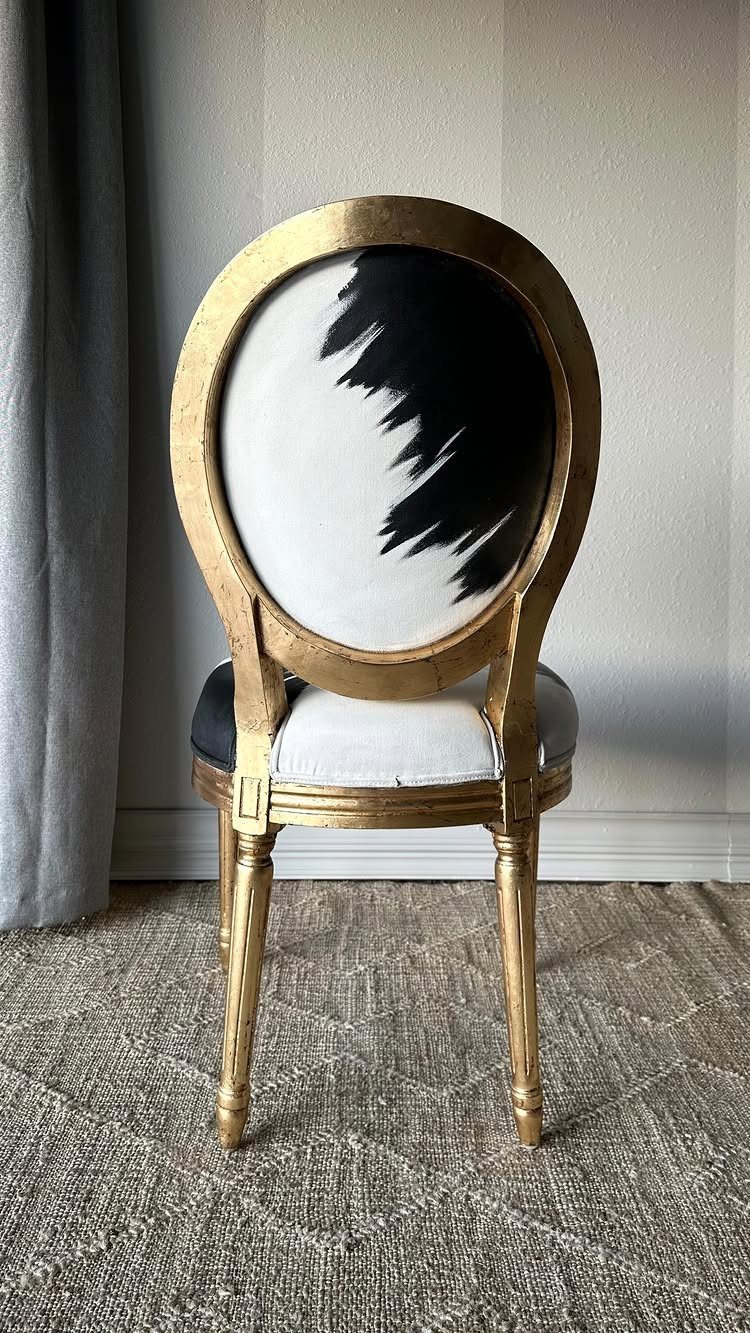
Upholstered chairs don’t have to be reupholstered to look new.
Painting fabric works best on a light, tightly woven upholstery piece, and a single bold stroke of black fabric paint thinned with a little water gives you abstract art that still bends with the seat.
Pair it with a painted frame, like the gold one here, so the wood and fabric feel like one design. Fewer strokes look better than many.
Test your paint on a hidden patch of fabric first. Painted fabric can stiffen, so keep the design modest.
4. Painting Drawer Fronts
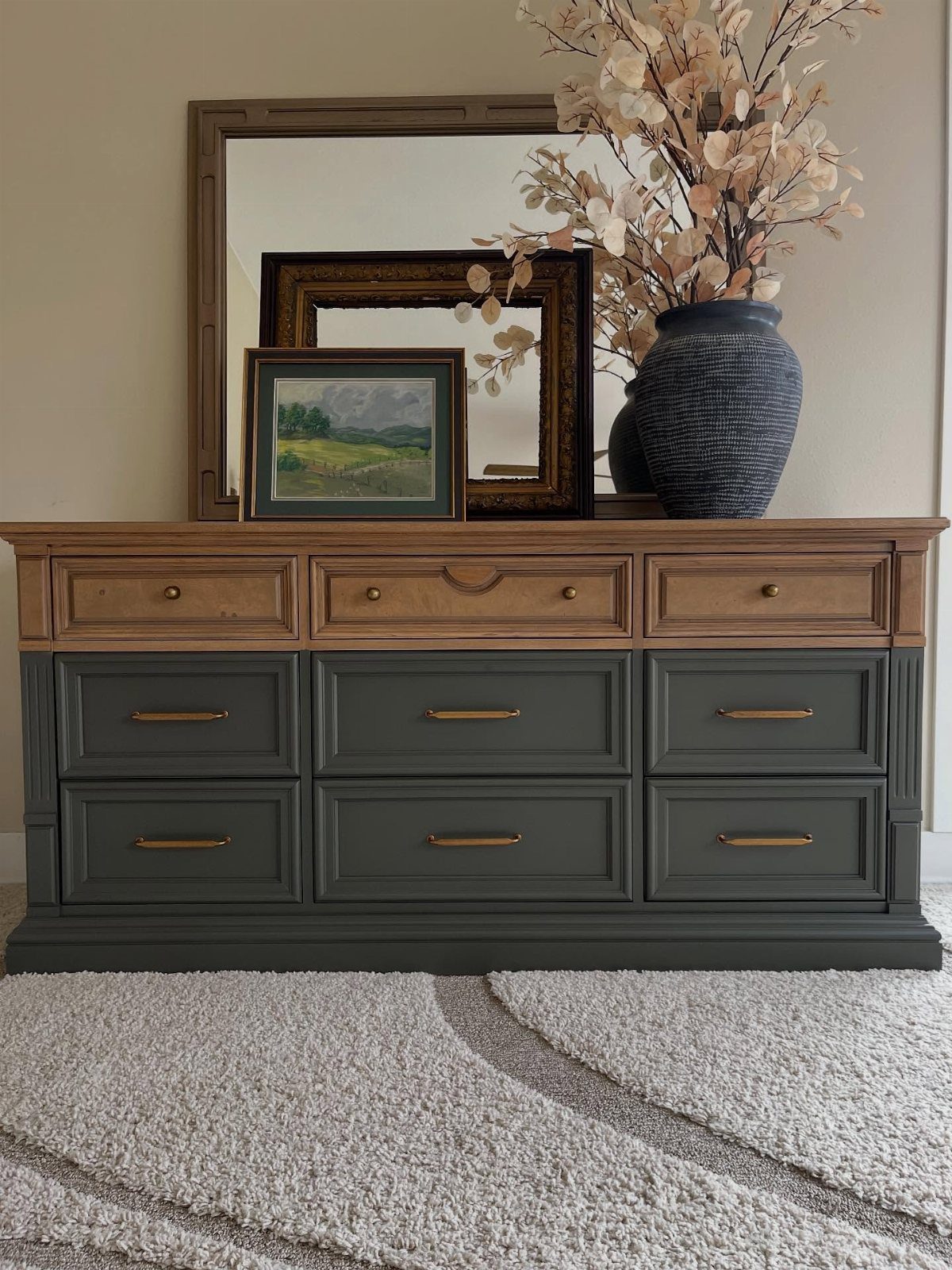
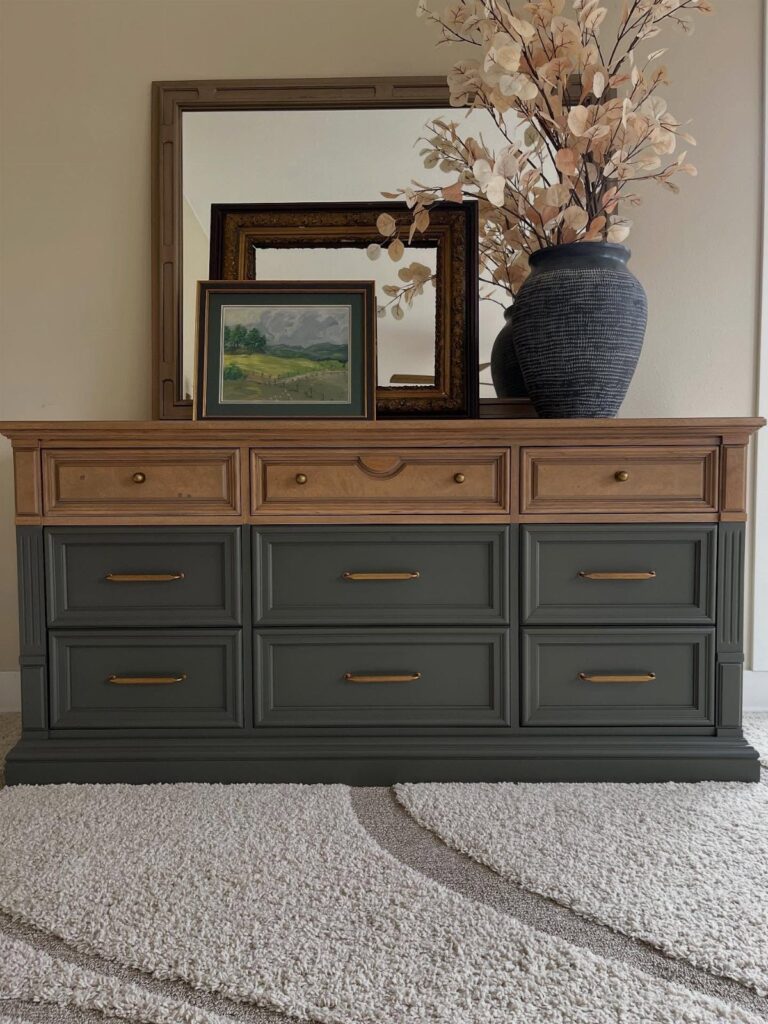
Painting only the drawer fronts is the fastest update a tired dresser can get.
Natural wood on the top drawers and a dark grey-green on the lower ones makes a two-toned piece that reads as a deliberate choice, so tape off the edge of each drawer front and keep the line crisp.
Remove the drawers and handles first so paint doesn’t pool around the hardware. Gold pulls against the dark paint look sharp, and swapping them costs little.
I like this because the frame and top stay untouched, so you finish in an afternoon.
5. Faux Marble Effect
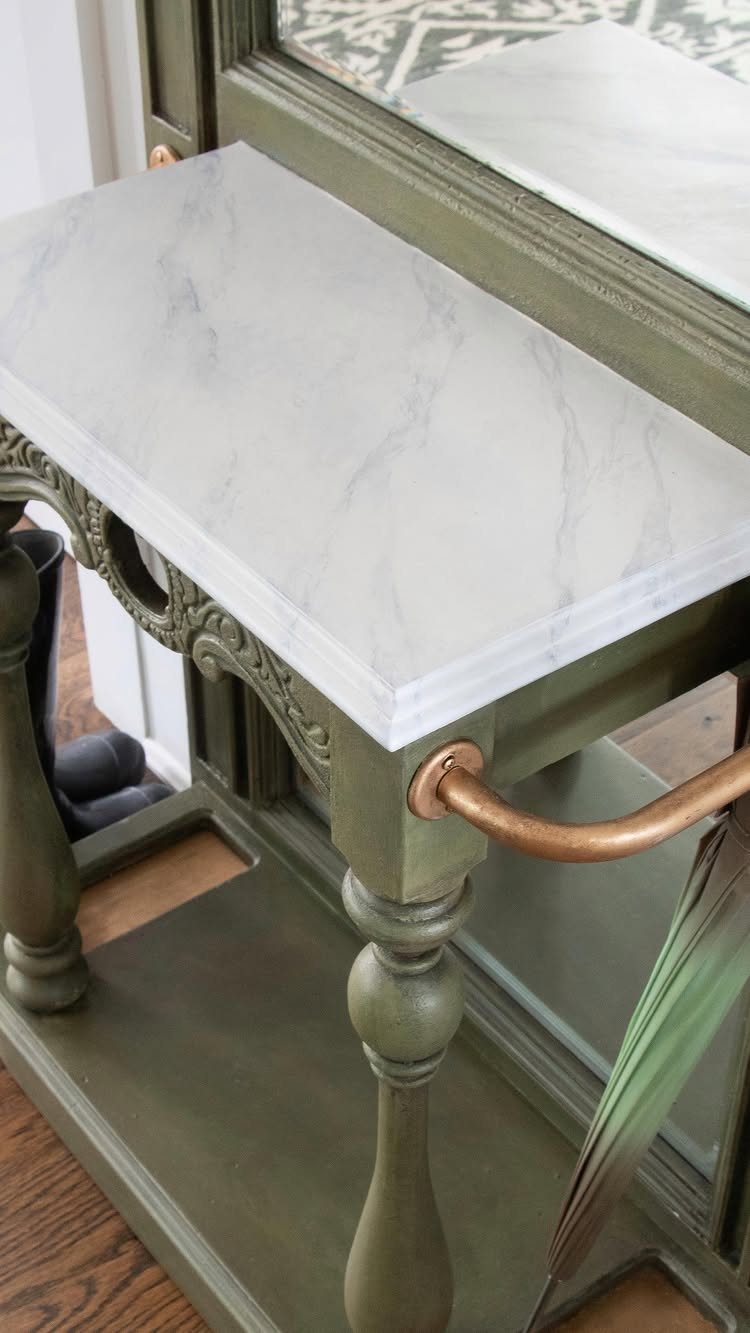
Faux marble lets a console table top look like stone without the price of stone. A white base coat with soft grey veining on a flat top is the whole idea.
Paint the veins thin and uneven, then blur a few with a dry brush. Real marble never repeats, so avoid anything symmetrical.
A deep olive on the body sets off a white faux marble top, and copper hardware adds a warm accent that ties the two together.
A faux marble top will see cups, plates and elbows, so brush on 2–3 thin coats of clear water-based polyurethane to protect the paint.
6. Accent Colors
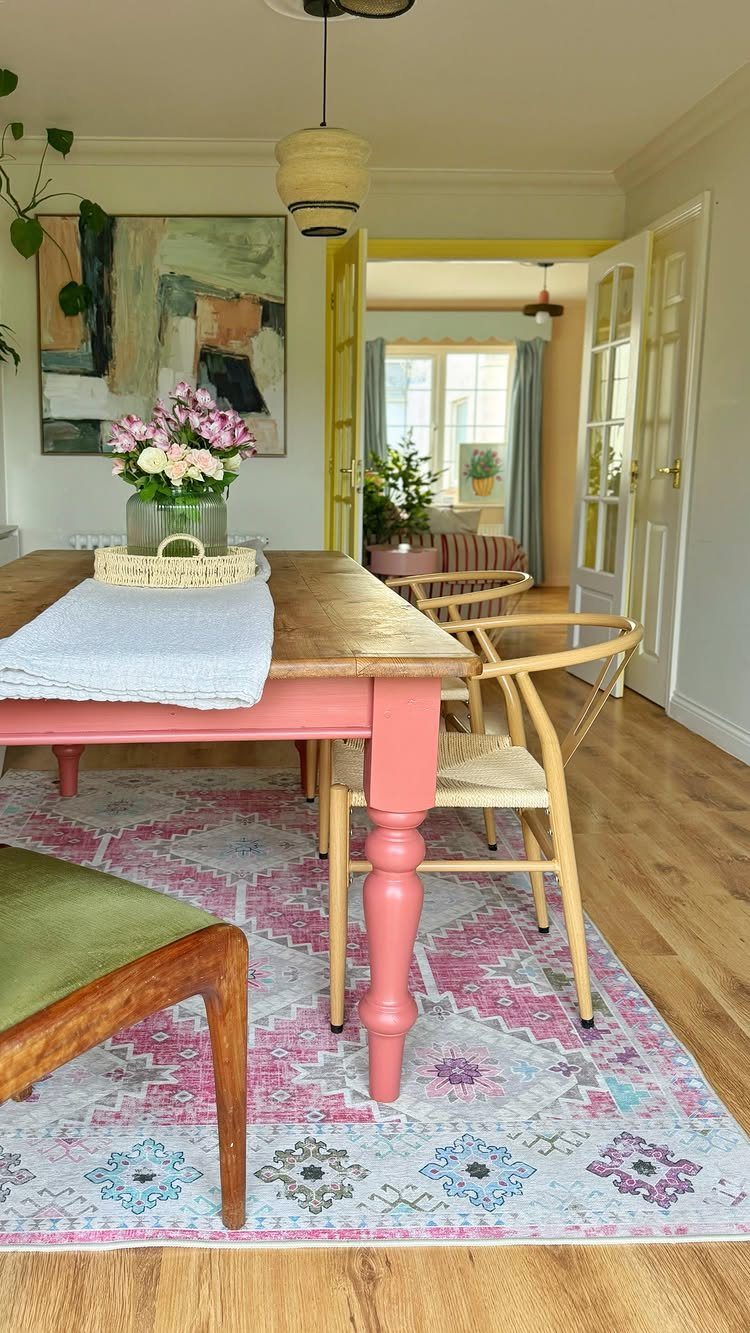
A pink painted base under a wooden tabletop is a statement you can make with one color and one weekend. Painting only the legs keeps the wood top as a calm counterweight.
Sand lightly, prime, then use two thin coats rather than one thick one. Bold color asks for clean, even coverage.
On a busy rug, pick a shade already in the pattern so the table looks planned. I’d go bolder than feels comfortable; legs are easy to repaint.
Best Paint Types
Satin or semigloss is the sheen to look for on wood furniture, and acrylic latex is the paint I reach for most.
Water-based acrylic goes on smoothly, hides the old finish in a coat or two, and skips the harsh fumes and long cure time that come with oil-based paint.
Oil-based paint is still a fair choice if you don’t mind the wait between coats. Plan on a longer project and open a window.
Some paints are made specifically for furniture and sold as a durable, factory-style finish for wood or laminate. If you’re painting wicker or metal, ask at a paint store for a product made for that material rather than guessing.
Preparation Tips
A piece that was never painted, or one with a slick factory finish, may call for primer, while a sound painted surface often won’t. Bare wood and glossy or slick surfaces call for different treatment.
For laminate, Formica, and other nonporous surfaces, use a waterborne bonding primer. Paint won’t grip them otherwise.
Metal pieces like filing cabinets need a primer made for metal. Plastic takes a few more steps:
- Ammonia-based cleaner on a rag cuts through grease and grime well.
- Follow with a damp cloth to pick up the residue, then give the piece time to dry completely.
- Roughen glossy or previously painted plastic with 150-grit sandpaper.
- For plastic, start with a bonding primer made to stick to it.
- Finish with latex paint.
On plastic or fiberboard, a light sanding is enough. A wide brush covers in fewer passes and leaves fewer brushstrokes.
Color Selection Advice
Start with the room’s light and the colors already in it. A shade that looks right in the store can turn muddy next to your walls, so hold a sample against them at different times of day.
For a color with some personality, aqua feels fresh and coastal, and plum reads rich and sophisticated. Saffron yellow adds warmth, while pale apricot suits a nursery without leaning toward any gender.
For a calm, low-contrast look, match the piece to the wall color and let it blend in. A one-color room makes an instant statement, and the furniture seems to melt into the space instead of competing with it.
Frequently Asked Questions
Can I paint over already painted furniture?
Yes. If the existing paint is sound and not shiny, you can often skip primer; a slick factory finish is the exception, and there a coat of primer helps.
Prep decides how long the new coat lasts, so clean the piece and scuff glossy areas first.
Is it better to brush paint or spray paint wood furniture?
For most pieces I’d brush. A wide brush gets the job done in fewer passes, leaves fewer marks, and skips the masking and ventilation that spraying demands.
Spray paint reaches crevices on spindle chairs and other slim parts more easily. If you spray, work outdoors or somewhere well ventilated and use thin, even coats.
Do I have to prime furniture before painting it?
It depends on the surface. Each slick material wants its own primer: a waterborne bonding primer for laminate and Formica, a metal primer for steel or iron, and a plastic-grip bonding primer for plastic.