Skill level sorts these jobs more than time does: a wrench-and-an-afternoon swap sits at one end, opening a wall sits at the other, and wiring comfort is the dividing line.
Plug-in LED strips and solar path lights skip it entirely. Recessed fixtures mean shutting off the breaker first, and hiring an electrician if you’ve never wired before.
The planning sections at the end matter just as much, since a 20% cushion in the budget covers what walls and floors hide until they’re open.
1. Replace Faucets and Showerheads
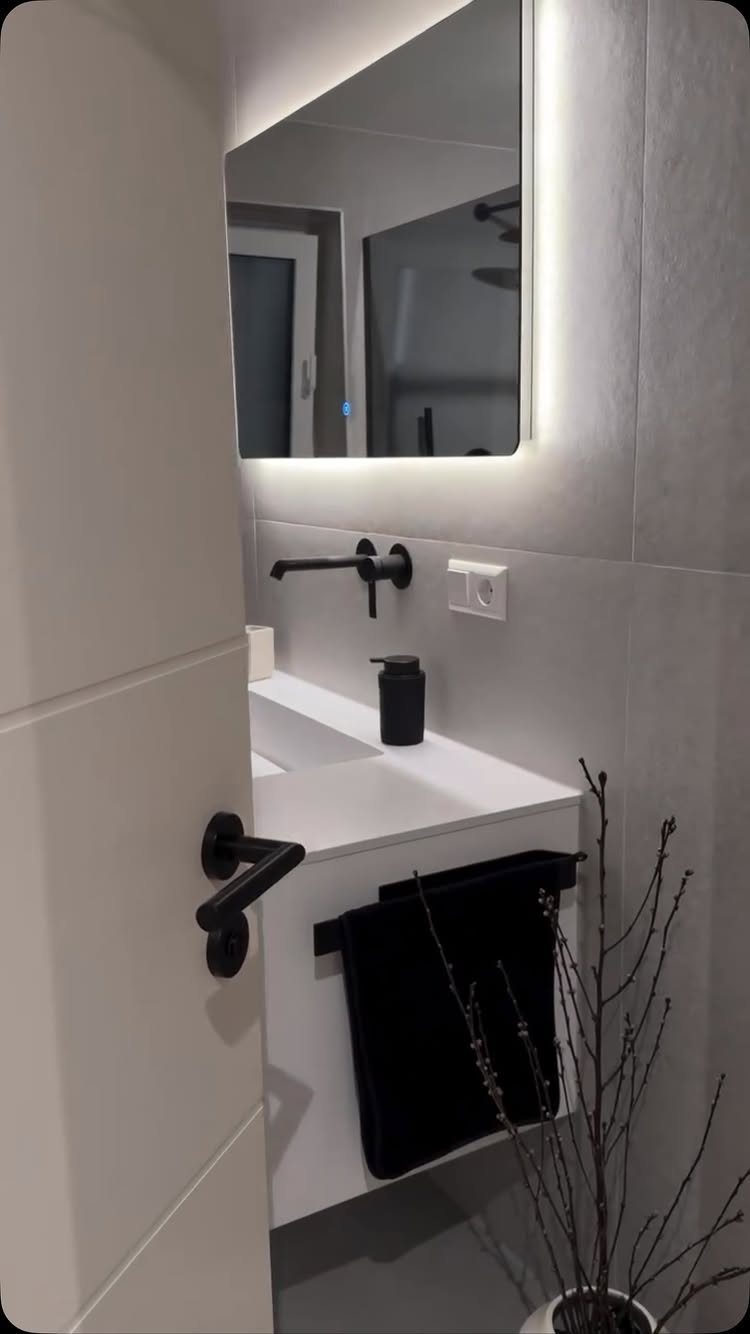
The fixture is small, but it sits at eye level and draws the whole room toward it.
Pick a finish that repeats something already in the room. Black here matches the towel rack, so the faucet looks planned instead of bolted on.
A showerhead in the same finish carries the look into the shower. Swapping both takes a basic wrench and an afternoon, and the price stays modest next to a full remodel.
2. Install New Light Fixtures
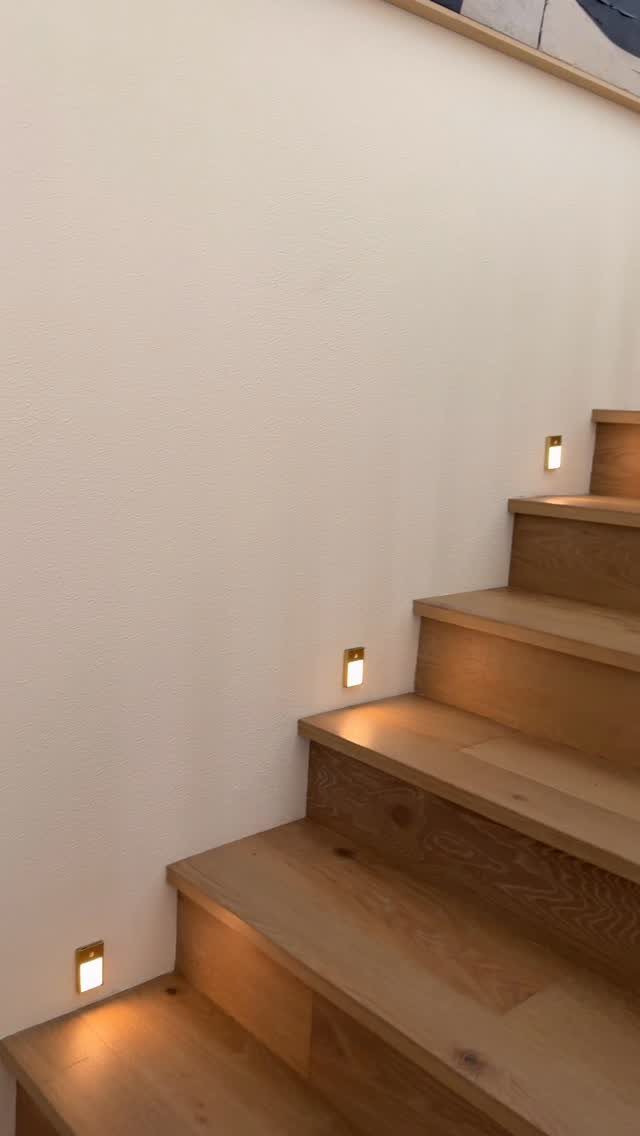
Small square recessed lights set into a wall beside a staircase do 2 jobs: they light each step and they make the stairwell feel finished.
Warm-toned bulbs suit wood treads best, since the glow picks up the grain instead of flattening it.
Wall-level lighting also keeps glare out of your eyes, which an overhead bulb often doesn’t.
For a budget job, a single replaced fixture in a hallway or living room changes a room’s mood more than most people expect.
Cutting into a wall is a bigger step, so shut off the breaker first, and hire an electrician if wiring is new to you.
3. Painted Front Door
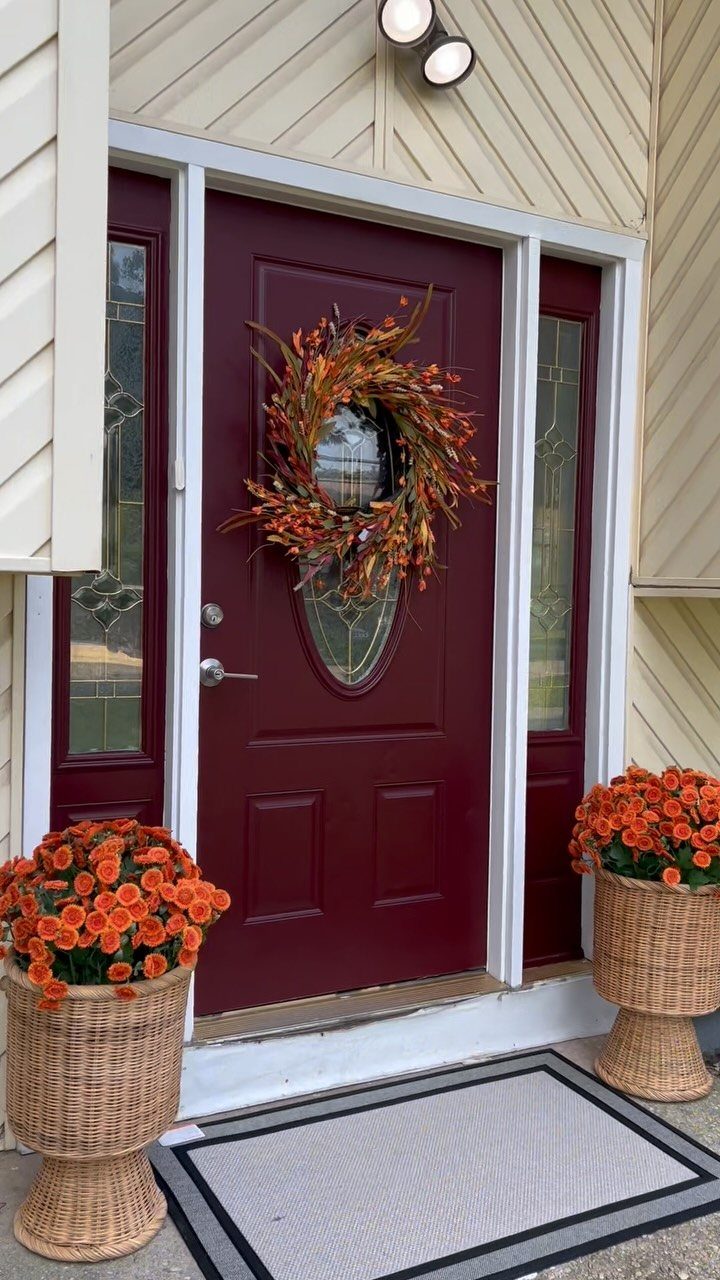
Deep red on a front door reads as confident without touching the rest of the house. A can of exterior paint costs little, and the job fits into a single day with time left over.
Sidelights, like the ones here, make the door the focus of the entry, so a bold color has room to work. Orange flowers and a seasonal wreath sit well against red, and you can swap them as the months change.
Take the door off or tape the hardware carefully, and let each coat dry fully before the next. Two thin coats beat one thick, drippy one.
4. Add Floating Shelves
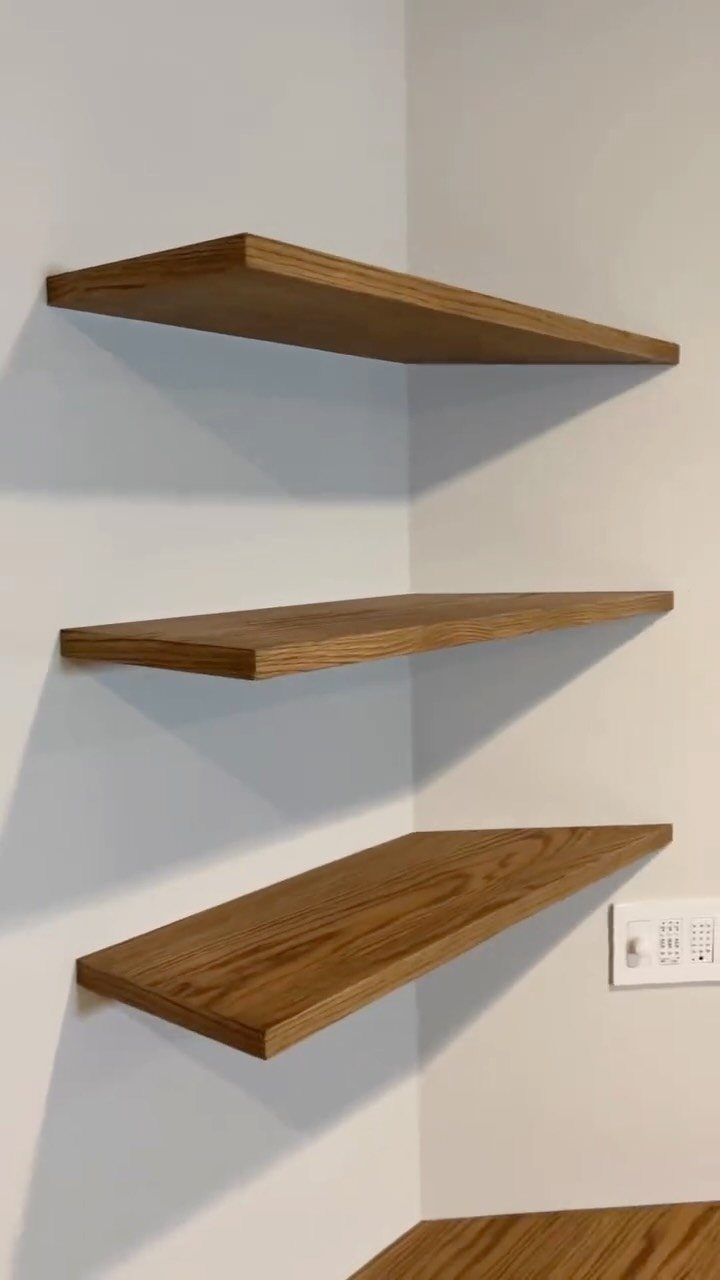
Three stacked wood shelves on a bare wall corner add storage without adding a single piece of floor furniture. That matters in small rooms, where every square foot counts.
Stagger the shelf lengths or keep them matched; either works as long as the spacing between them is even.
Plan around the outlet.
Leaving the wall below the bottom shelf clear keeps it reachable. Anchor into studs for anything heavy, and use wall anchors only for light décor.
5. Refinish Old Furniture
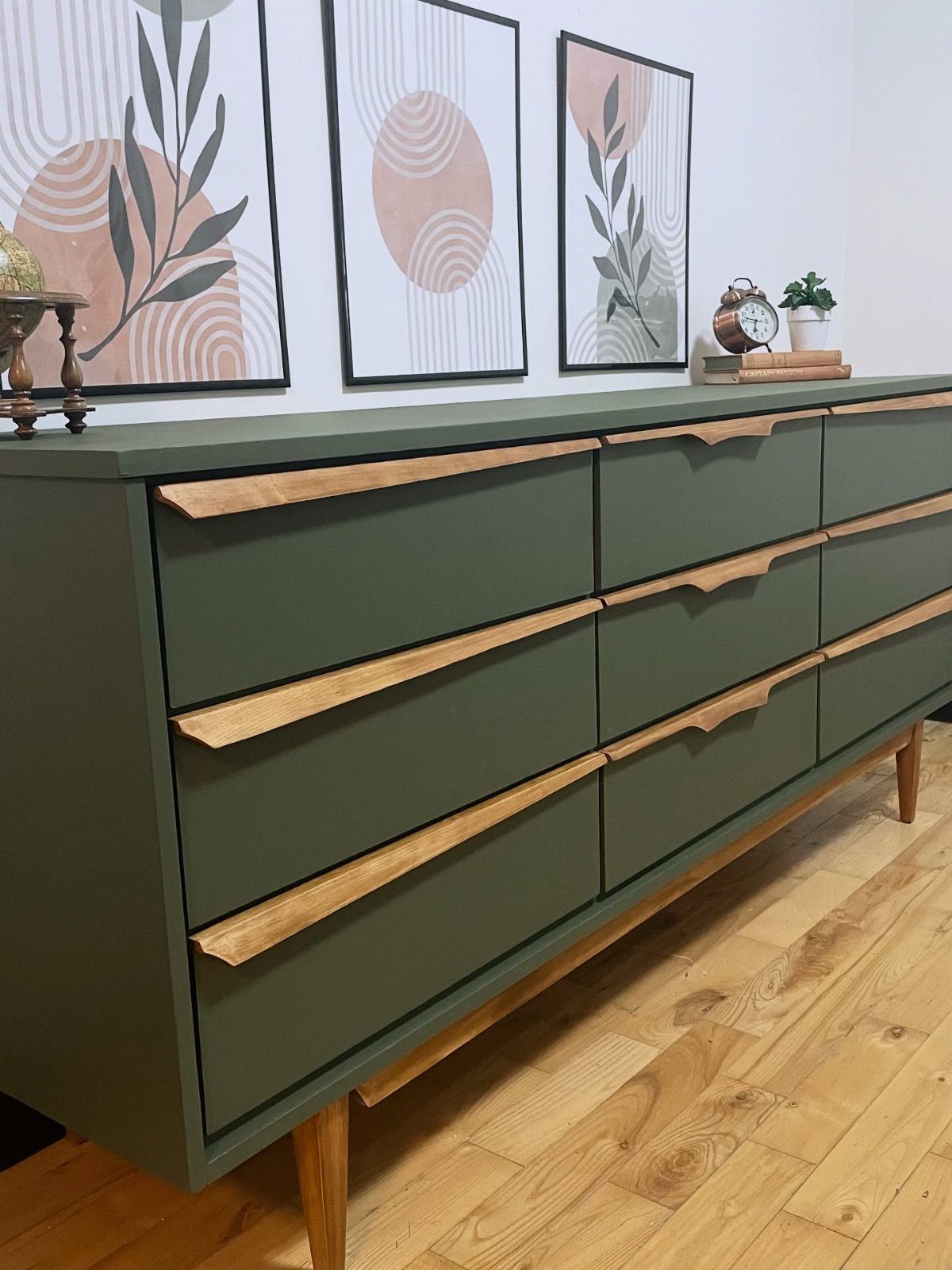
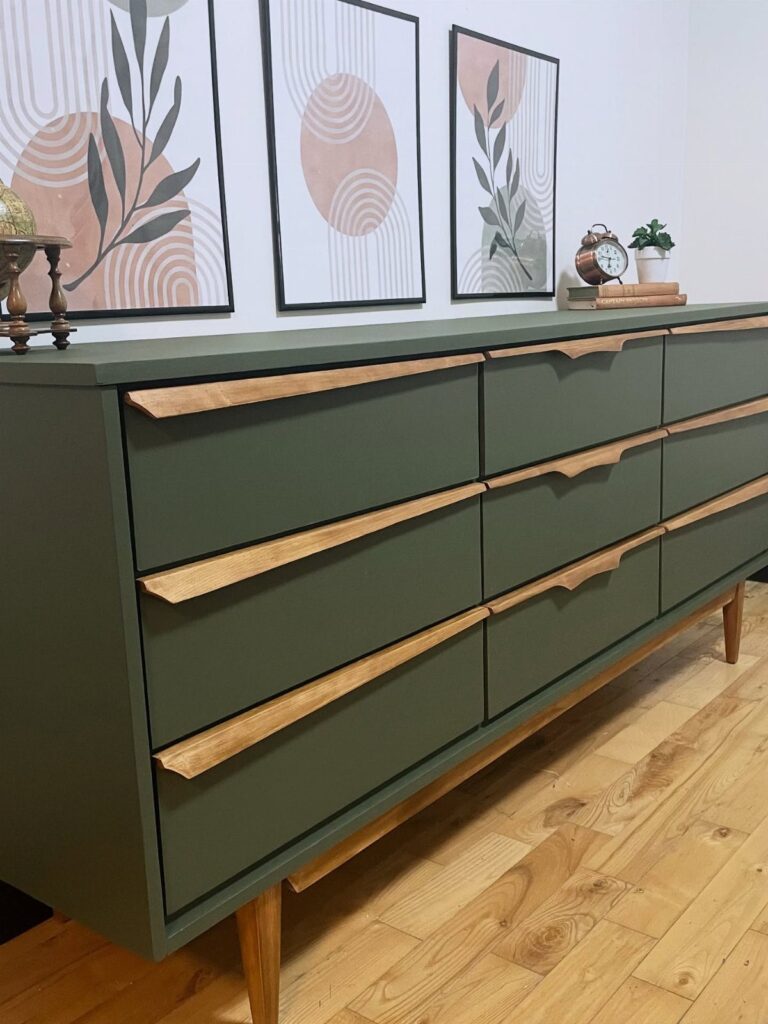
An old six-drawer dresser can look brand new with paint alone. Painting the body olive green and leaving the original wood legs and handles natural is my favorite version, because the 2 tones keep the piece from looking flat.
Sand lightly so the paint grips, wipe off the dust, and brush on thin coats. Leaving the hardware and legs as bare wood saves time and money.
A thrift-store or curbside find is ideal for this, since a mistake costs you almost nothing. Finish with a clear topcoat if the dresser will see daily use.
6. Install Under-Cabinet Lighting
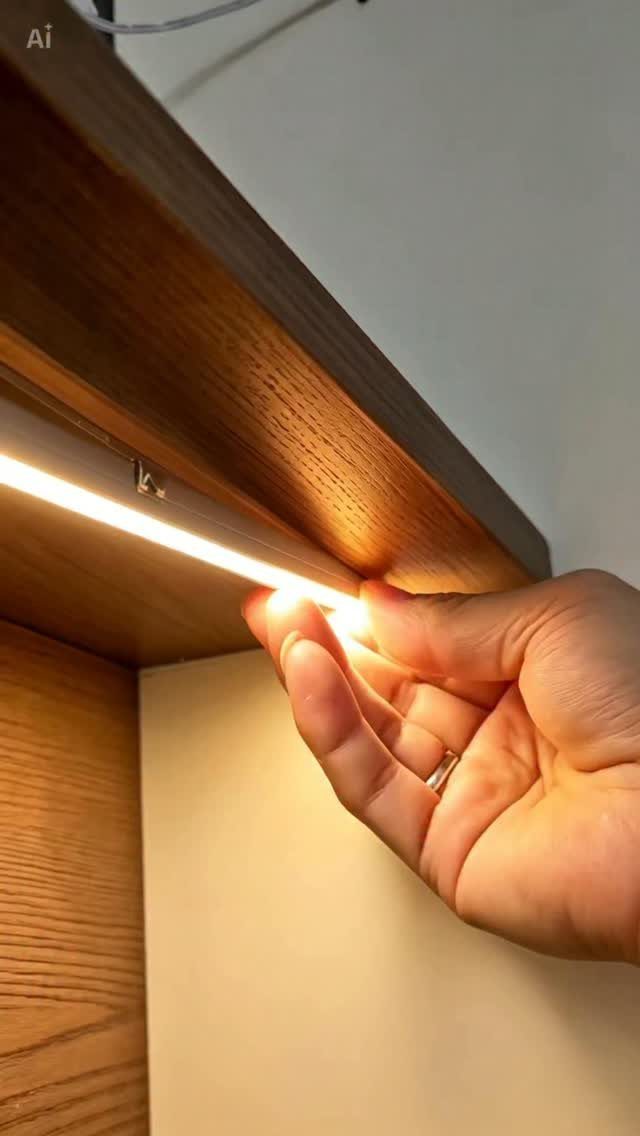
LED strip lights tucked beneath a cabinet put light exactly where you chop, stir and read recipes. The strip is thin enough to hide behind the front edge, so you see the glow and not the fixture.
Clean the underside first so the adhesive backing sticks. Measure the run, cut only at the marked lines on the strip, and test it before peeling the backing.
Plug-in strips skip the electrician entirely, which makes them the easiest pick on a limited budget. Hardwired versions look tidier but take more work.
7. Add Solar Pathway Lights

No wiring and no trenching, so the whole job fits into an afternoon with basic tools.
Space the lights evenly along the path, and set each one upright so the top faces open sky. Push the stake into the soil by hand rather than hammering the housing.
I like black here because it fades into the mulch by day. Solar lights cost little, which suits a tight budget, though a shaded spot will give you a dimmer glow.
Budgeting for Renovations
A renovation budget starts with your goals, not with a number you hope to hit. Look up average costs for similar projects in your area, then add a 20% cushion for surprises, because walls and floors hide problems until they’re open.
Sort every line into must-have or nice-to-have.
Labor is the line people underestimate most. Material prices are easy to look up, but labor is the line most DIYers underestimate, and a skilled trade can take up a big slice of the total.
Spend more on whatever is hard to redo later.
Flooring is the classic case: tearing it out and starting over costs far more than getting it right the first time. Insulation and windows follow the same logic.
Choosing Materials Wisely
Compare more than price tags when you pick materials. A pricier option can pay you back over the years, and a cheap one can cost more once you count the repairs and redo work.
Pre-primed and pre-painted clapboard siding is a good example. It costs more at the register, but it saves you from painting later, which makes it the better buy over time.
Energy-efficient appliances follow the same math. Ask what a material costs over its whole life, then decide where the higher price earns its place.
Timing Your Projects
Trades and supply houses run on seasons, with slow stretches and rushes, and a flexible start date lets you work that to your advantage.
Summer and the stretch from September to Christmas keep most contractors slammed, so book outside those months and you may land a lower quote and a calendar with more room.
Ask about off-season discounts when you request quotes. Some contractors offer them, and the question costs nothing.
If your timeline is flexible, plan the big jobs for the slow months and save the afternoon DIY projects for whenever the weather suits you.
Frequently Asked Questions
What is the 30 rule of home renovation?
The 30 rule says a renovation shouldn’t cost more than 30% of your home’s value. The rule sets a spending ceiling at the outset, so every quote gets measured against a number you already chose.
Even with a ceiling in place, I tack an extra 20% onto the estimate, since walls and floors tend to hide their problems until someone opens them up.
What are the easiest home renovations I can do myself?
Painting, swapping fixtures and hanging shelves are the easiest. Plug-in LED strips beneath cabinets and solar path lights skip the electrician, the wiring and the trenching, which makes them quick wins too.
How much does it cost to remodel a 2000 sq ft house DIY?
There’s no single figure, because the total swings with materials and how much you take on. Most DIYers lowball labor, and that is exactly why handling more of the work yourself saves the most money.
Is $100,000 enough to renovate a house?
It depends on the scope of the work and your local costs. Spend the extra dollars on whatever would be hardest to redo later: flooring, insulation and windows top my list.