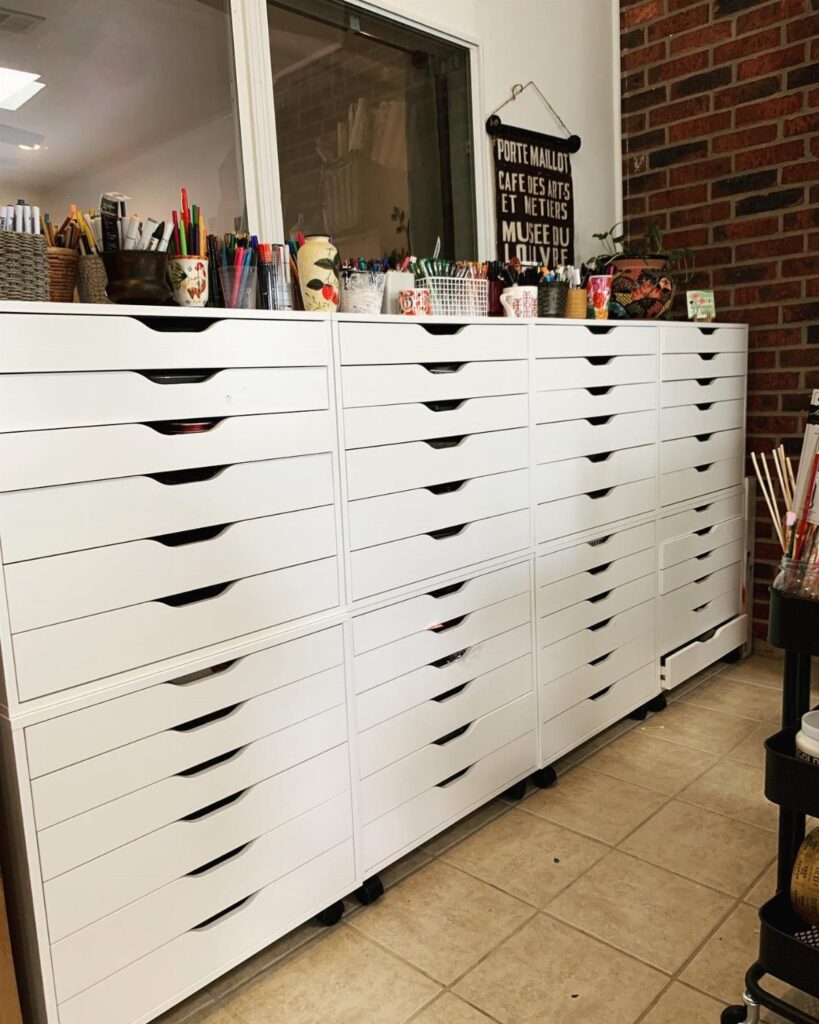
What you plan to store decides which of these 6 cabinets works: water-based craft paint and art tubes fit a rolling cart or a drawer unit, while oil-based paint, stain and thinner belong only in a locking metal safety cabinet.
Most of the wood and drawer designs here offer no fire protection, and only the flammable liquid safety cabinet at the end of the list is built to hold oil-based paint, stain and thinner.
Sort your stock by liquid type first, then pick the cabinet by size and by how close it sits to your bench.
1. Rolling Art Cart with Dividers
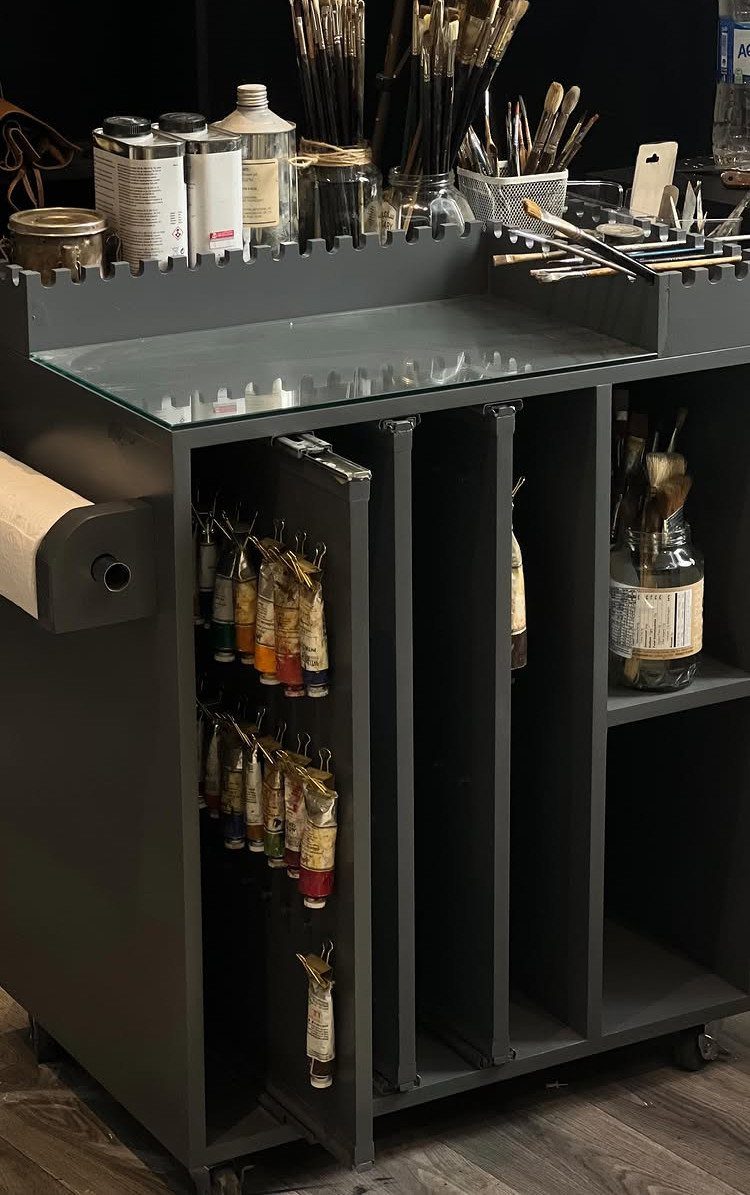
A cart this small keeps the paint you use weekly within reach and off the shelves. Tubes, jars and brushes each get their own divided compartment, so nothing rolls around or gets buried.
Wheels make it a good fit for tight spaces; park it in a closet and pull it out when the table is set.
Keep it for water-based craft paint and art supplies. Larger cans of oil-based paint or thinner belong in a real flammables cabinet.
2. Multi-drawer Rolling Studio Cabinet
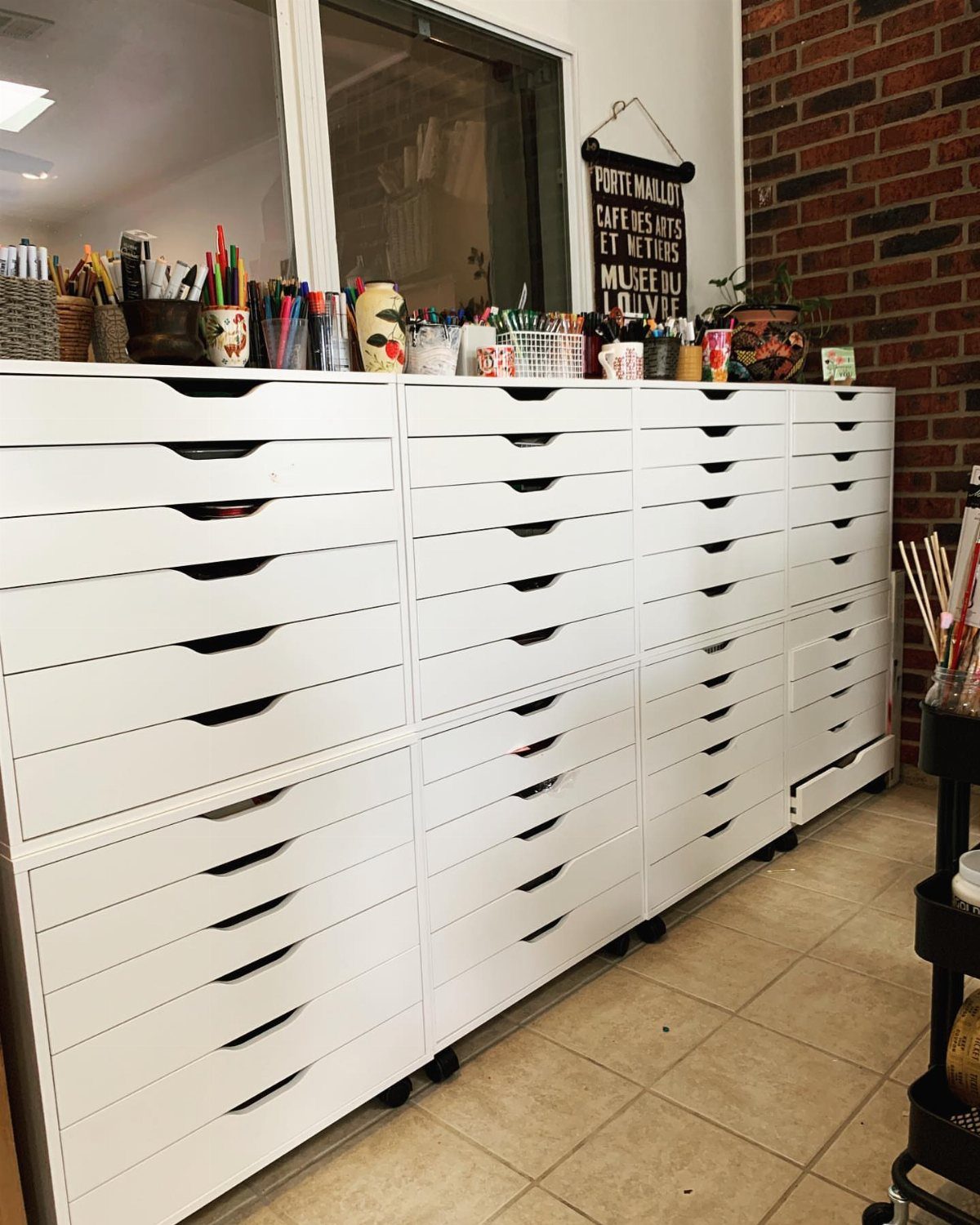
Wide and low, a white rolling cabinet with shallow drawers sorts small supplies by type, so tubes, pencils and tools stay flat and visible instead of piling up in one bin.
The top works as a staging surface, and I like a few jars of brushes standing there. Label each drawer front.
Keep this one for artist-size tubes and craft paints, since drawers give no protection from fumes or spills. Quarts of solvent need a different home.
3. Workshop Cabinet with Open Shelves
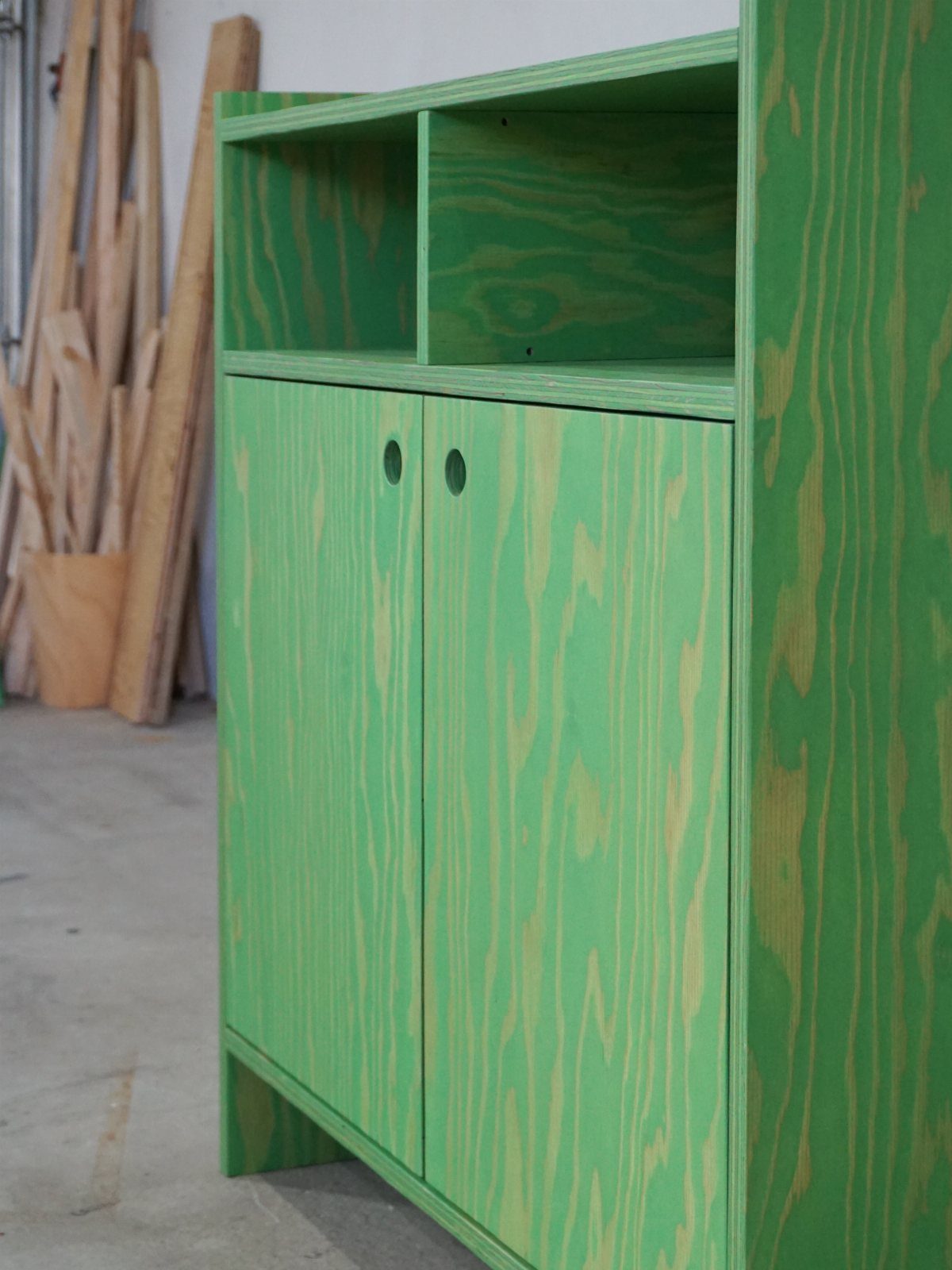
Closed doors below and open shelves above is a layout I like for a workshop. Everyday items sit at eye level, while the base hides the clutter.
Painting the wood in a bold color, like green, makes it easy to spot.
Keep sealed cans of water-based paint on the lower shelf where they are easy to lift. Open shelving offers no fire protection, so leave flammable liquids and thinners out of it.
4. Shallow Drawer Flat File Unit
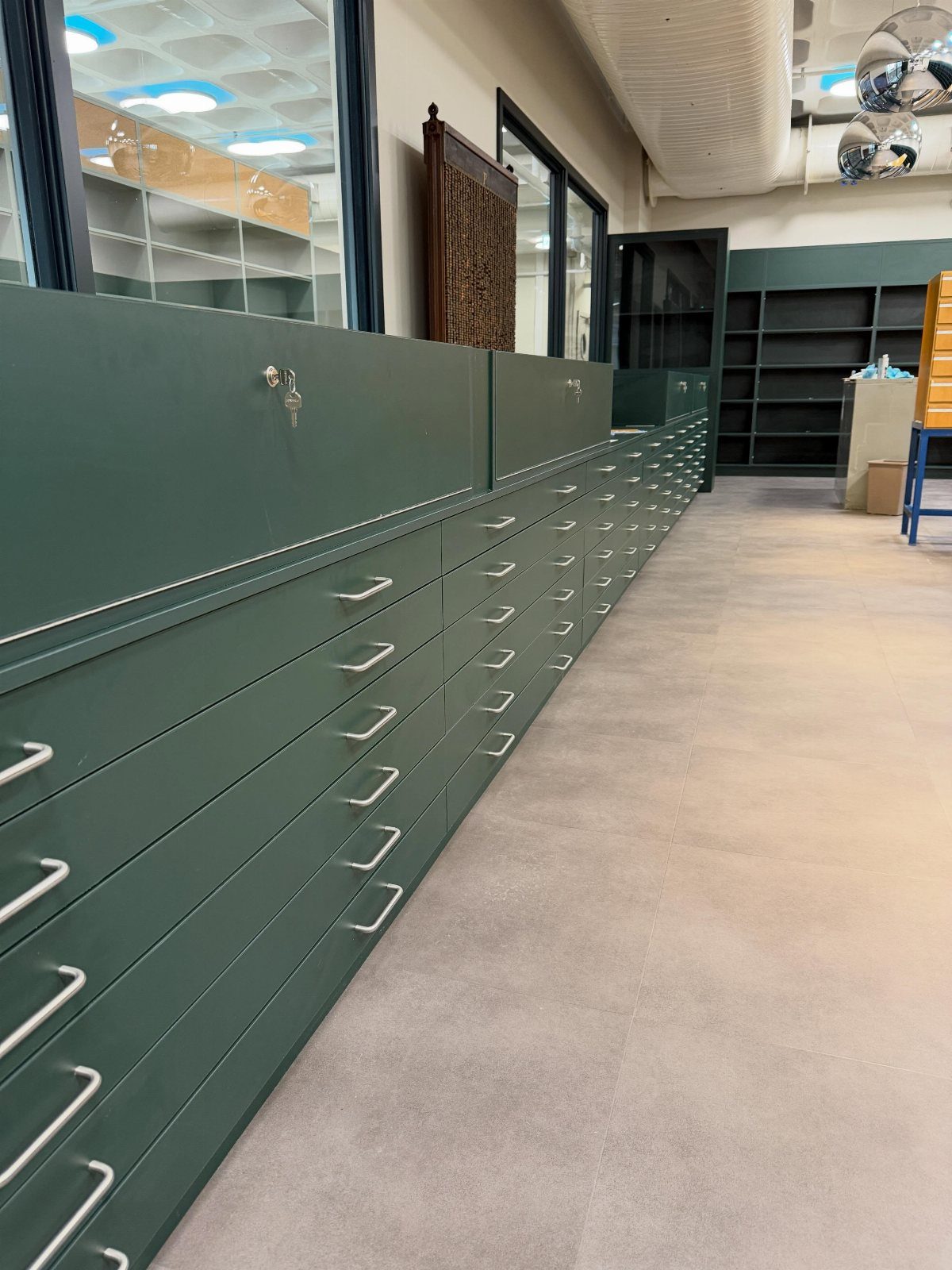
Shallow drawers in a long, low unit suit flat or thin items: paper, brushes, palettes and small tubes. Nothing stacks on top of anything else, so you see everything the moment a drawer slides open.
A dark finish, like the green here, hides paint smudges well.
Make the drawers shallow on purpose; deep ones turn into junk pits. This is storage for art supplies, not for cans of paint or solvents.
5. Mobile Workshop Organizer with Flip Lids

Flip-up lids over tiered drawers give you 2 ways in: grab from the top for what you reach for constantly, and open drawers for the rest. Wheels let the whole cabinet follow the project around the shop.
Soft maple is a smooth, tight-grained hardwood, and that is why it takes a sprayed finish so well. Use it for tools and supplies, not for flammable liquids.
6. Flammable Liquid Safety Cabinet

For gallons of oil-based paint, stain and thinner, a purpose-built metal safety cabinet is the right choice. The yellow finish tells anyone who walks into the shop what this cabinet holds, and the doors lock.
Set it level and away from heat or ignition sources, and keep it closed.
Check local fire codes for how much liquid you may store. A pallet keeps the base off damp ground, though I would move a cabinet like this indoors to a garage or shop.
Choosing the Right Cabinet
Start with what is going in the cabinet. Oil-based paint, stain, thinner, gasoline and pesticides all count as hazardous, and the type of liquid decides whether a basic shelf will do or a fire-rated cabinet is needed.
Next, count your containers. Sizes run a wide range, from compact units sized for spray cans and quart jars up to floor models that can hold a 55-gallon drum.
Measure your biggest can and your total stock, then buy for what you have plus a little room, not for a someday collection.
Placement matters as much as capacity. Check the floor space, the door swing and the distance to the spot where you actually work.
Last, think about workflow.
A cabinet you open every day belongs near your bench, with shelves low and shallow enough that you never have to stretch for a can. If you open it twice a year, tuck it in a corner.
Safety Data Sheets (SDS)
Every chemical in your shop should have a Safety Data Sheet (SDS) that you can grab in seconds. It lists the hazards of the product and how to handle and store it properly.
Manufacturers post these sheets on their websites, usually on the product page. Search the product name plus "SDS," download the PDF, and print it.
Keep the printed copies in a binder or folder near the cabinet, not buried in a drawer across the shop. Anyone helping you in the space should know where it is.
Read the storage and first-aid sections before you open a new can. If a sheet says to keep a product away from heat, ventilated, or apart from other chemicals, that decides where it goes.
When you finish a product and dispose of it, pull its sheet from the binder so the folder only reflects what you actually own.
Frequently Asked Questions
What is a flammable storage cabinet?
A flammable storage cabinet is a purpose-built metal safety cabinet for liquids that can catch fire, such as oil-based paint, stain, thinner, solvents, varnish and gasoline.
The steel is double-walled and insulated, and the doors close securely. That construction helps protect the contents in a fire and cuts the risk of leaks and accidental ignition during daily use.
What are the safe paint storage requirements?
Match the storage to the liquid. Keep the doors closed, label contents by hazard, and keep an updated inventory.
Local fire codes cap how much liquid you can keep, and a big stockpile may call for a separate, purpose-built storage building, so look up your limits before you buy more.