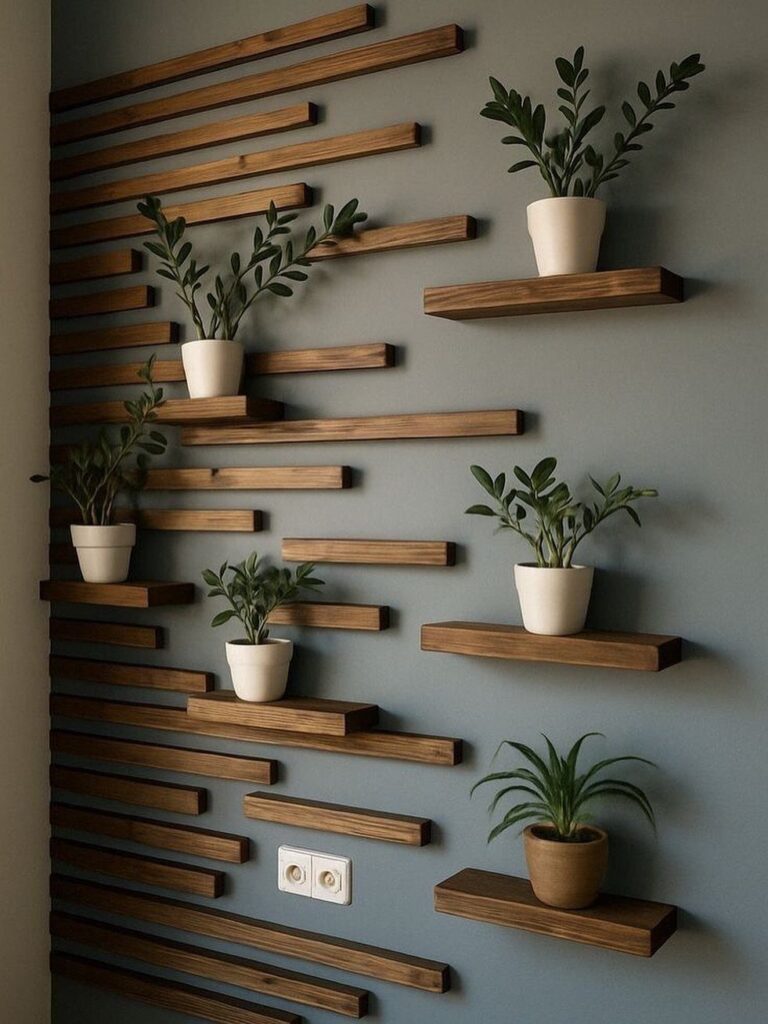
Your wall decides which of these ideas fits: a stud-backed wall can handle Wooden Coat Racks or Live-edge Wood Shelves with a real load, while a plain white wall suits Floating Wooden Shelves, which carry less because the hardware is hidden.
The range runs from an afternoon of scrap cut into Wooden Geometric Wall Art to a full Wooden Accent Wall of mixed planks, and most of it can be built from offcuts or reclaimed boards.
1. Floating Wooden Shelves
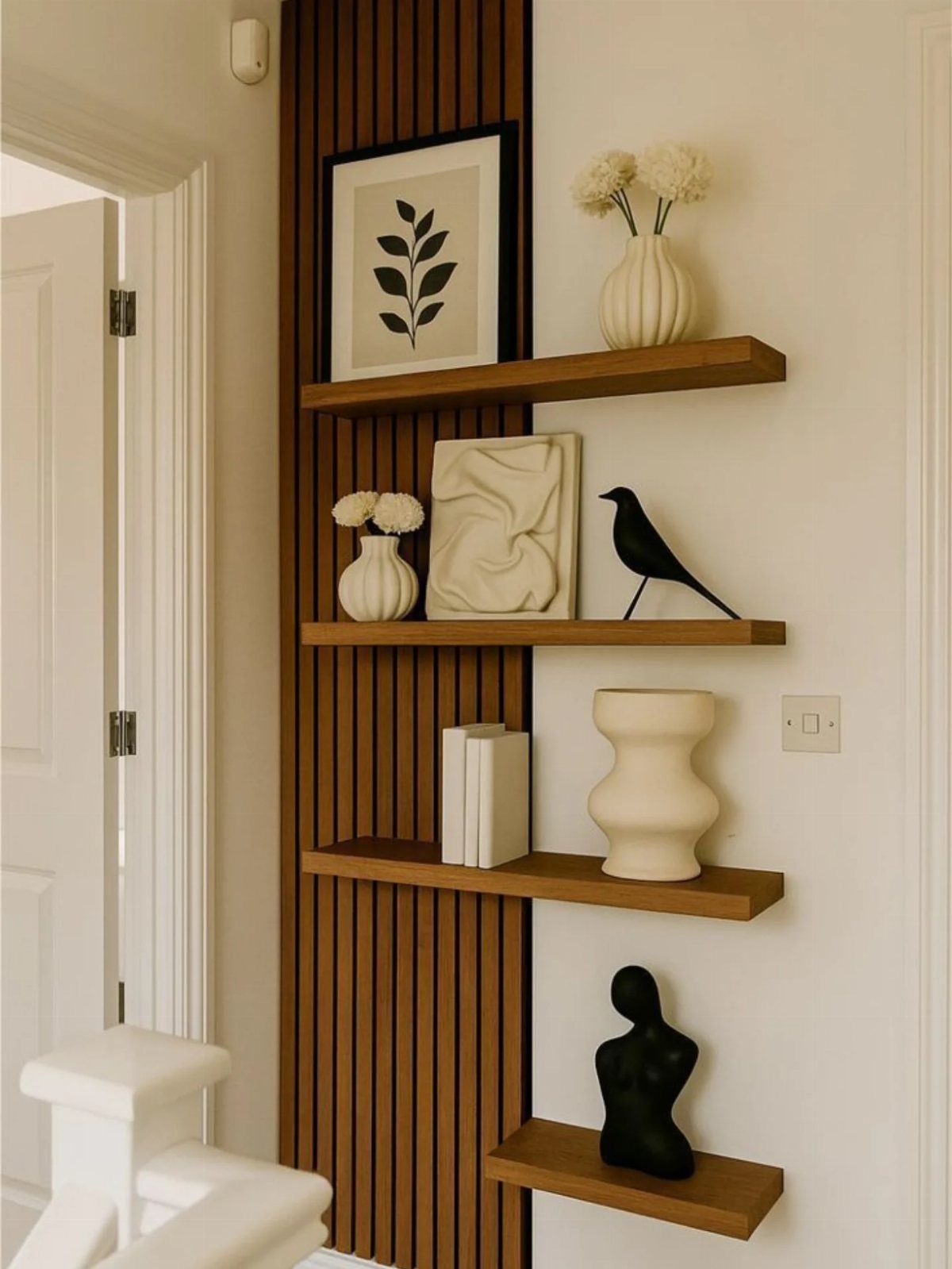
A floating shelf hides its bracket, so the board reads as if it hangs on nothing. That clean line suits a plain white wall, and it keeps the eye on what you display.
Anchor the hidden hardware into studs where you can. Concealed brackets carry less than visible ones, so I keep the load light: a framed print, a few vases, a short row of books.
Pick one wood tone and repeat it elsewhere in the room so the shelves feel planned.
2. Wood Slat Wall Panels
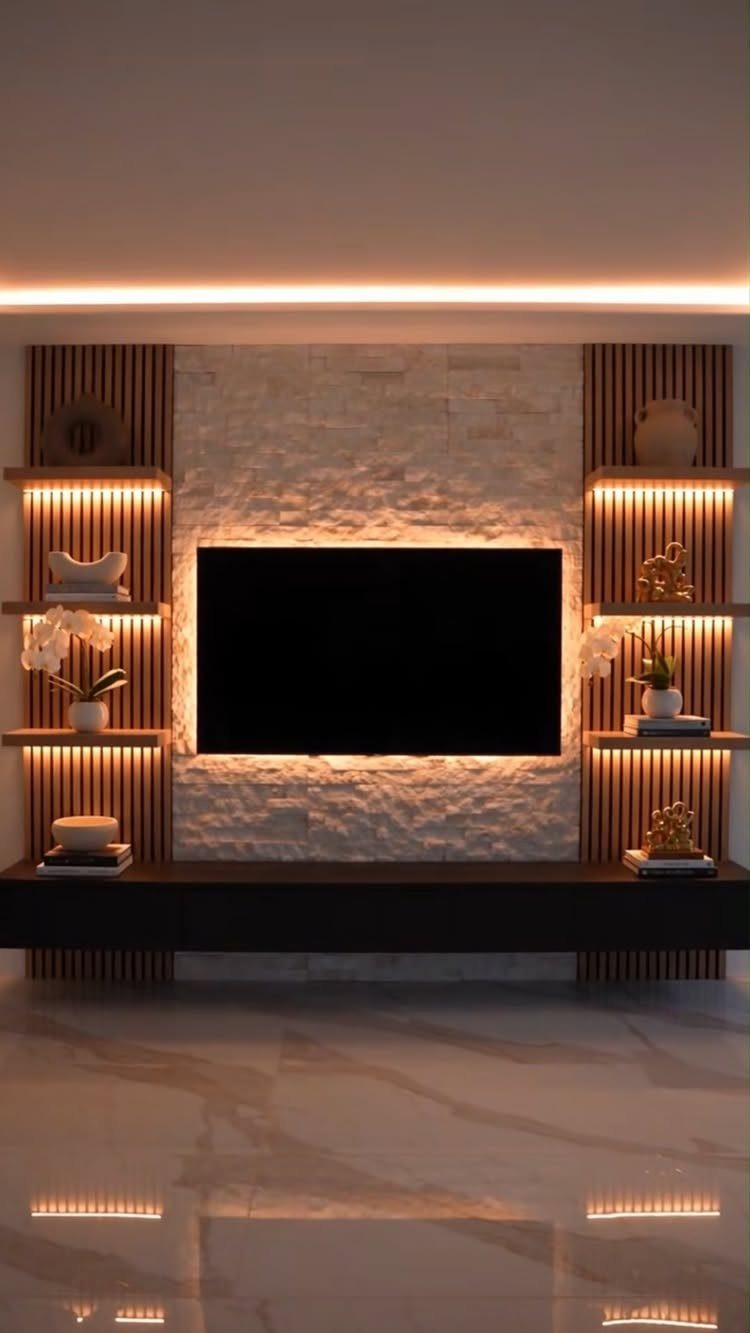
Vertical slats beside a TV do more than add texture. Spaced boards hide cable runs and give the wall a rhythm that a flat panel of drywall never has.
This is the version I would build for a living room, since slats can frame a screen and hold shelving. Warm LED strips tucked behind the boards add depth after dark.
Budget-wise, slats are mostly cut-to-length lumber, so the cost stays in your hands. Use a spacer block between boards to keep the gaps even.
3. Corner Wooden Shelves
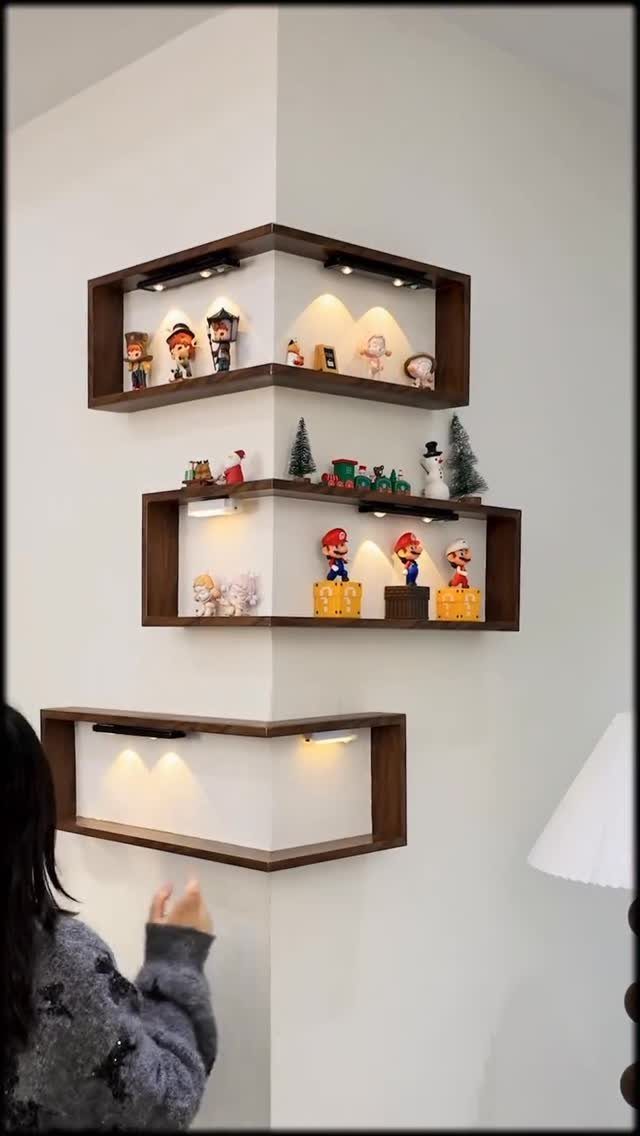
Corners usually sit empty, which makes them the best unused spot for display. Triangular or angled shelves fill that dead space and draw the eye to the edge of the room.
Dark brown stain looks rich against white walls, and small figurines suit the shallow depth. Built-in lighting is worth adding, because a lit corner reads as a feature instead of a gap.
Keep each shelf small and spaced evenly so the stack doesn’t feel crowded.
4. Live-edge Wood Shelves
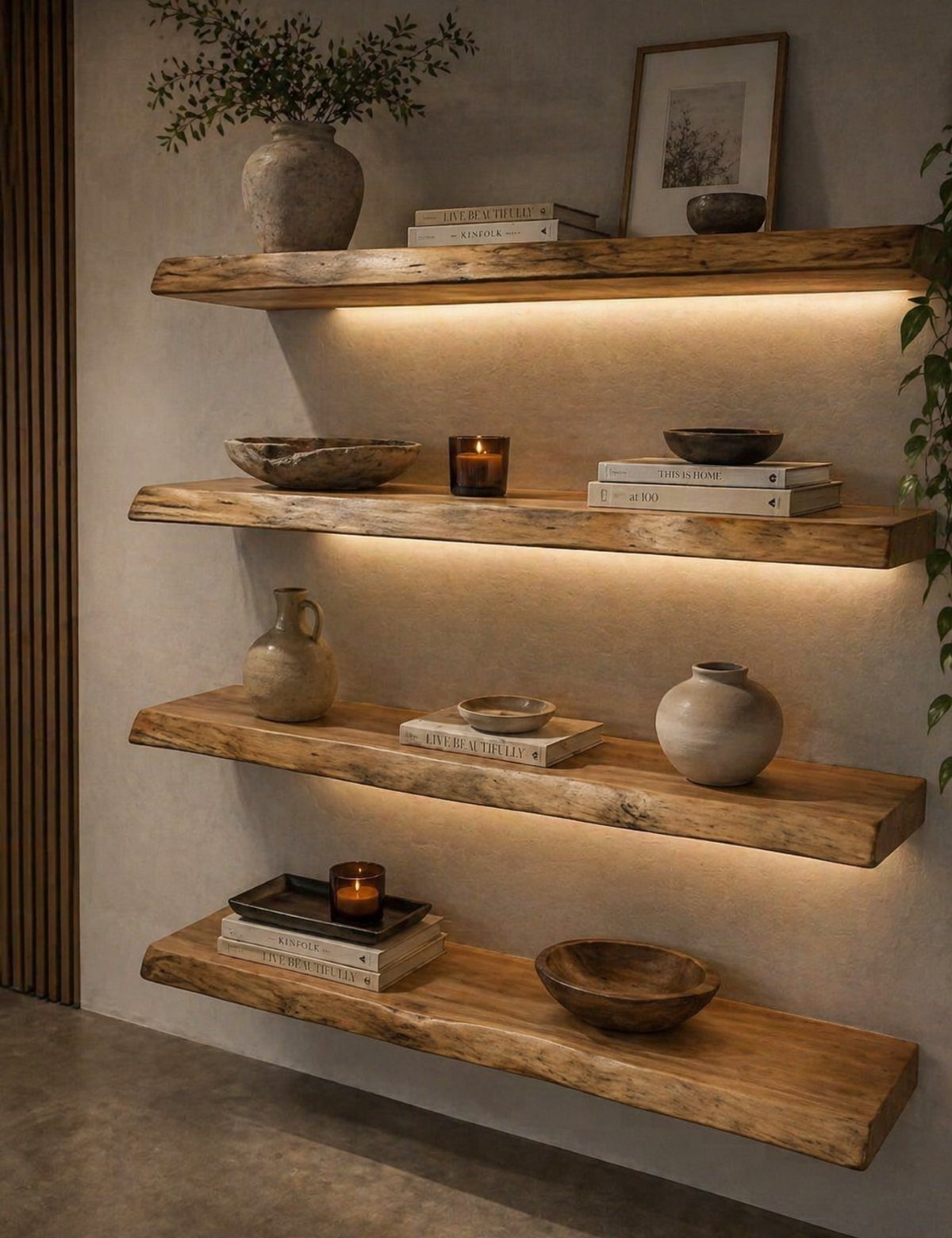
Leave the bark side of a board alone and the shelf carries its own story. A live-edge shelf keeps the wavy outline of the tree, so no two are alike.
Sand the face smooth, but leave the edge natural. Under-lighting makes the grain glow, and it pairs well with calm, minimal decor like bowls, candles and a few books.
I prefer a neutral wall behind them. The wood is the loud part, so let it be.
5. Wooden Geometric Wall Art
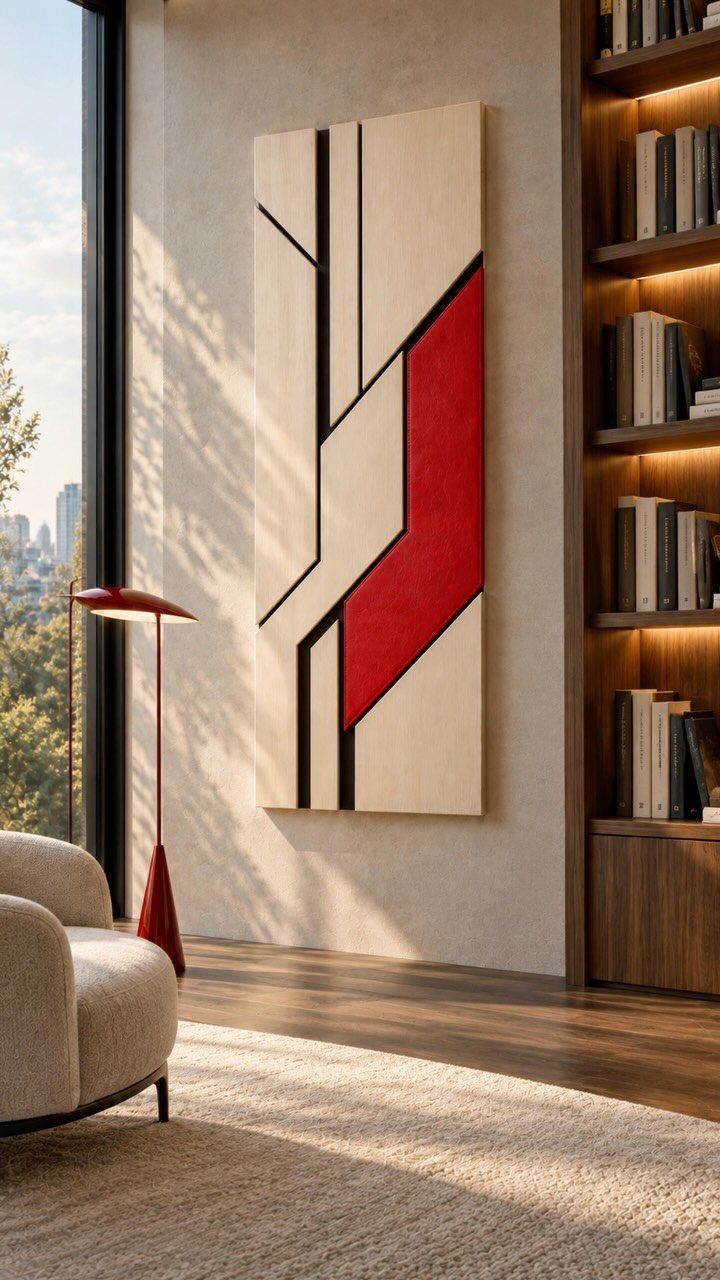
Cut wood into triangles, diamonds or stripes, and an afternoon of scrap becomes a piece of art. A tall, vertical layout draws the eye up a wall, which helps in a room with low furniture.
One accent color keeps it modern. A single painted section among natural and black wood pieces works best when the color repeats something already in the room, like a lamp, a pillow, or a rug.
Dry-fit the shapes on the floor before gluing so you can fix the pattern first.
6. Wooden Shelves for Potted Plants
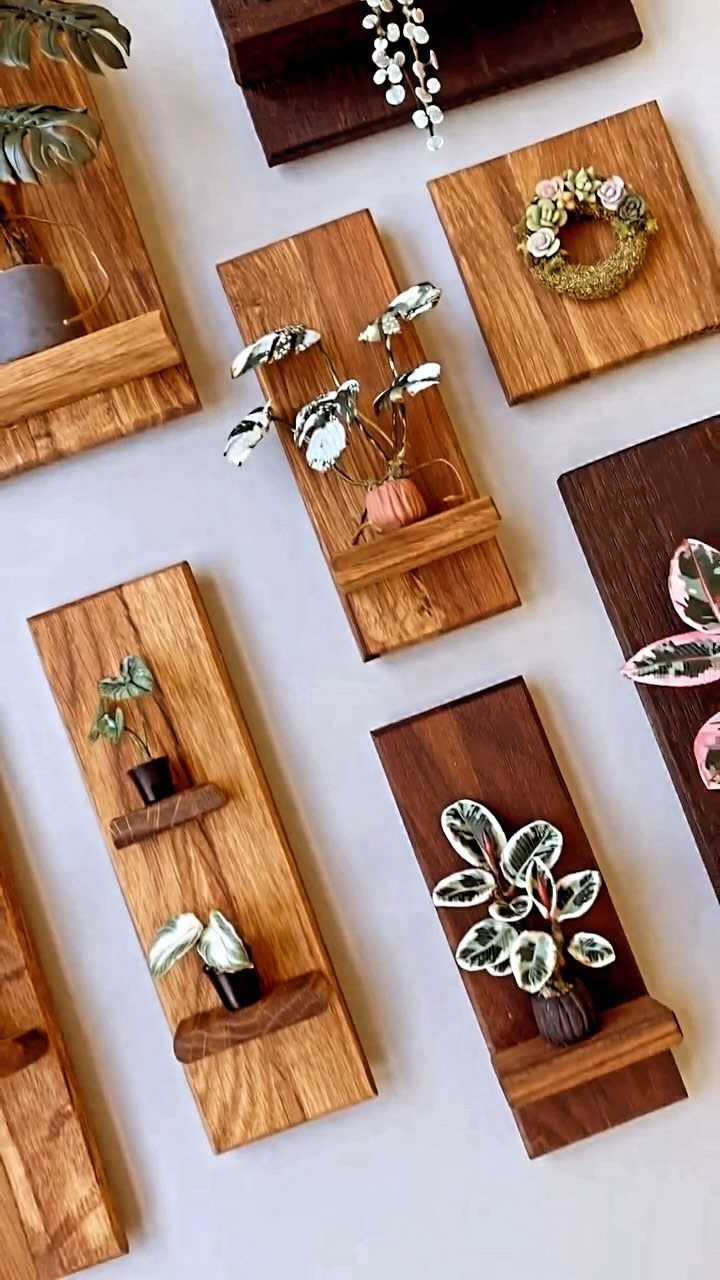
Small wall-mounted wooden shelves turn a bare patch of wall into a plant display, and they free up windowsills. Mixed shapes and stains look collected rather than matched, which I like against a white wall.
Keep each shelf sized to a single small pot. Plants with variegated leaves stand out most, since the pattern shows well against plain paint.
Cheap to build from offcuts, and easy to rearrange as your collection grows.
7. Wooden Coat Racks
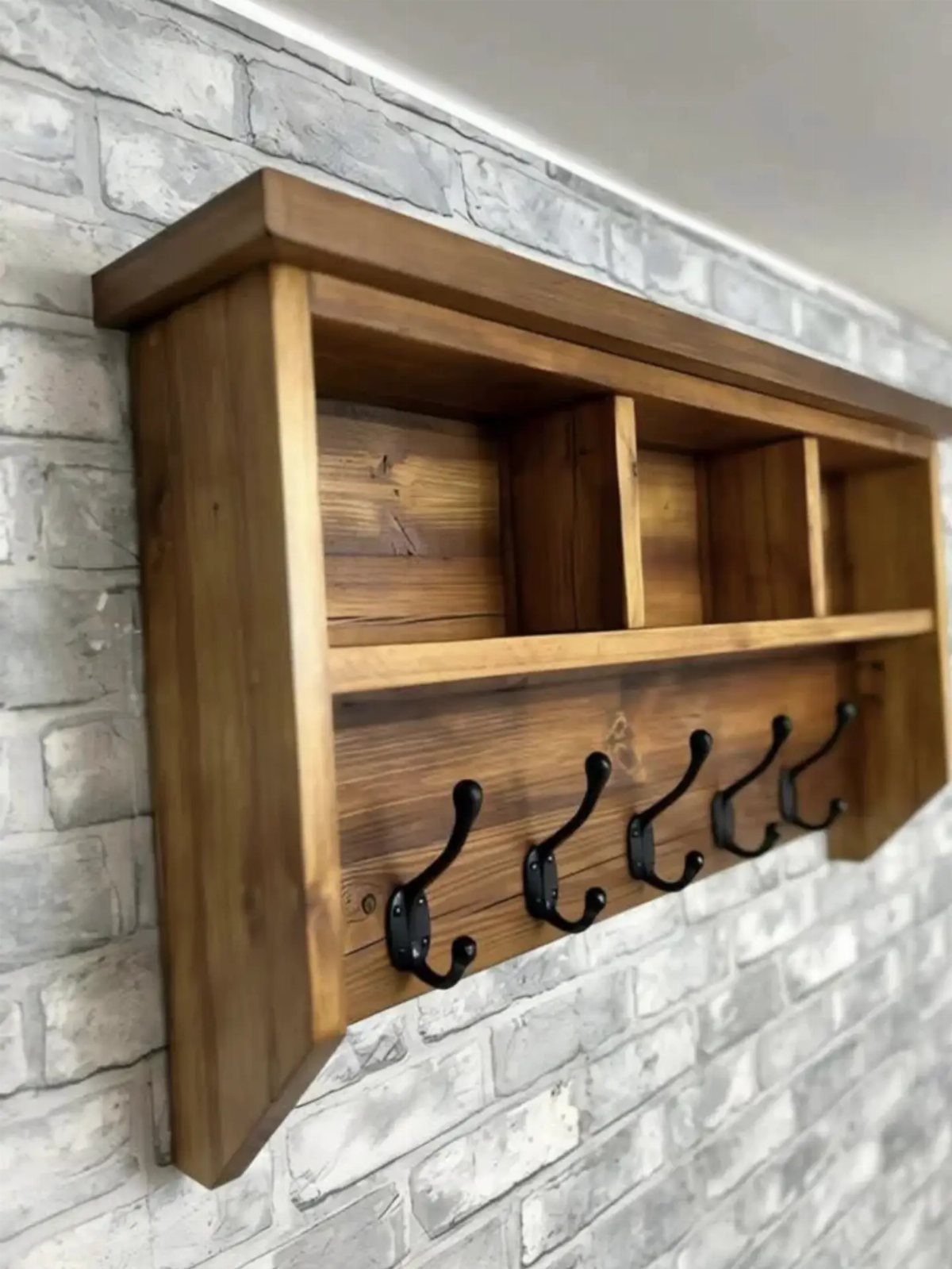
A wall-mounted coat rack with a top shelf does two jobs in the space of one board: hooks below for coats, a ledge above for keys, a basket or a small plant.
That makes it a good fit for a tight entry where a floor-standing piece would block the walkway.
Black metal hooks against pale wood give a crisp contrast, and they are an easy swap if you build your own. I would space the hooks evenly and keep the shelf narrow so it doesn’t crowd heads or shoulders.
Mount it into studs. Coats get heavy when they pile up.
8. Wooden Wall Sculptures
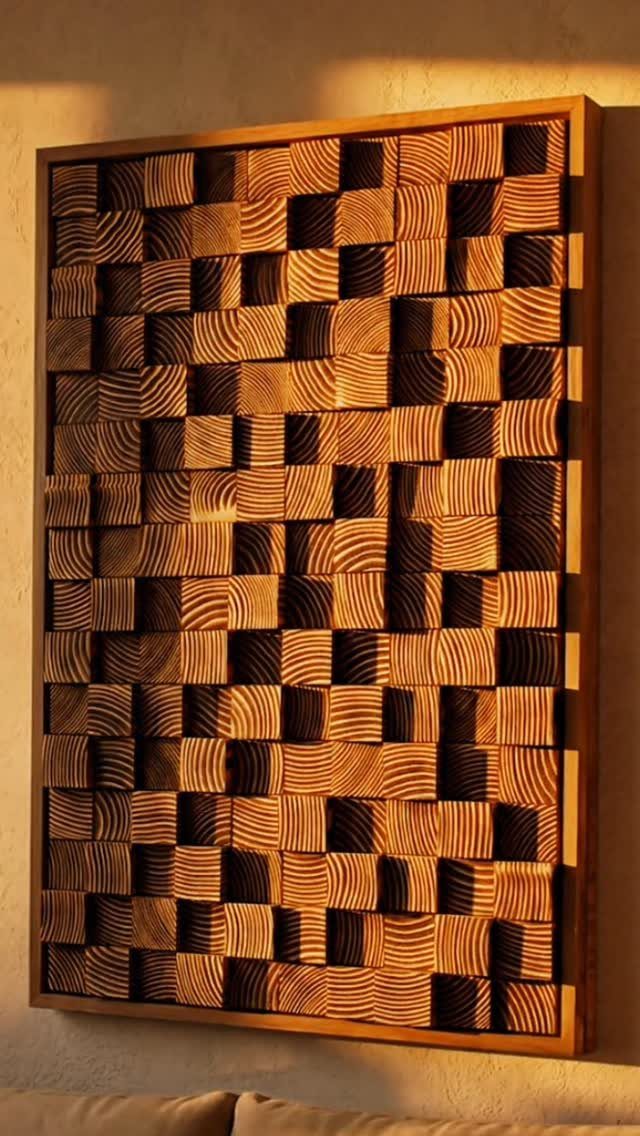
Small blocks of wood pushed out at different depths make a wall sculpture that changes with the light. Shadows pool between the blocks, so the piece looks different at noon than it does at night.
Cut the blocks from scrap in one length range and let the grain run the same direction; the visible end grain is the best part.
Glue them to a flat backer board, then frame the edge so the grid looks finished.
I would hang it where side light hits it, such as a wall beside a window.
9. Wooden Accent Walls
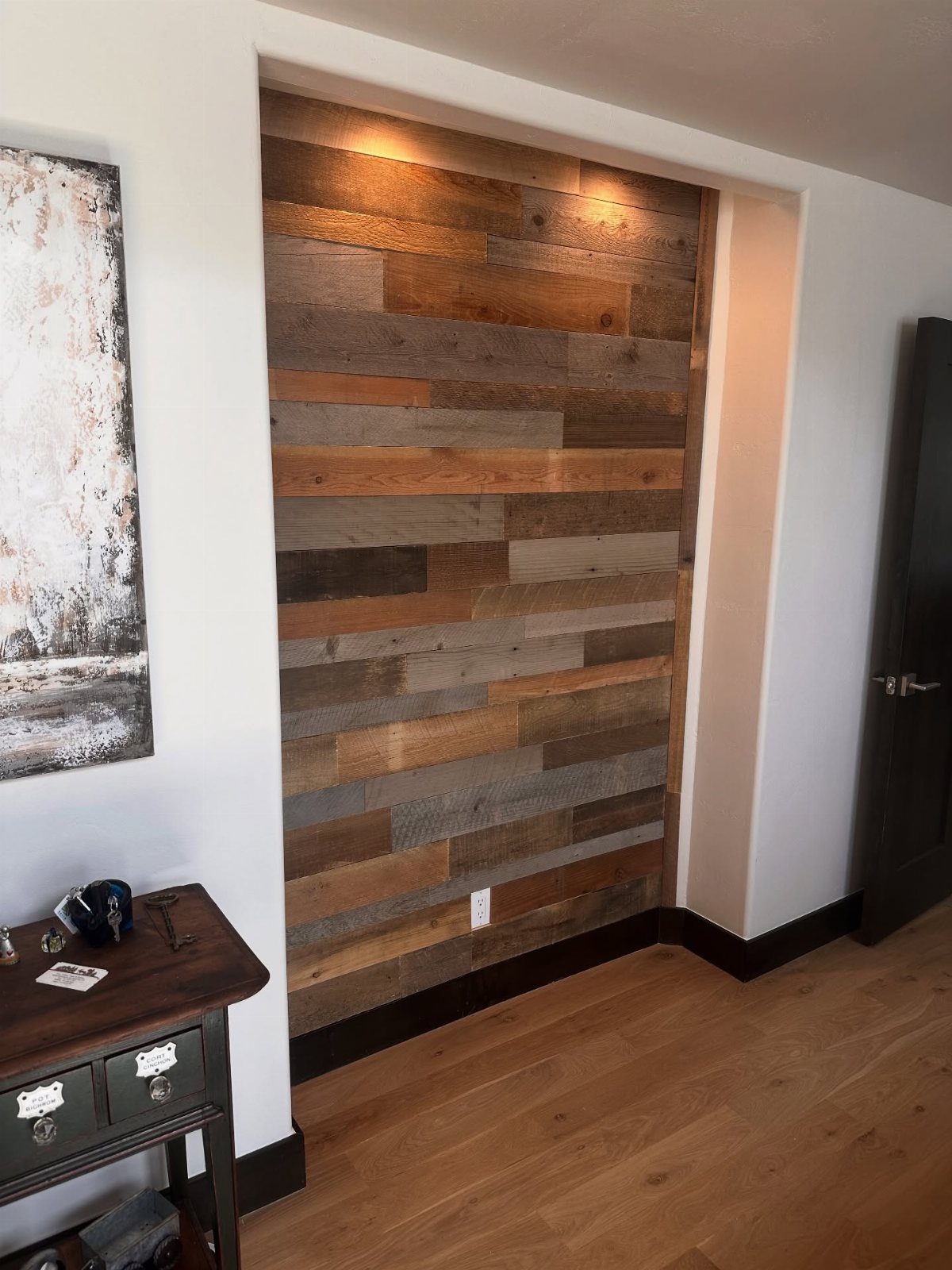
Planks in mixed tones turn one wall into the room’s anchor. A recessed wall like this one suits wood well, since the planks sit inside a frame and feel deliberate instead of busy.
Keep everything else quiet: white walls, light flooring and a single piece of art. The wood already supplies the pattern and warmth.
Mixed boards are friendly to a budget, because offcuts and reclaimed lumber hide mismatches by design. Sort the boards by tone before nailing so the dark and light pieces scatter evenly.
Current Wall Decor Trends
Natural materials, geometric patterns and pieces that do a job are what people are pinning right now, with sustainability and organic shapes running underneath all three.
Wood sits at the center of that mix. Slats laid in diagonal and horizontal runs read as geometry, yet the material stays warm and honest.
For a sustainable build, choose reclaimed or locally milled boards and a water-based finish. Soft curves, like a rounded corner or a gently shaped edge, pull a project toward the organic look without extra cost.
Functional decor is the easiest trend to act on. Give a piece a second purpose, such as a shelf, a hook or a place to set a plant, and it earns its spot on the wall.
Decorative Wood Terminology
A few terms come up constantly in shopping and plans, and knowing them saves you from ordering the wrong thing.
Live edge means the board keeps its natural, uncut outline from the tree. One listing I’d point to as a size reference describes a slab at 47 inches high, 28 inches wide and 12 inches deep, so check dimensions before you buy.
Slat wall means narrow boards set in a repeating pattern, sometimes in staggered, symmetrical layouts.
Floating shelf means the hardware is hidden, and some plans pair floating corner shelves with slats.
Digital plans often include a cutting list and blueprints, but no materials or installation, so you still buy and cut the lumber yourself.
DIY Wooden Decor Ideas
Reclaimed wood is the best starting point for a home build, since it adds character and keeps cost down.
Check each board for nails, staples and loose paint before it touches a saw blade, and wear a dust mask when you sand old lumber.
Simple techniques go a long way: square cuts, a sanded face and a clear finish. A miter saw or a handsaw with a guide, a drill and wood glue cover most wall pieces.
Plan the layout on paper, then cut one test piece before you cut them all. Finish every board before you hang it, so you aren’t brushing stain onto a wall.
Frequently Asked Questions
What are some good wall decor ideas for a wooden wall?
Slat wall panels, floating shelves and geometric wood art are the three I’d start with. Slats beside a TV add rhythm and hide cable runs, and floating shelves keep a plain wall clean because the brackets disappear.
A geometric piece can come out of one afternoon and a pile of offcuts; paint a single shape in a color already living in the room, and the whole thing looks planned.
What is the decorative wood on the wall called?
Most often it’s called wood paneling or wood wall art. When the boards are narrow and set in a repeating pattern, the term is a slat wall.
Live edge describes a slab or board whose outer edge was left as the tree grew it, bark line and curves included, with no straight cut.