Your saw decides which of these setups fits, because the port underneath it sets what you can connect: a shop vac with a cyclone separator, an overarm pickup, a blade guard port, or metal ducting.
The ideas run from reusing a vac you already own to running rigid metal duct into a permanent collector, and the cost and floor space climb with each step toward the fixed setup.
Before buying anything, measure the dust port on your saw or look up its size in the manual, since that number decides which hose or fitting will fit.
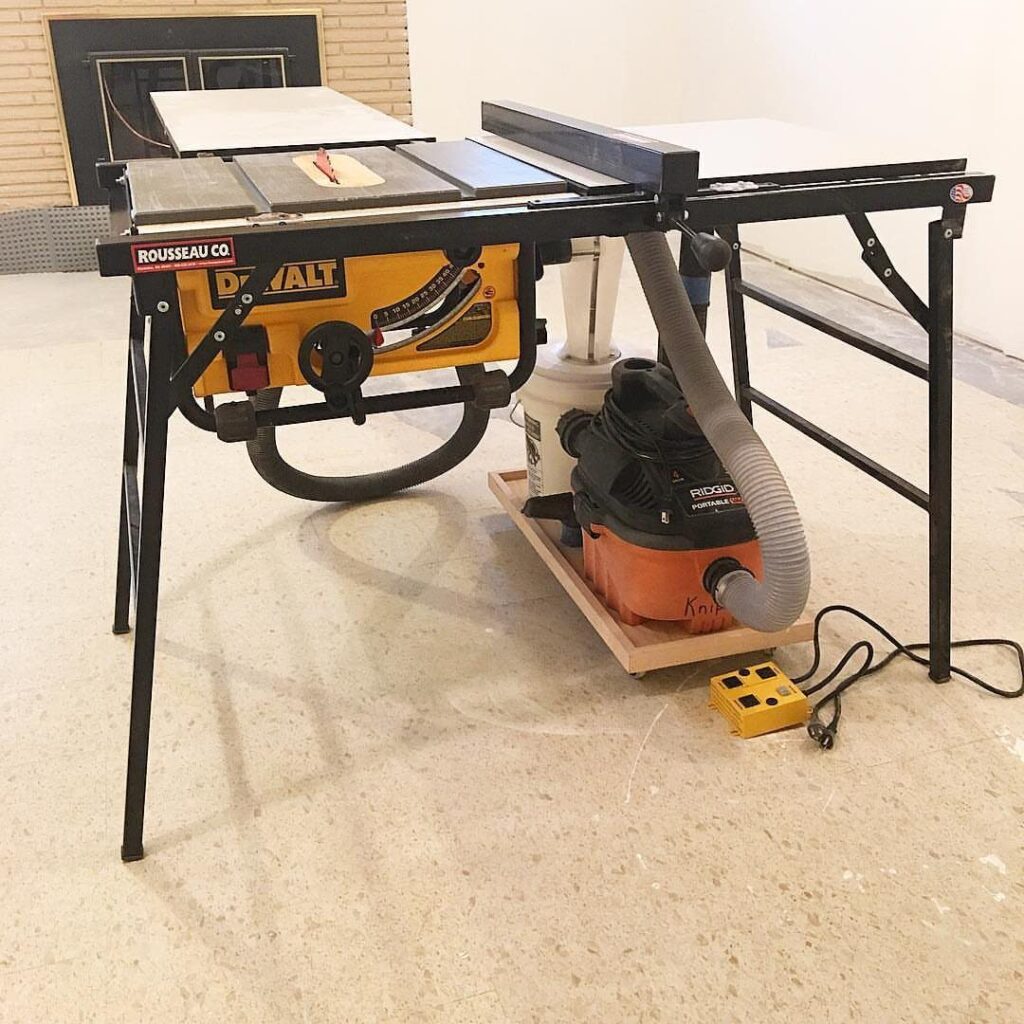
1. Shop Vac with Cyclone Separator
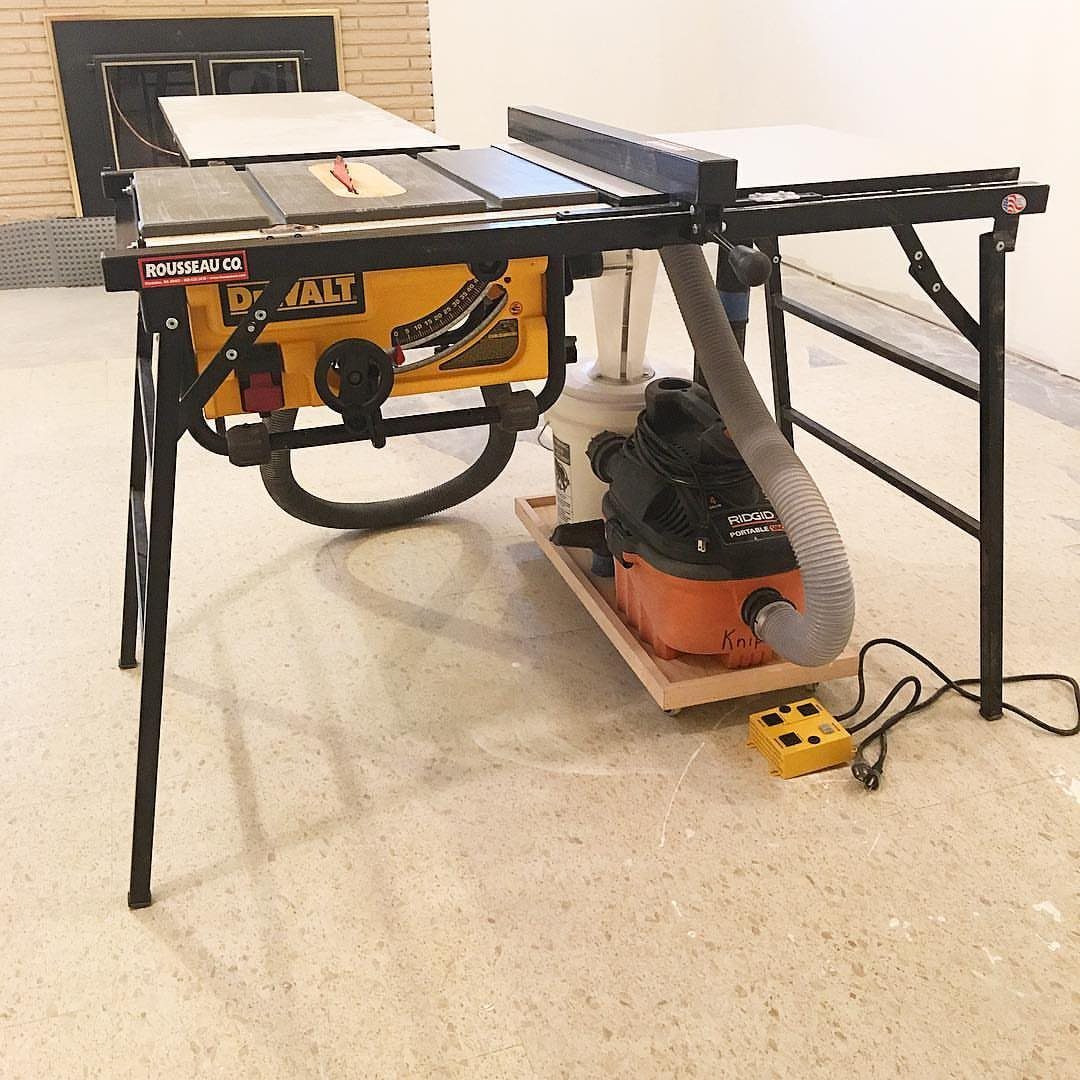
A shop vac hose runs to a cyclone separator, and the separator feeds the vac. Most of the sawdust drops into the separator bucket, so the vac’s filter stays cleaner and keeps its suction longer.
For a hobbyist with a small shop and a small budget, this is the setup I’d start with.
It reuses a vac you likely own and adds one inexpensive piece. Empty the separator before it fills, since a packed bucket stops catching anything.
2. Overarm Dust Collection
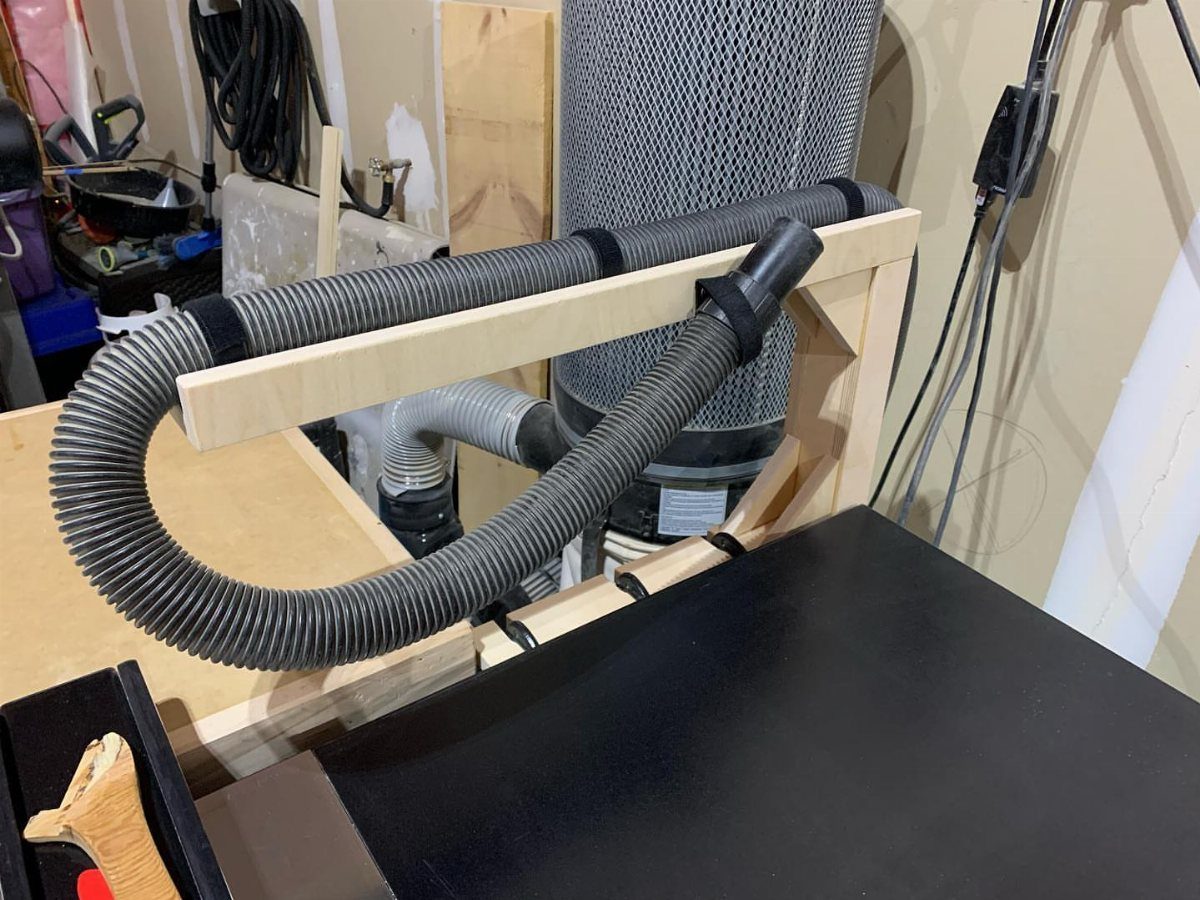
Mounting a flexible hose on an arm above the saw puts the pickup where dust is thrown upward, over the blade.
A wooden arm like this one can be built from scrap, and the hose can swing out of the way when you change cuts.
Pair it with a pickup below the table if you can. Overhead capture alone leaves the cabinet side uncovered, so I treat it as a partner to other methods, not a replacement.
3. DIY Dust Collection Solutions
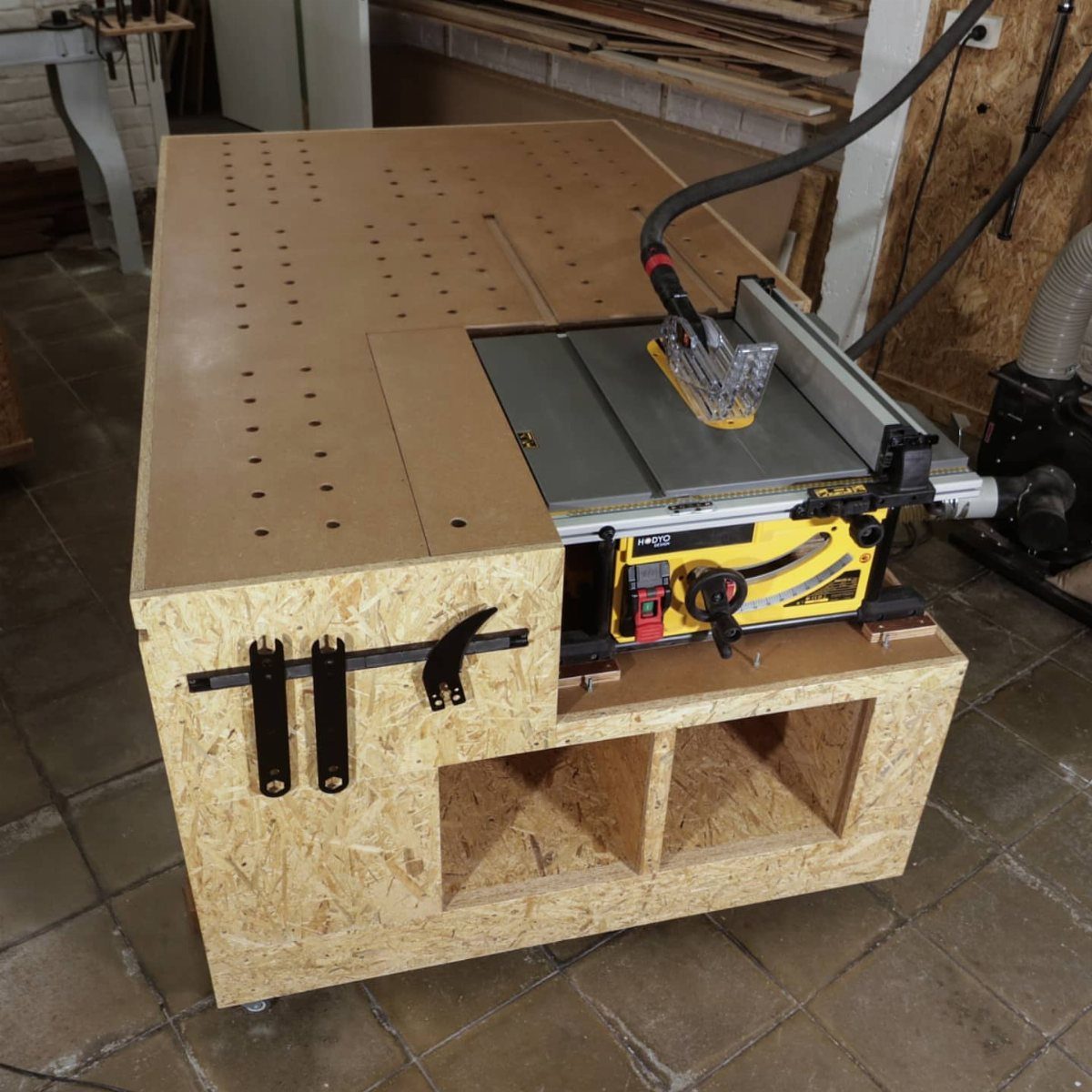
Building the saw into your own workbench lets you design the dust path around the machine instead of fitting the machine to a store-bought stand.
Boxing in the space under the saw and attaching a vacuum hose to it gives the dust one place to go.
A homemade setup can work well, and it costs far less than buying a cabinet saw. Seal the gaps in the enclosure as best you can, because leaks pull suction away from the blade.
4. Blade Guard Dust Port
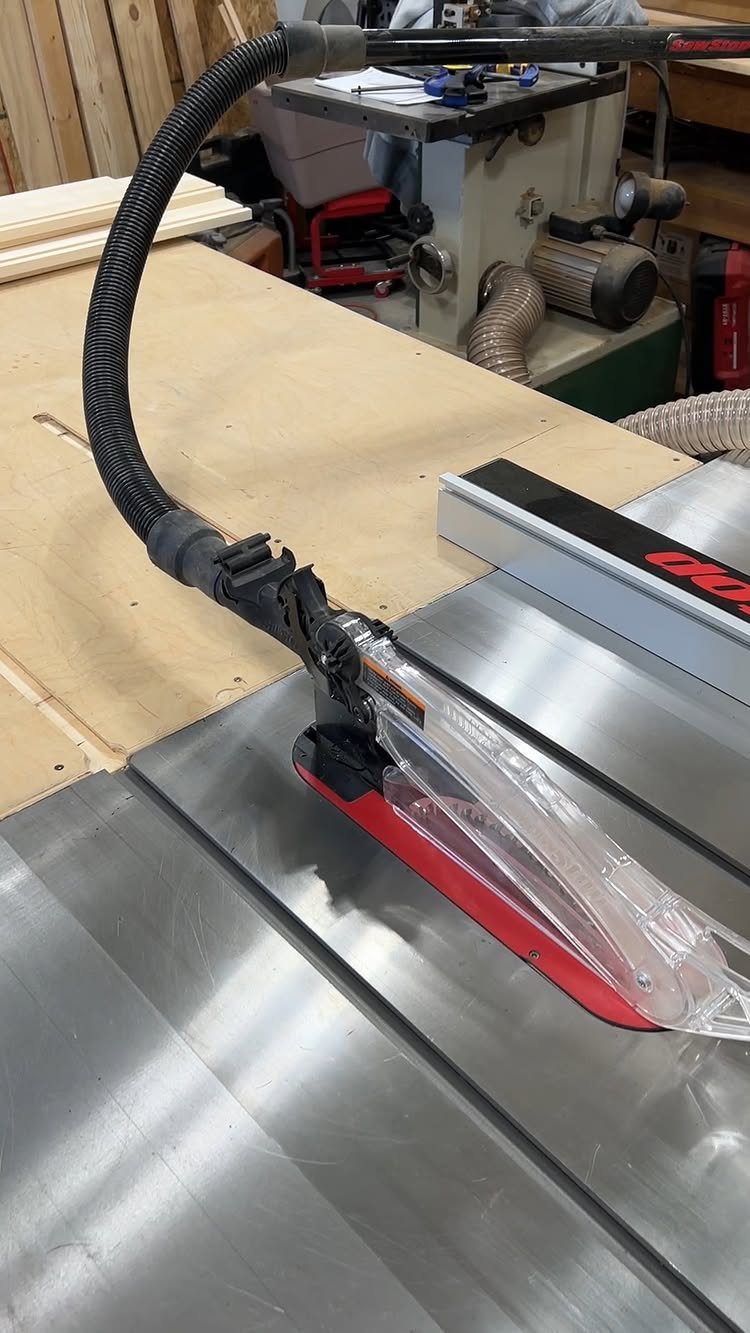
Hooking a vacuum hose to a port on a clear blade guard catches dust right at the top of the cut, where the blade throws it toward your face. The clear plastic also keeps the cut line visible.
This is a cheap upgrade for a small shop, since it needs only a hose and a compatible guard. Keep the hose routed up and away from the fence so it never drags on your stock mid-cut.
5. Direct Metal Ducting Connection
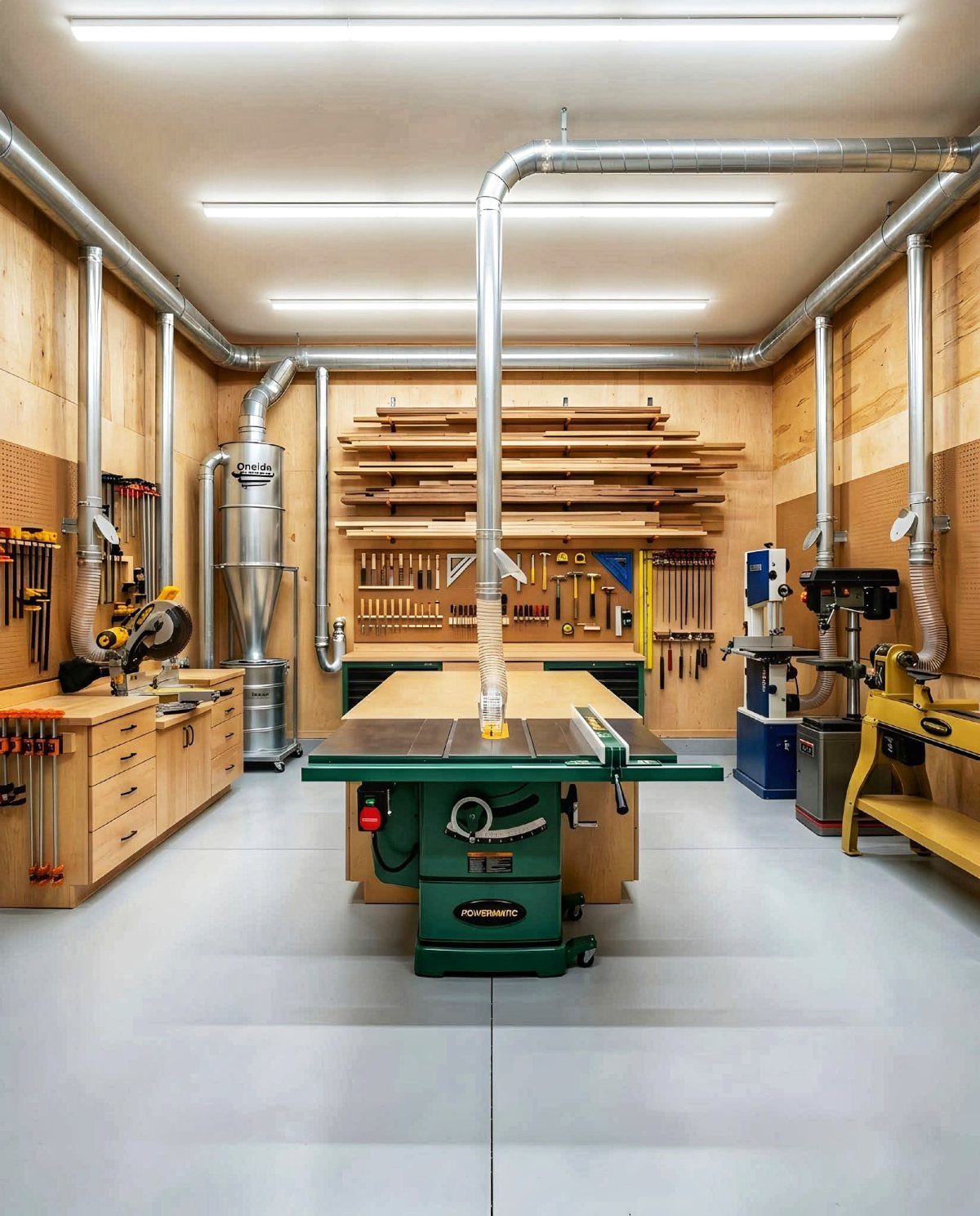
Plumbing a stationary saw straight into rigid metal ductwork gives you a permanent connection to a dedicated dust collector, with no hose to untangle at the saw.
I like the clean result, but it asks for floor space and real money, so it suits a shop you plan to keep. Rigid duct also locks the saw’s position, so settle on your layout before you start hanging pipe.
Best Dust Collectors
Before you buy any hose, look up the dust port size in your saw’s manual.
Cabinet and hybrid saws usually have a 4″ port on the back or the bottom of the cabinet, which is sized for a dust collector rather than a shop vac.
A full day of ripping produces more sawdust than a vacuum can handle.
If your saw is open underneath, like many plastic benchtop models, cover the bottom with a panel, even cardboard.
To test the setup, leave the saw off, run the vacuum, and hold a hand near the table slot; a light draft pulling air in means it’s working. Remove the panel now and then to clear what has piled up.
Keep expectations realistic: some dust will escape no matter what you buy. Any collection still beats none.
Dust Collection Techniques
Planers and jointers throw thick shavings fast, which makes them the biggest dust makers by volume in a small shop. Give them a dust collector with a 4″ hose.
One machine at a time is about all a 1–1.5 HP collector can handle, airflow-wise. Another option is to wheel the collector up to whichever machine you’re using and hook it straight on.
Common Dust Collection Issues
Expect some dust at the blade even with a good setup, and plan for it with a mask and regular cleanup. The fix is usually matching the right collection method to each tool.
Here’s how I’d pair the common machines with their collection gear:
- Table saw: a 4″ dust collector hookup at the cabinet, plus an overarm guard with its own dust port over the blade.
- A cup or small box mounted under the table will catch more of what falls.
- Random orbital and sheet sanders: dust extractor or shop vac, with multi-hole discs.
- Benchtop belt, disc and spindle sanders: shop vac or extractor, with a hood behind the abrasive.
- Miter saw: run a vacuum from the saw’s port, or park a collector behind the saw with a hood to catch the spray.
Frequently Asked Questions
What is the best dust collector for woodworking?
For a cabinet or hybrid table saw, a dust collector with a 4″ hose is the match, since the saw’s port is sized for it.
A 1–1.5 HP collector handles one machine at a time, so wheel it to whichever tool you’re running and hook it on. Planers and jointers throw the thickest shavings, and they need that 4″ hose too.
How to improve table saw dust collection?
Two pickups do better than one, so connect a 4″ dust collector hose to the cabinet and add an overarm guard that has its own dust port over the blade.
Below the table, the cabinet port pulls in what drops down, and above it the guard grabs the dust the blade flings up.