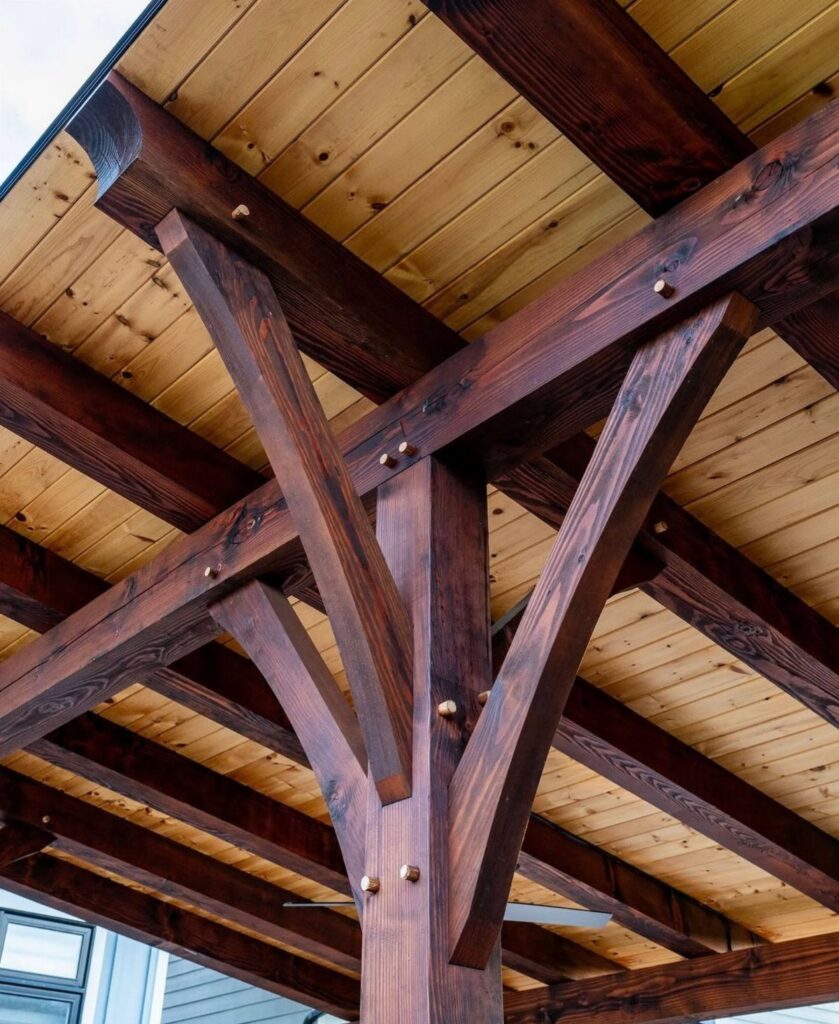
The list covers 4 joints, from a half lap cut with a saw and chisel to a knee brace, a pegged timber joint, and black steel brackets with bolts that need almost no cutting, so the choice comes down to whether you would rather spend your afternoon cutting wood or fastening hardware.
If you have a drill, a mallet and some patience, pegged joints hold beams together with no metal at all.
For the quickest assembly, the black metal bracket joint wins, though the steel costs money and the look is plainly industrial.
1. Knee Brace Joint
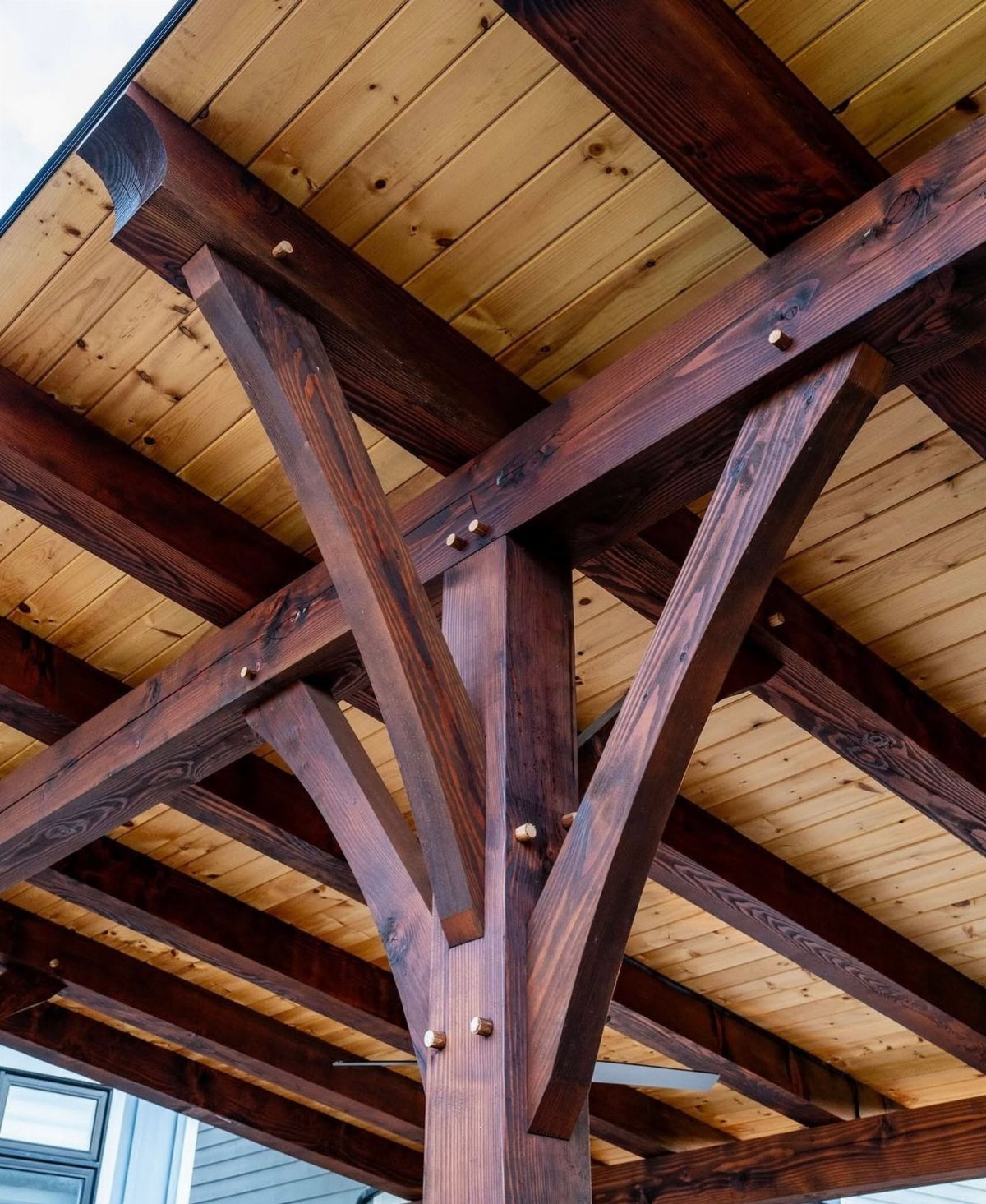
Diagonal braces running from post to beam turn a square corner into a triangle, and a triangle won’t rack sideways. That is why knee braces earn their place in open structures like porches and pergolas.
I like them most when they carry pegs, as these do.
Keep the braces short and the angle at a true diagonal so they stay in proportion to the post. A long brace looks clumsy and cuts into headroom.
2. Half Lap Joint
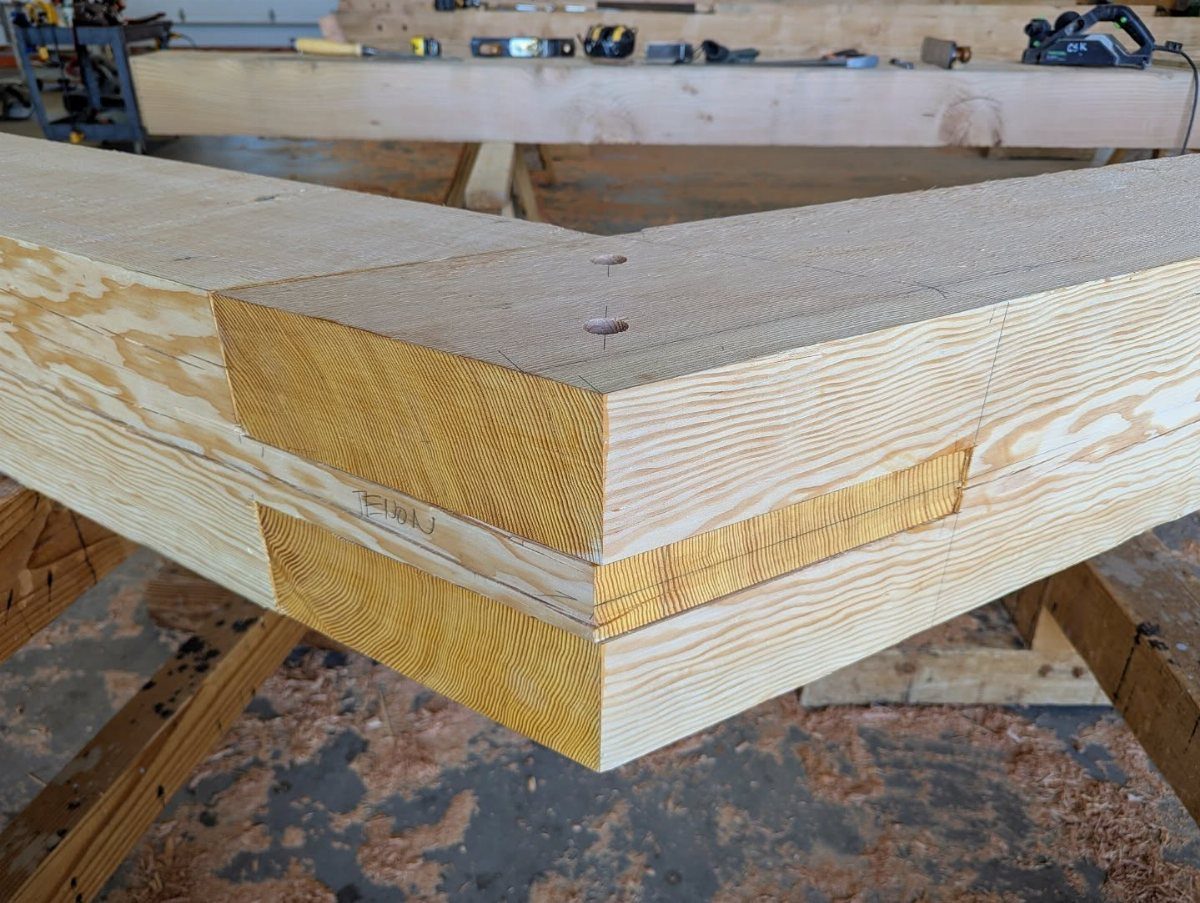
Two thick beams meet at a right angle here, each one cut away to half its depth so the pieces overlap and sit flush. Because the cuts are simple, this is a good first timber joint for a home shop.
Mark both pieces from the same layout lines, saw the shoulders, then clean the cheeks with a sharp chisel.
Check the fit before any glue or fasteners go in. A joint that needs a hammer to close is usually cut too tight.
3. Pegged Timber Joint
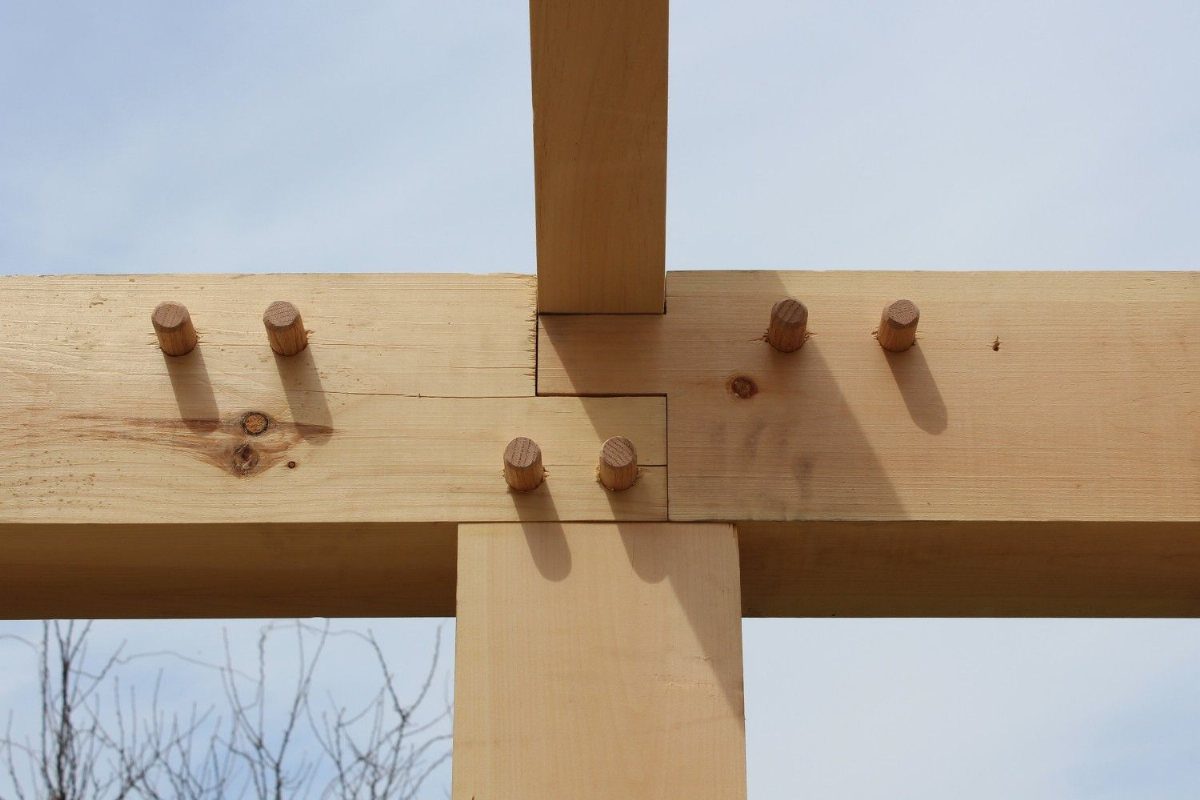
Round wooden pegs hold intersecting beams together without any metal, and four of them make a very secure-looking connection. Pegs look best when the wood matches the beams, so the joint reads as one piece.
Drill the holes cleanly and size the pegs to fit snugly.
I would pick a hardwood peg for strength. This takes patience, but you only need a drill and a mallet.
4. Black Metal Bracket Joint
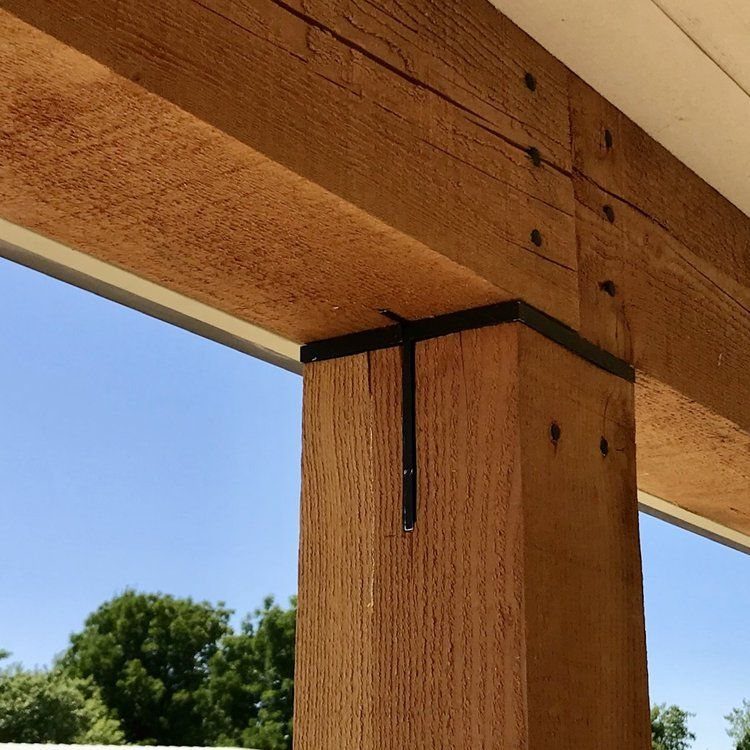
Black steel plates and bolts on the outside of a post and beam make the quickest joint of the four to assemble. Hardware does the holding, so the wood needs far less cutting.
The look is plainly industrial, and I find it pairs well with light timber.
Use exterior-rated hardware for anything outdoors. Drill the bolt holes straight, and use a square to confirm the post is plumb before you tighten.
Differences Between Timber Frame and Post and Beam
The core difference is what carries the load. A timber frame holds itself together with interlocking mortise and tenon joints, and oak pegs drive them tight, which leaves the timbers carrying the load without help from metal.
Post and beam uses metal connectors and bolts, though half-lap joints also fit that style.
Both leave the beams exposed, and both can be customized to nearly any layout or architectural style. Of the two, only a true timber frame is built entirely from wood joints, with no hardware tying it together.
Cost is where people assume wrongly. Post and beam cuts down on labor because steel connectors stand in for hand-cut joints, though a big hardware order can eat into those savings quickly.
Cutting and fitting every joint by hand takes a timber framer far longer, but the frame needs no pricey metal connectors in return.
Neither is automatically cheaper. Price both against your own design, materials, joinery, hardware and the level of craftsmanship you want.
For an afternoon project at home, the post and beam approach is the more forgiving one. Timber frame joinery rewards patience and a longer timeline.
Both methods use heavy timbers, which accounts for the confusion that exists between the two. Traditional timber-framing uses difficult-to-make mortise & tenon joints secured with wooden pegs (tree nails), whereas post & beam often uses simple lap joints and even metal fasteners to hold the pieces together.
Modern Technology in Joinery
CNC (Computer Numerical Control) machines have changed how timber joints get made. They cut to the millimeter, which improves consistency from one timber to the next and shortens fabrication time.
CNC machines can also reproduce intricate joints that would eat up hours with a chisel, and the quality holds.
Some timber frame shops now run their mortise and tenon joints through CNC machines, so a precise traditional joint can come straight off the machine.
For a home maker, the practical takeaway is that hand-cut joinery is still respected and still worth learning. If a joint is too intricate for your shop, or you need several identical ones, ordering machine-cut timbers is a sensible option.
I would still cut one joint by hand first. It teaches you what a tight, clean fit feels like, and that helps you judge any machine-cut piece you buy.
Frequently Asked Questions
How to join post and beam?
Post and beam relies on metal hardware: steel plates, bolts, and connectors fastened to the outside of the post and beam.
Half-laps suit hardware-based frames too, since 2 overlapping notches can be bolted or screwed together. Metal connectors mean far less cutting in the timber, so this is the faster route.
Outdoors, pick hardware rated for exterior use, keep bolt holes drilled square to the face, and test the post for plumb with a square before the final tightening.
What is the strongest joining method for wood?
For load-bearing strength in a timber frame, the mortise and tenon comes out on top, with dovetails and scarf joints following behind it. Its interlocking shape spreads weight evenly and puts less stress on fasteners.
Driving oak pegs through the joint pulls it snug, and the wood itself carries the weight with no metal involved. Length, thickness, and wood species all change how strong a given joint turns out.
Is post and beam expensive?
Post and beam tends to run cheaper, since steel connectors replace hand-cut joinery and the labor hours shrink, though neither style is cheaper in every case.
Once the hardware order gets large, those savings can disappear fast. A true timber frame takes far longer to cut and fit by hand, though it needs no pricey metal connectors.